Note: to put things in perspective, especially in the private-public data debate, it is interesting to start digg into the history of privacy, or how, where and when it possibly came from... So as how, where and when it will possibly vanish...
The following article was found on Medium, written by journalist Greg Ferenstein. It has some flaws (or rather some quick shortcuts due to its format) and seems driven by the statement that the natural state of human beings is "transparency/no privacy", but it also doesn't pretend to be a scientific final story about privacy. It is rather instead a point of view and a relatively brief introduction by a writer, considering the large period adressed (to start digg in then). It is not a detailed paper by an historian specialized into this topic.
The article should be taken with a bit of critical distance therefore. Especially, to my reader's point of view, there are missing arguments regarding the fact that "privacy" is obviously not mainly "physical privacy" (walls, curtains, etc.), or not anymore for a long time. It certainly started as physical privacy -- as the author demonstrates it well -- but at a critcal point, this gained privacy, this evolution from a state of "no privacy" helped guarantee a certain freedom of thinking that became therefore highly related to the foundation of our "democratic" political system, to the "enlightenment" period as well.
And this is the main element regarding this question according to me. Loosing one could also clearly mean loosing the other... (if it's not already lost... a subject that could be debated as well, not to speculate further to know if a different system could emerge from this nor not, maybe even an "egalitarian" one).
Also, to state as a conclusion (last 7 lines) that our "natural state" is to be "transparent" (state of no privacy) and that the actual move toward "transparency" is just a manner to go "naturally" back to what it always was is a bit intellectually lazy: the current "transparency" that is pushed mainly by big corporations and also by States for security reasons --as stated, "law enforcements" of many sorts-- is not the old "passive" transparency but a highly "dynamic", computed, processed, and often merchandised one.
It has nothing to do with the old "all the family lives naked with their nurturing animals in the same room" sort of argument then... It is a different system, not democratc anymore but a mix of ultra liberalism and monitored surveillance. Not a funny thing at all...
So, all in all, the arguments in the article remain very interesting, related to many contemporary issues and there are several useful resources as well in there. But you should definitely keep your brain "switch on" while reading it!
Via Medium
-----
By Greg Ferenstein
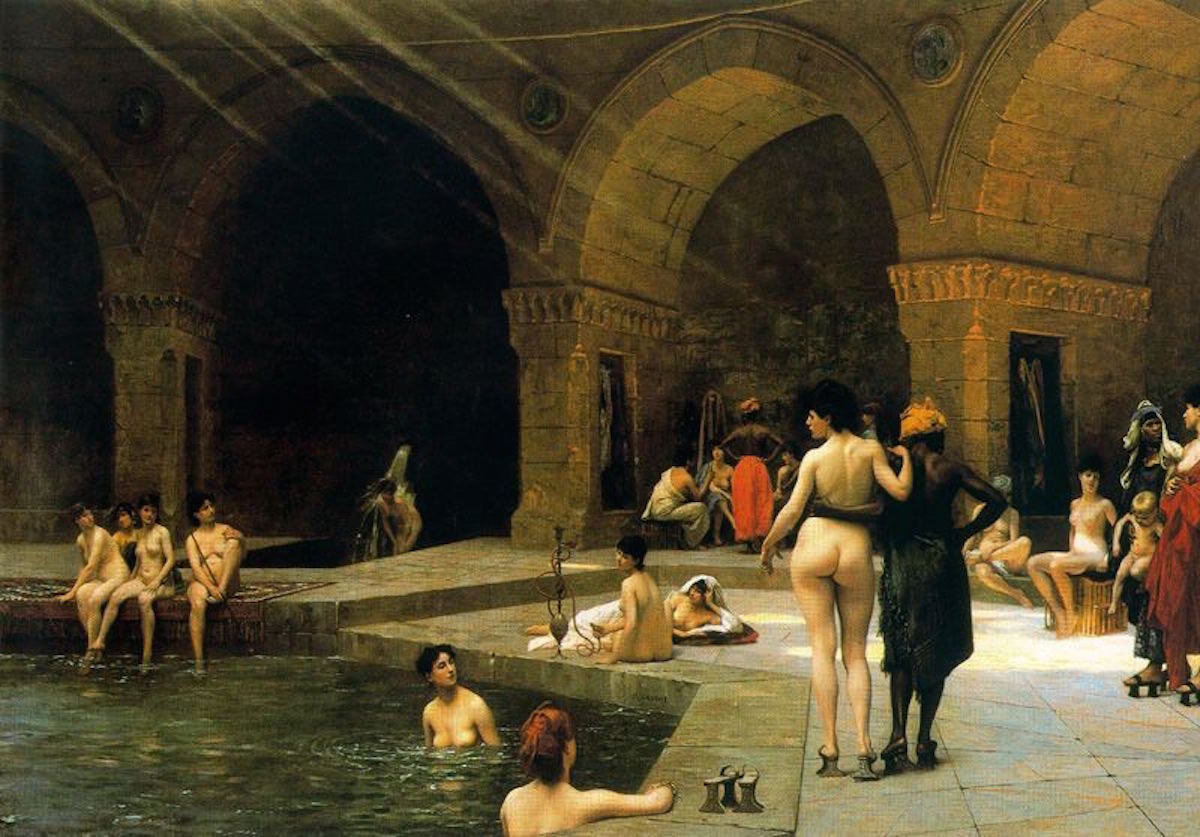
Jean-Leon Gerome, The Large Pool Of Bursa
2-Minute Summary ...
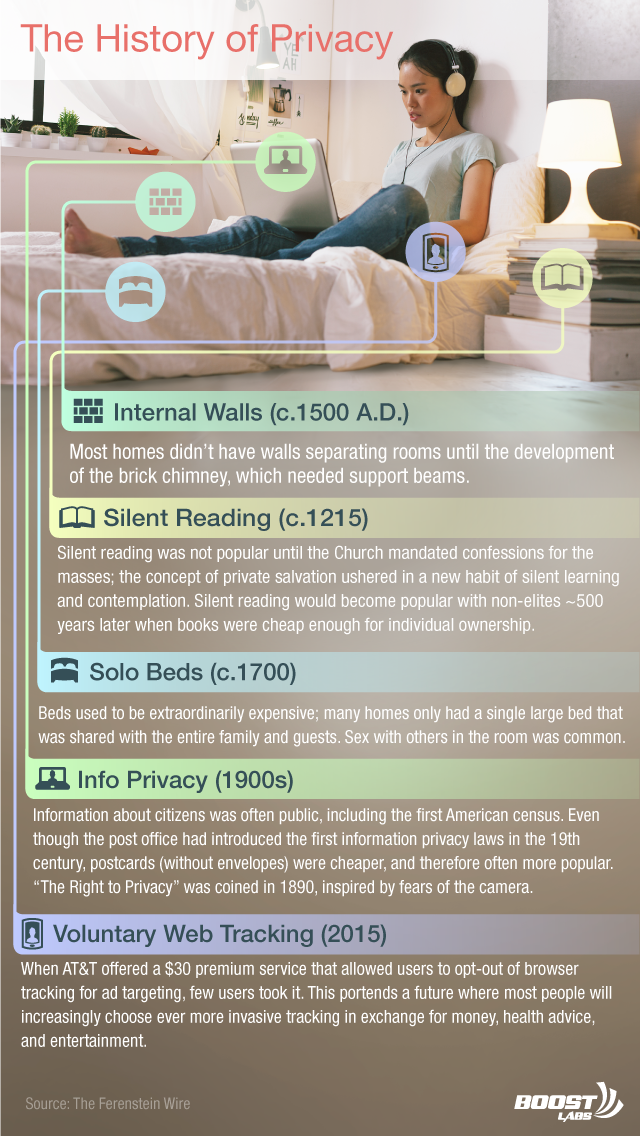
- Privacy, as we understand it, is only about 150 years old.
- Humans do have an instinctual desire for privacy. However, for 3,000 years, cultures have nearly always prioritized convenience and wealth over privacy.
- Section II will show how cutting edge health technology will force people to choose between an early, costly death and a world without any semblance of privacy. Given historical trends, the most likely outcome is that we will forgo privacy and return to our traditional, transparent existence.
*This post is part of an online book about Silicon Valley’s Political endgame. See all available chapters here.
SECTION I:
How privacy was invented slowly over 3,000 years
“Privacy may actually be an anomaly” ~ Vinton Cerf, Co-creator of the military’s early Internet prototype and Google executive.
Cerf suffered a torrent of criticism in the media for suggesting that privacy is unnatural. Though he was simply opining on what he believed was an under-the-radar gathering at the Federal Trade Commission in 2013, historically speaking, Cerf is right.
Privacy, as it is conventionally understood, is only about 150 years old. Most humans living throughout history had little concept of privacy in their tiny communities. Sex, breastfeeding, and bathing were shamelessly performed in front of friends and family.
The lesson from 3,000 years of history is that privacy has almost always been a back-burner priority. Humans invariably choose money, prestige or convenience when it has conflicted with a desire for solitude.
Tribal Life (~200,000 B.C. to 6,000 B.C)

Flickr user Rod Waddington
"Because hunter-gatherer children sleep with their parents, either in the same bed or in the same hut, there is no privacy. Children see their parents having sex. In the Trobriand Islands, Malinowski was told that parents took no special precautions to prevent their children from watching them having sex: they just scolded the child and told it to cover its head with a mat" - UCLA Anthropologist, Jared Diamond
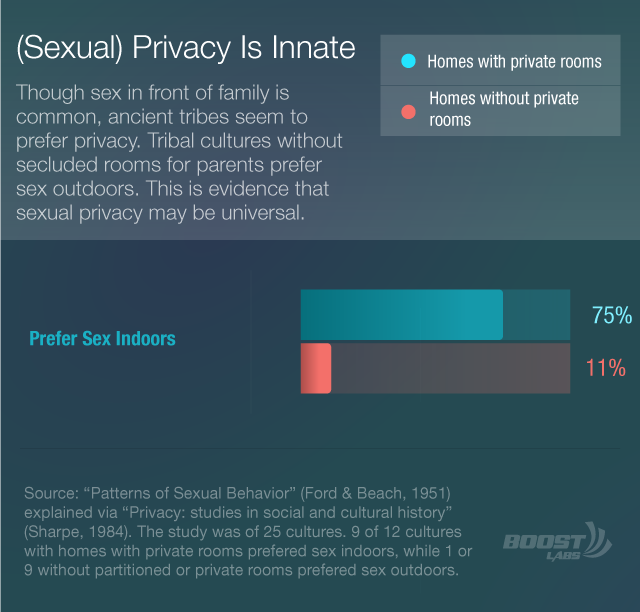
While extremely rare in tribal societies, privacy may, in fact, be instinctive. Evidence from tribal societies suggests that humans prefer to make love in solitude (In 9 of 12 societies where homes have separate bedrooms for parents, people prefer to have sex indoors. In those cultures without homes with separate rooms, sex is more often preferred outdoors).
However, in practice, the need for survival often eclipses the desire for privacy. For instance, among the modern North American Utku’s, a desire for solitude can seem profoundly rude:
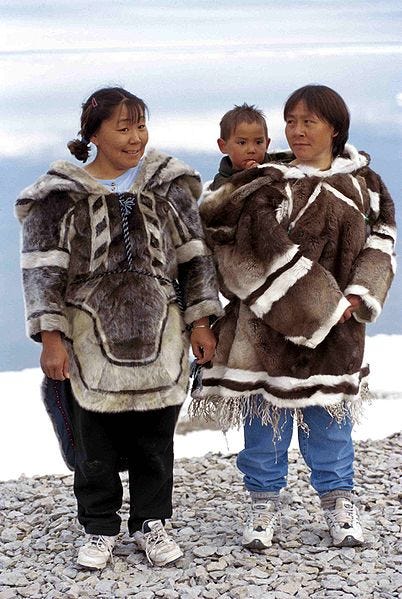
Inuit family. Source: Wikipedia Ansgar Walk
...
"It dawned on me how forlorn I would be in the wildness if they forsook me. Far, far better to suffer loss of privacy” - Anthropologist Jean Briggs, on being ostracized by her host Utku family, after daring to explore the wilderness alone for a day.
...
The big question: if privacy isn’t the norm, where did it start? Let’s start from the first cities:
Ancient Cities (6th Century B.C. — 4th Century AD)
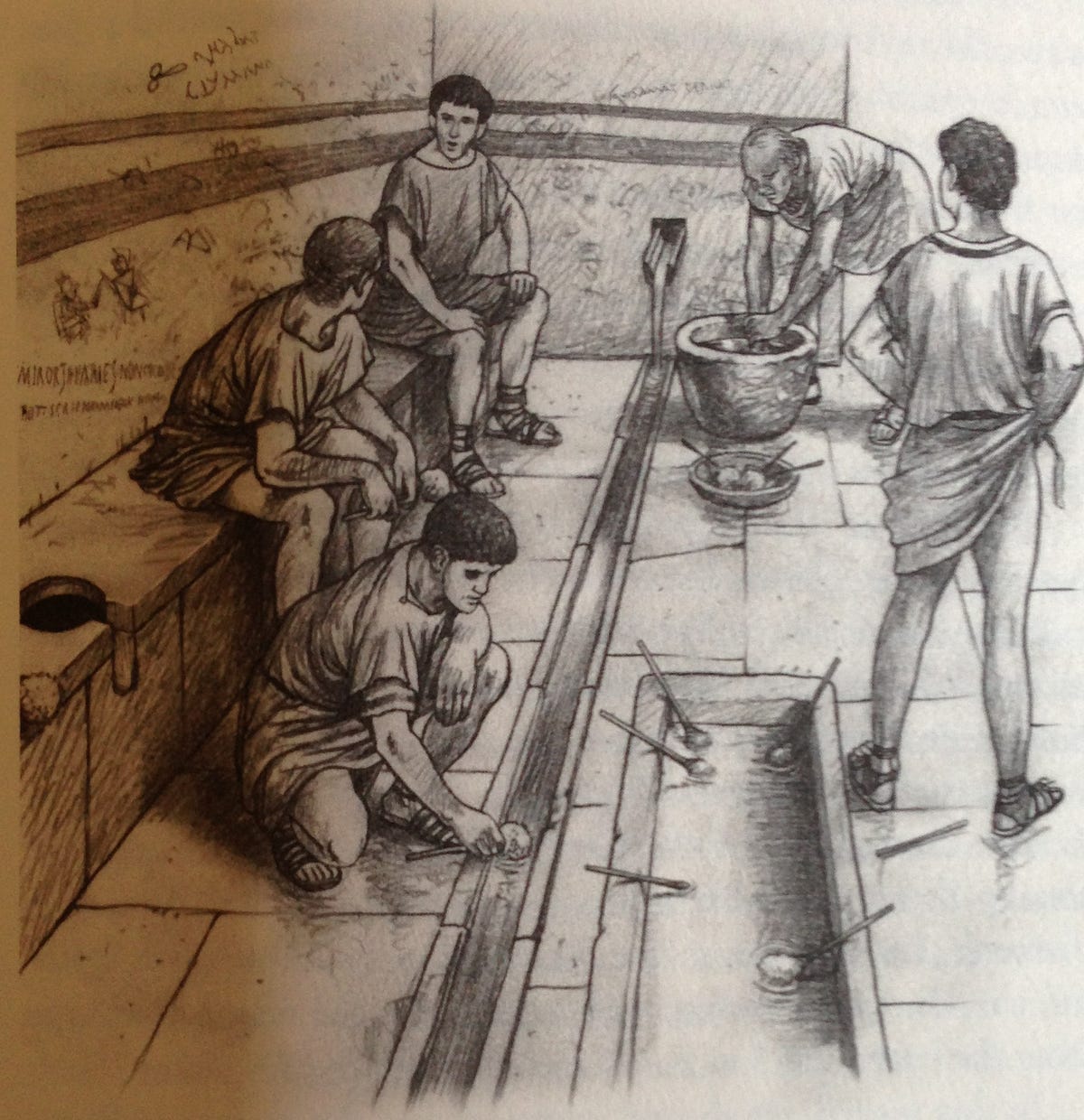
Image: Roman citizens engaged in conversation in a public restroom. Credit: A Day In The Life Of Ancient Rome
Like their tribal ancestors, the Greeks displayed some preference for privacy. And, unlike their primitive ancestors, the Greeks had the means to do something about it. University of Leicester’ Samantha Burke found that the Greeks used their sophisticated understanding of geometry to create housing with the mathematically minimum exposure to public view while maximizing available light.
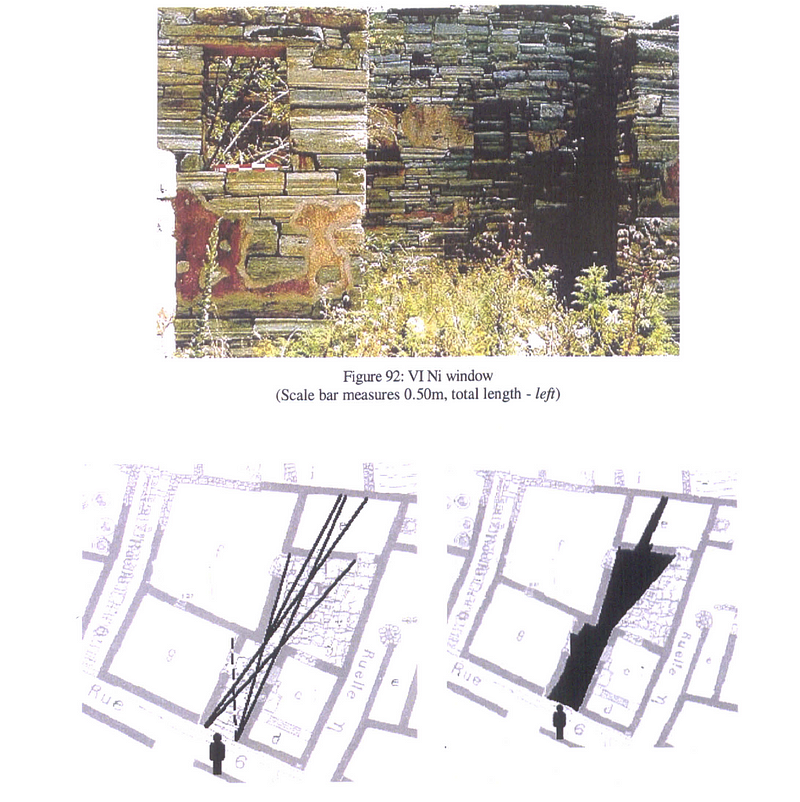
Sightline analysis of maximum viewable space from the street. Burke (2000)
“For where men conceal their ways from one another in darkness rather than light, there no man will ever rightly gain either his due honour or office or the justice that is befitting” - Socrates
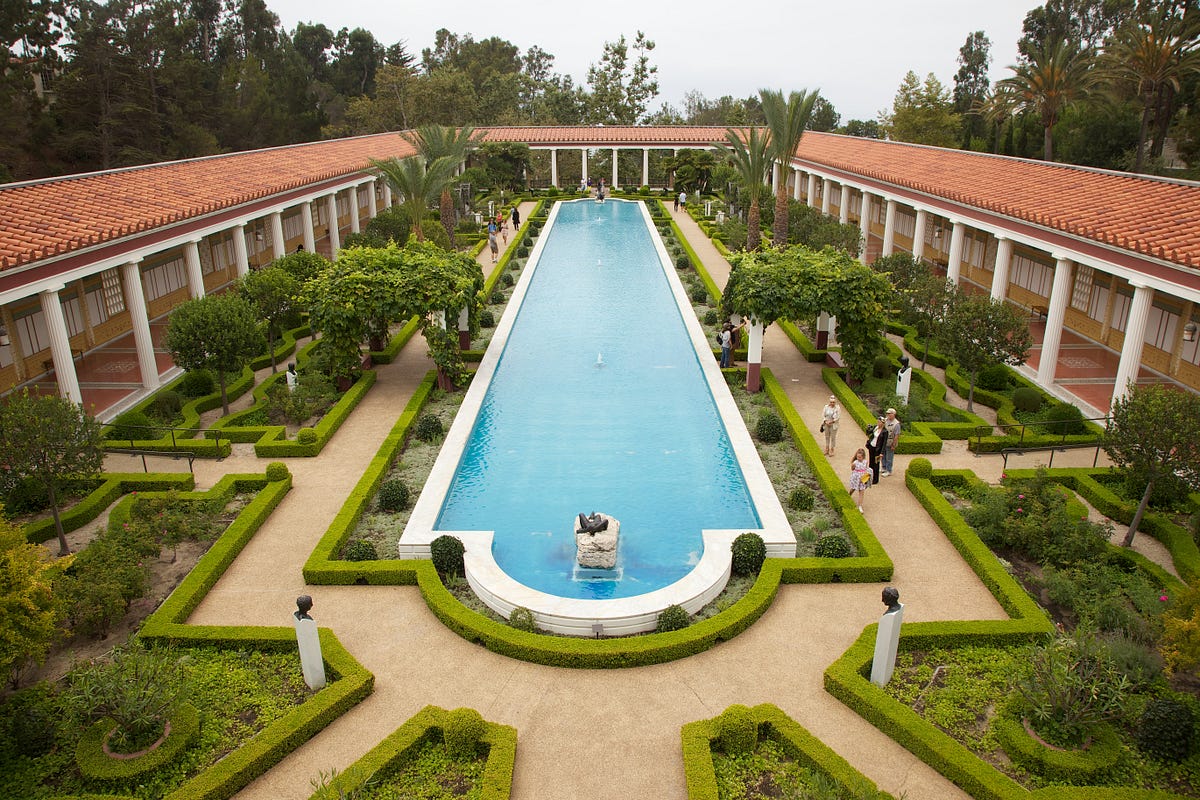
Athenian philosophy proved far more popular than their architecture. In Greece’s far less egalitarian successor, Rome, the landed gentry built their homes with wide open gardens. Turning one’s house into a public museum was an ostentatious display of wealth. Though, the rich seemed self-aware of their unfortunate trade-off:
flickr user Nina Haghighly
“Great fortune has this characteristic, that it allows nothing to be concealed, nothing hidden; it opens up the homes of princes, and not only that but their bedrooms and intimate retreats, and it opens up and exposes to talk all the arcane secrets” ~ Pliny the Elder, ‘The Natural History’, circa 77 A.D
The majority of Romans lived in crowded apartments, with walls thin enough to hear every noise. “Think of Ancient Rome as a giant campground,” writes Angela Alberto in A Day in the life of Ancient Rome.
...
https://www.youtube.com/watch?v=HhwXipv3tRU
...
And, thanks to the Rome’s embrace of public sex, there was less of a motivation to make it taboo—especially considering the benefits.
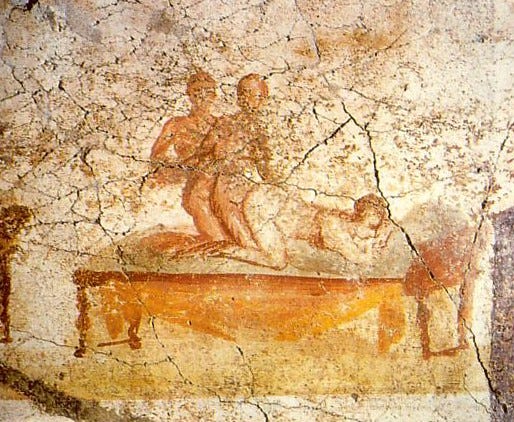
Sex art, Pompeii
“Baths, drink and sex corrupt our bodies, but baths, drink and sex make life worth living” - graffiti — Roman bath
Early Middle Ages (4th century AD-1,200 AD): Privacy As Isolation
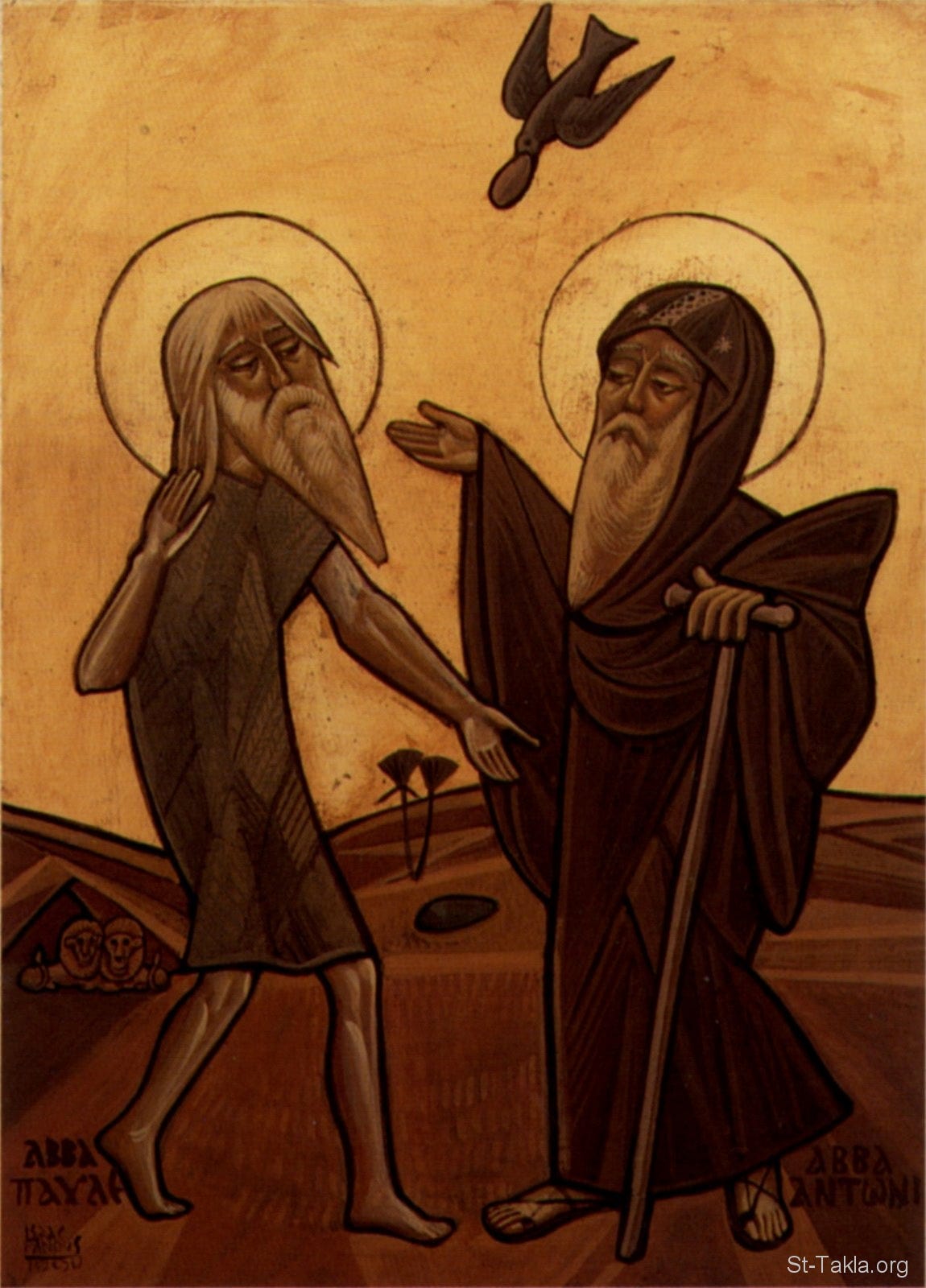
Early Christian saints pioneered the modern concept of privacy: seclusion. The Christian Bible popularized the idea that morality was not just the outcome of an evil deed, but the intent to cause harm; this novel coupling of intent and morality led the most devout followers (monks) to remove themselves from society and focus obsessively on battling their inner demons free from the distractions of civilization.
“Just as fish die if they stay too long out of water, so the monks who loiter outside their cells or pass their time with men of the world lose the intensity of inner peace. So like a fish going towards the sea, we must hurry to reach our cell, for fear that if we delay outside we will lost our interior watchfulness” - St Antony of Egypt
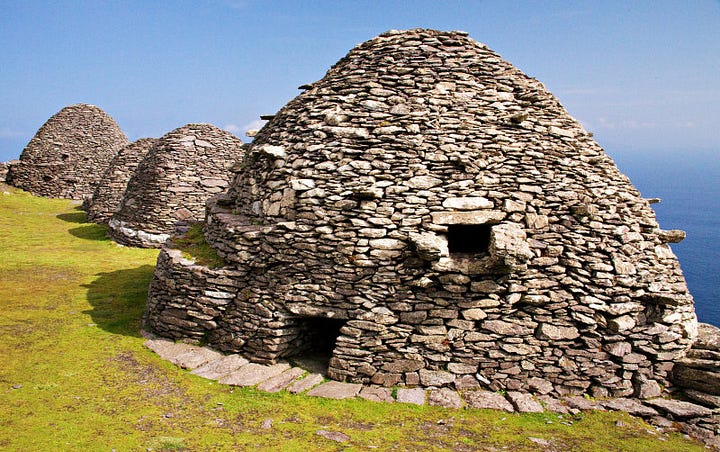
It is rumored that on the island monastery of Nitria, a monk died and was found 4 days later. Monks meditated in isolation in stone cubicles, known as “Beehive” huts.
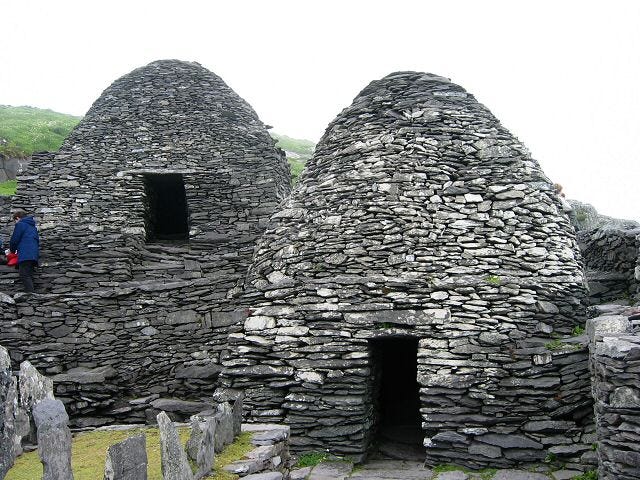
Wikipedia / Rob Burke
Even before the collapse of ancient Rome in 4th century A.D., humanity was mostly a rural species
A stylized blueprint of the Lord Of The Rings-looking shire longhouses, which were popular for 1000 years, shows animals and humans sleeping under the same room—because, there was only one room.
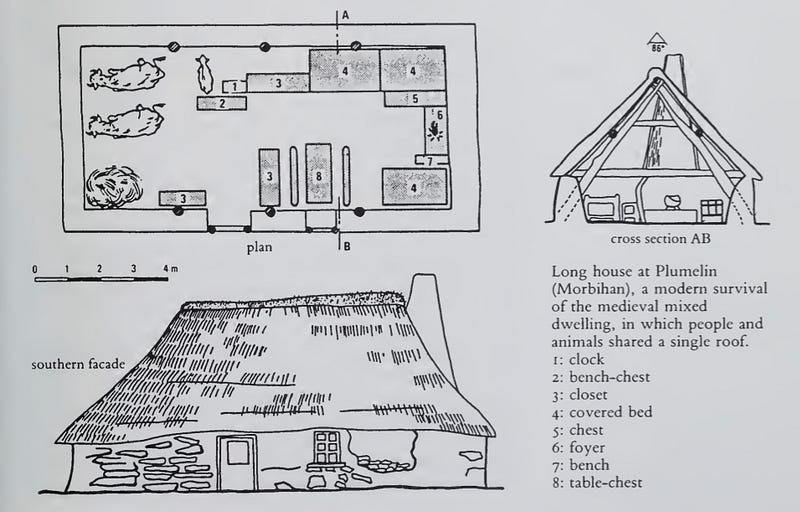
Photo credit: Georges Duby, A History Of Private Life: Revelations of the Medieval World
“There was no classical or medieval latin word equivalent to ‘privacy’. privatio meant ‘a taking away’” - Georges Duby, author, ‘A History Of Private Life: Revelations of the Medieval World’
Late Medieval/Early Renaissance (1300–1600) — The Foundation Of Privacy Is Built
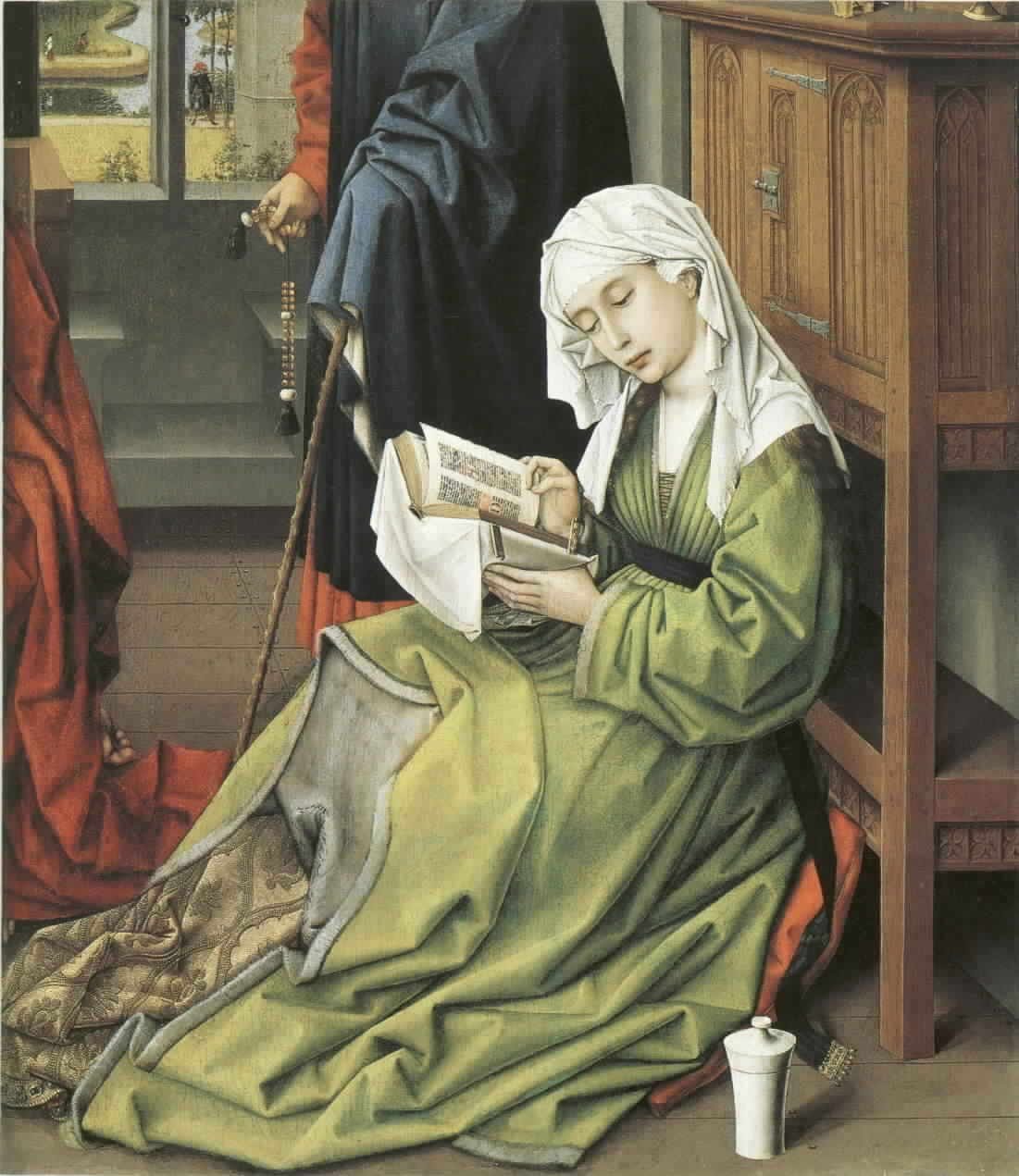
“Privacy — the ultimate achievement of the renaissance” - Historian Peter Smith
In 1215, the influential Fourth Council Of Lateran (the “Great Council”) declared that confessions should be mandatory for the masses. This mighty stroke of Catholic power instantly extended the concept of internal morality to much of Europe.
“The apparatus of moral governance was shifted inward, to a private space that no longer had anything to do with the community,” explained religious author, Peter Loy. Solitude had a powerful ally.
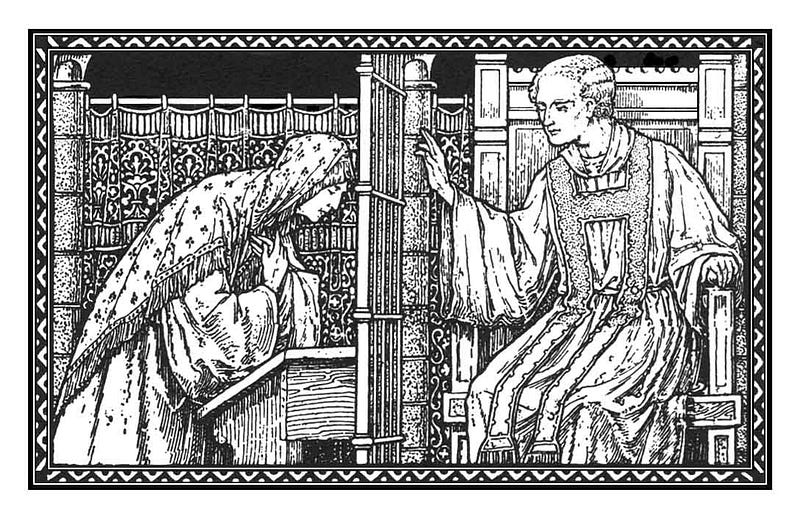
...
Fortunately for the church, some new technology would make quiet contemplation much less expensive: Guttenberg’s printing press.
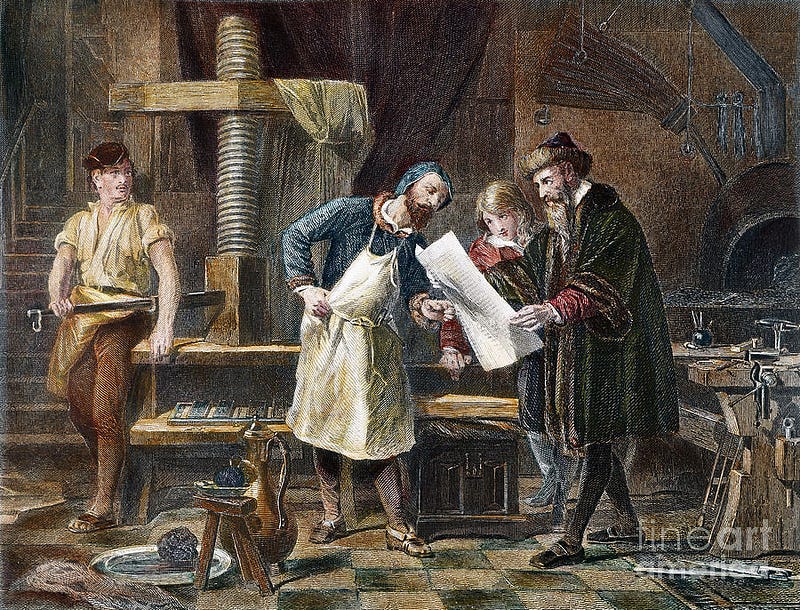
Thanks to the printing presses invention after the Great Counsel’s decree, personal reading supercharged European individualism. Poets, artists, and theologians were encouraged in their pursuits of “abandoning the world in order to turn one’s heart with greater intensity toward God,” so recommended the influential canon of The Brethren of the Common Life.
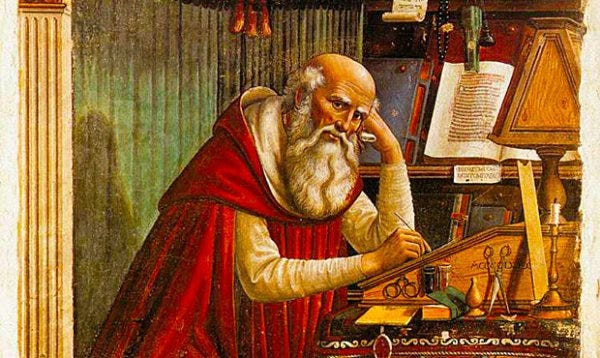
To be sure, up until the 18th century, public readings were still commonplace, a tradition that extended until universal book ownership. Quiet study was an elite luxury for many centuries.
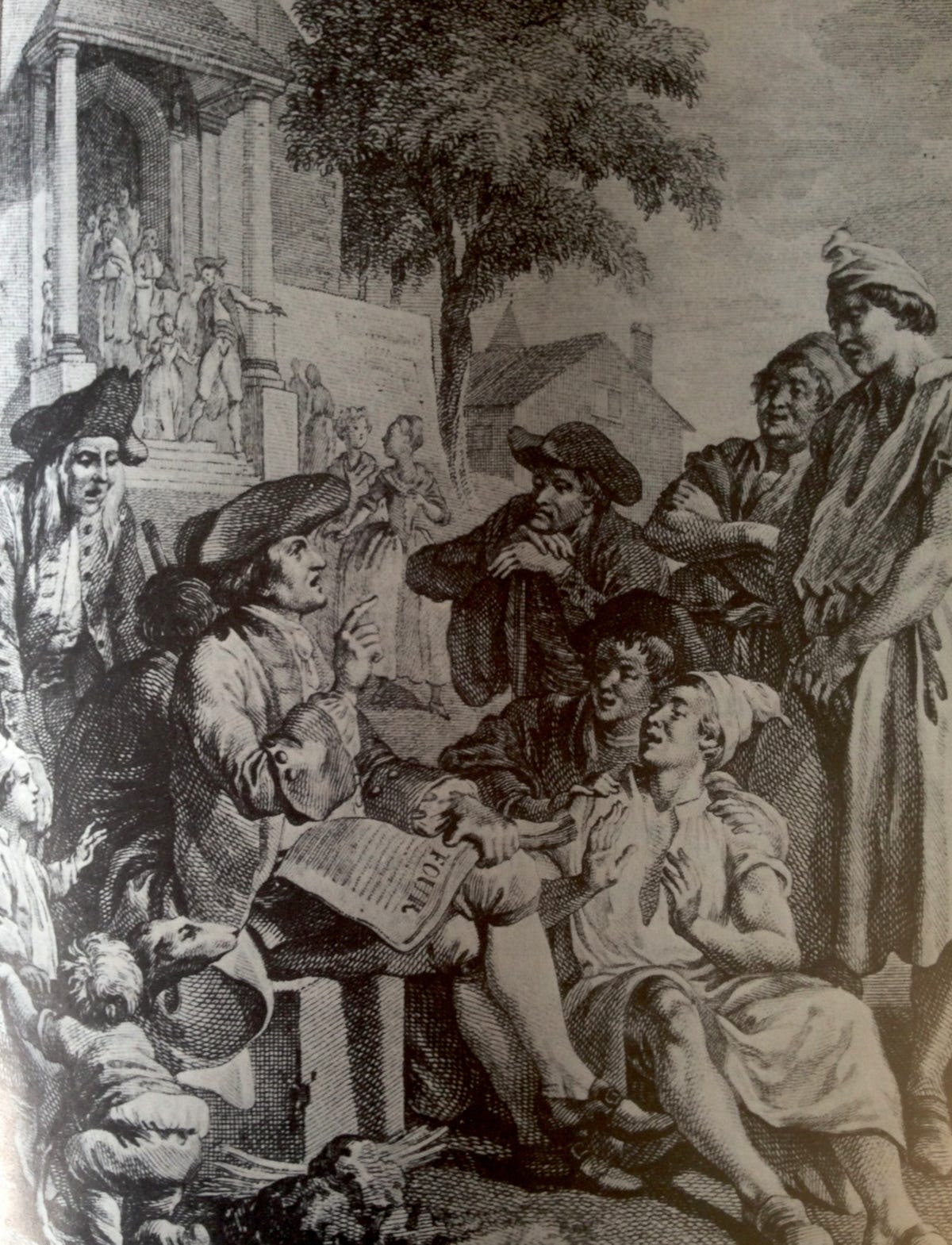
Citizens enjoy a public reading.
...
The Architecture of privacy
Individual beds are a modern invention. As one of the most expensive items in the home, a single large bed became a place for social gatherings, where guests were invited to sleep with the entire family and some servants.
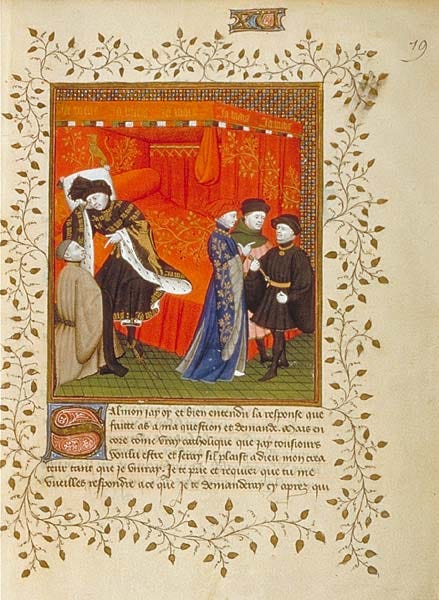
People gather around a large bed.
...
But, the uncleanness of urbanized life quickly caught up with the Europeans, when infectious diseases wiped out large swaths of newly crowded cities. The Black Death, alone, killed over 100 million people.
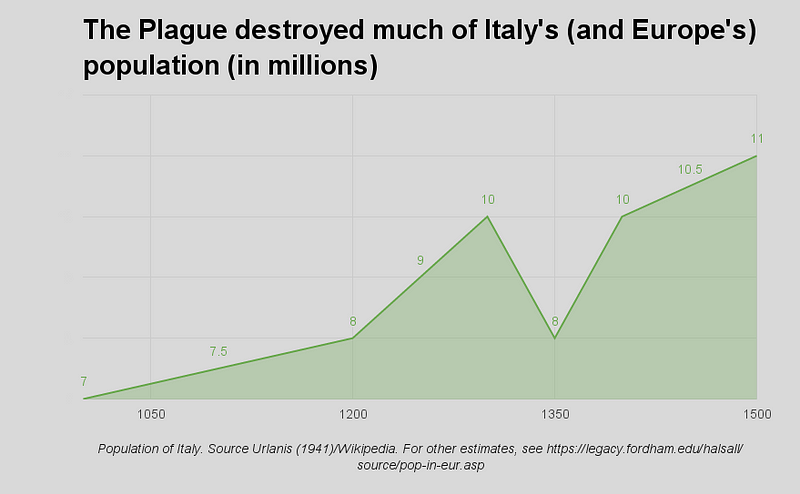
This profoundly changed hygiene attitudes, especially in hospitals, where it was once common for patients to sleep as close together as houseguests were accustomed to.
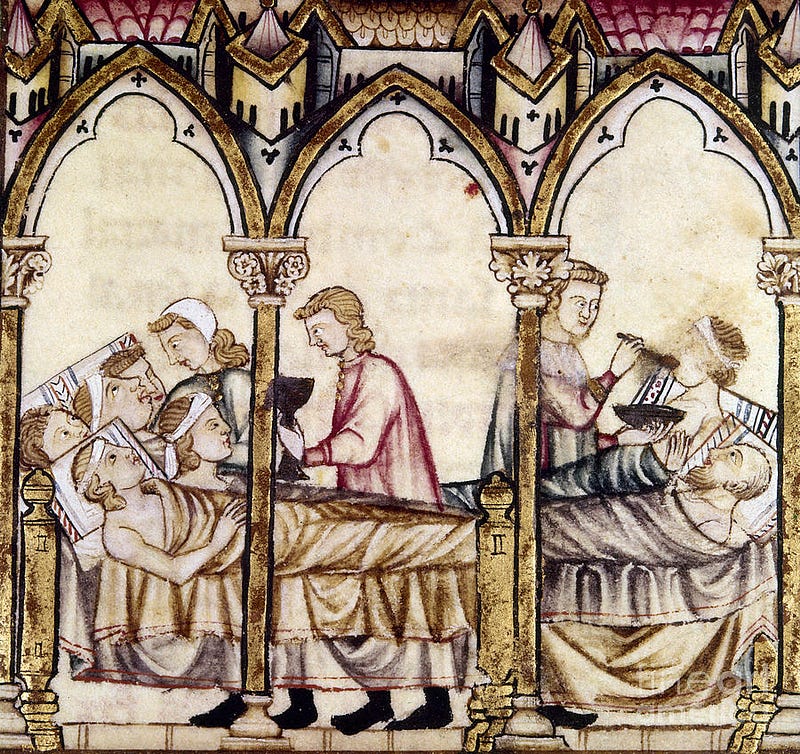
"Little children, both girls and boys, together in dangerous beds, upon which other patients died of contagious diseases, because there is no order and no private bed for the children, [who must] sleep six, eight, nine, ten, and twelve to a bed, at both head and foot" - notes of a nurse (circa 1500), lamenting the lack of modern medical procedures.
Though, just because individual beds in hospitals were coming into vogue, it did not mean that sex was any more private. Witnessing the consummation of marriage was common for both spiritual and logistical reasons:
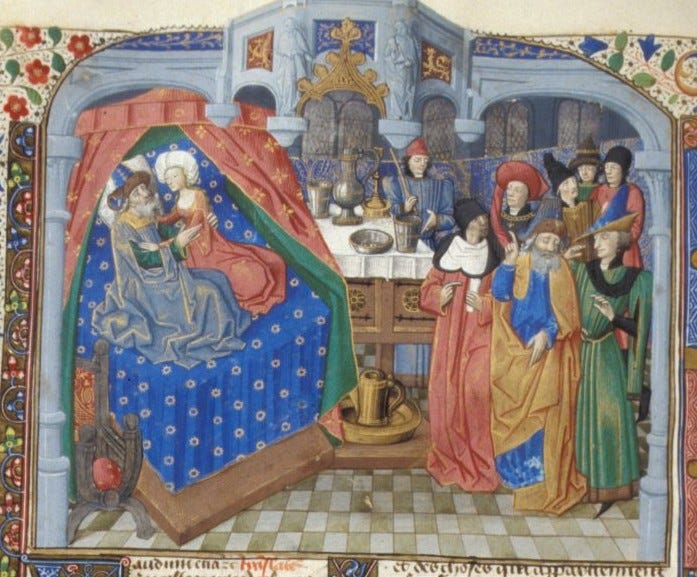
“Newlyweds climbed into bed before the eyes of family and friends and the next day exhibit the sheets as proof that the marriage had been consummated” - Georges Duby, Editor, "A History of Private Life"
...
Few people demanded privacy while they slept because even separate beds wouldn’t have afforded them the luxury. Most homes only had one room. Architectural historians trace the origins of internal walls to the more basic human desire to be warm.
Below, in the video, is a Hollywood re-enactment of couples sleeping around the burning embers of a central fire pit, from the film, Beowulf. It’s a solid illustration of the grand hall open architecture that was pervasive before the popularization of internal walls circa 1,400 A.D.
...
https://www.youtube.com/watch?v=UT4gELLPPzs > Couples sleep around the warmth of a fire (clip from Beowulf)
...
“Firstly, I propose that there be a room common to all in the middle, and at its centre there shall be a fire, so that many more people can get round it and everyone can see the others faces when engaging in their amusements and storytelling” - 15th century Italian Architect, Sebastian Serlio.
...
To disperse heat more efficiently without choking houseguests to death, fire-resistant chimney-like structures were built around central fire pits to reroute smoke outside. Below is an image of a “transitional” house during the 16th century period when back-to-back fireplaces broke up the traditional open hall architecture.
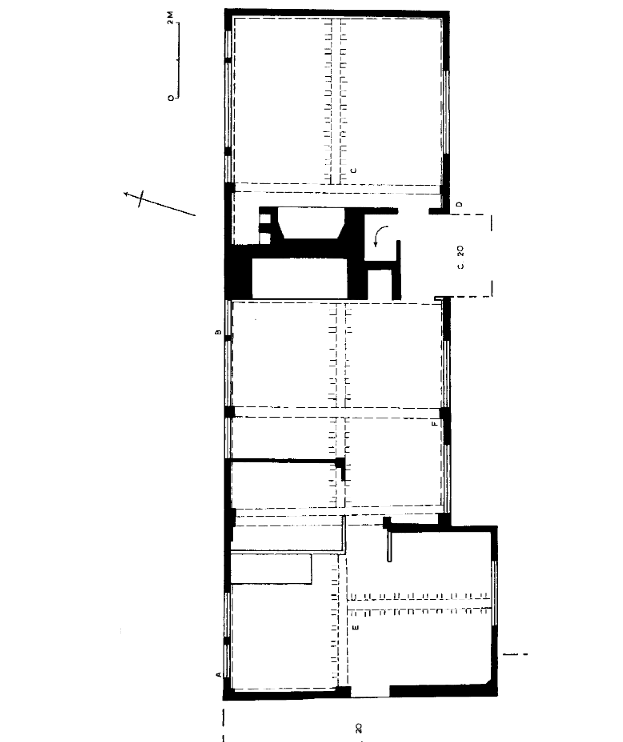
Source: Housing Culture: Traditional Architecture In An English Landscape (p. 78).
“A profound change in the very blueprint of the living space” - historian Sarti Raffaella, on the introduction of the chimney.
Pre-industrial revolution (1600–1840) — The home becomes private, which isn’t very private
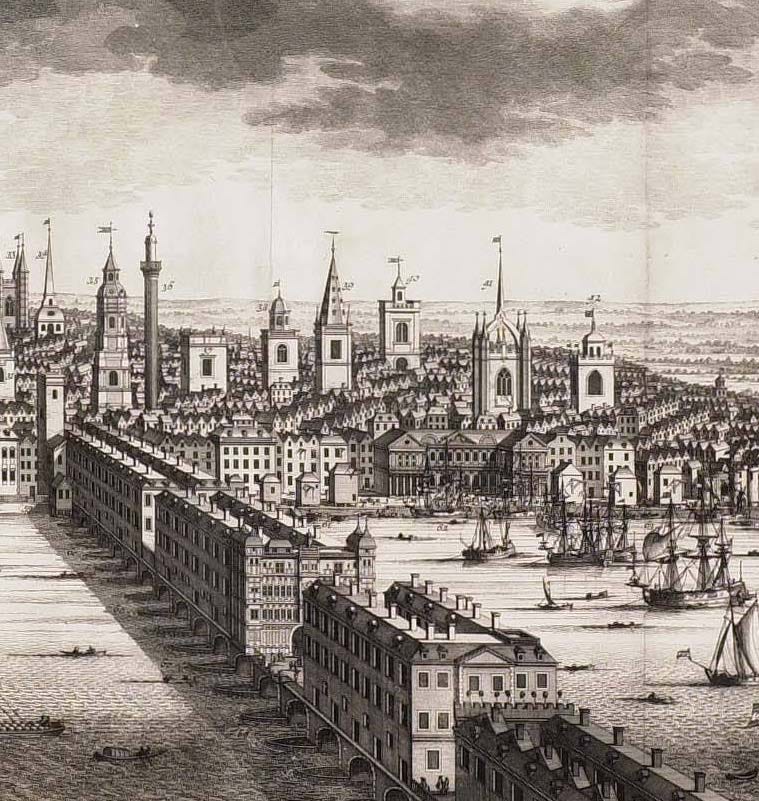
The first recorded daily diary was composed by Lady Margaret Hoby, who lived just passed the 16th century. On February 4th, 1600, she writes that she retired “to my Closit, wher I praid and Writt some thinge for mine owne priuat Conscience’s”.
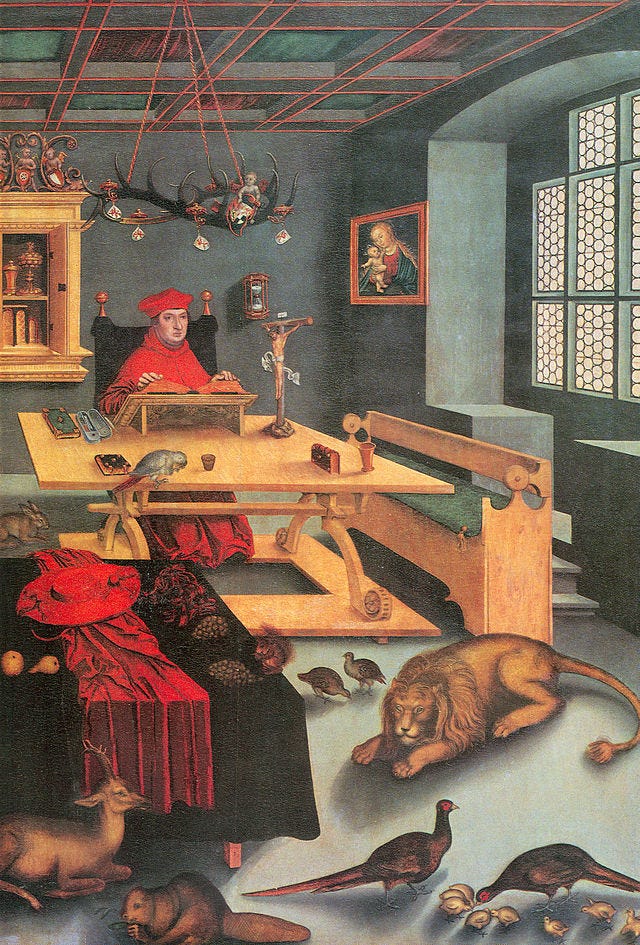
Cardinal Albrecht of Brandenburg in his study
By the renaissance, it was quite common for at least the wealthy to shelter themselves away in the home. Yet, even for those who could afford separate spaces, it was more logistically convenient to live in close quarters with servants and family.
“Having served in the capacity of manservant to his Excellency Marquis Francesco Albergati for the period of about eleven years, that I can say and give account that on three or four occasions I saw the said marquis getting out of bed with a perfect erection of the male organ” - 1751, Servant of Albergati Capacelli, testifying in court that his master did not suffer from incontinence, thus rebutting his wife’s legal suit for annulment.
...
Law
...
It was just prior to the industrial revolution that citizens, for the first time, demanded that the law begin to keep pace with the evolving need for secret activities.
In this early handwritten note on August 20th, 1770, revolutionist and future President of the United States, John Adams, voiced his support for the concept of privacy.
“I am under no moral or other Obligation…to publish to the World how much my Expences or my Incomes amount to yearly.”
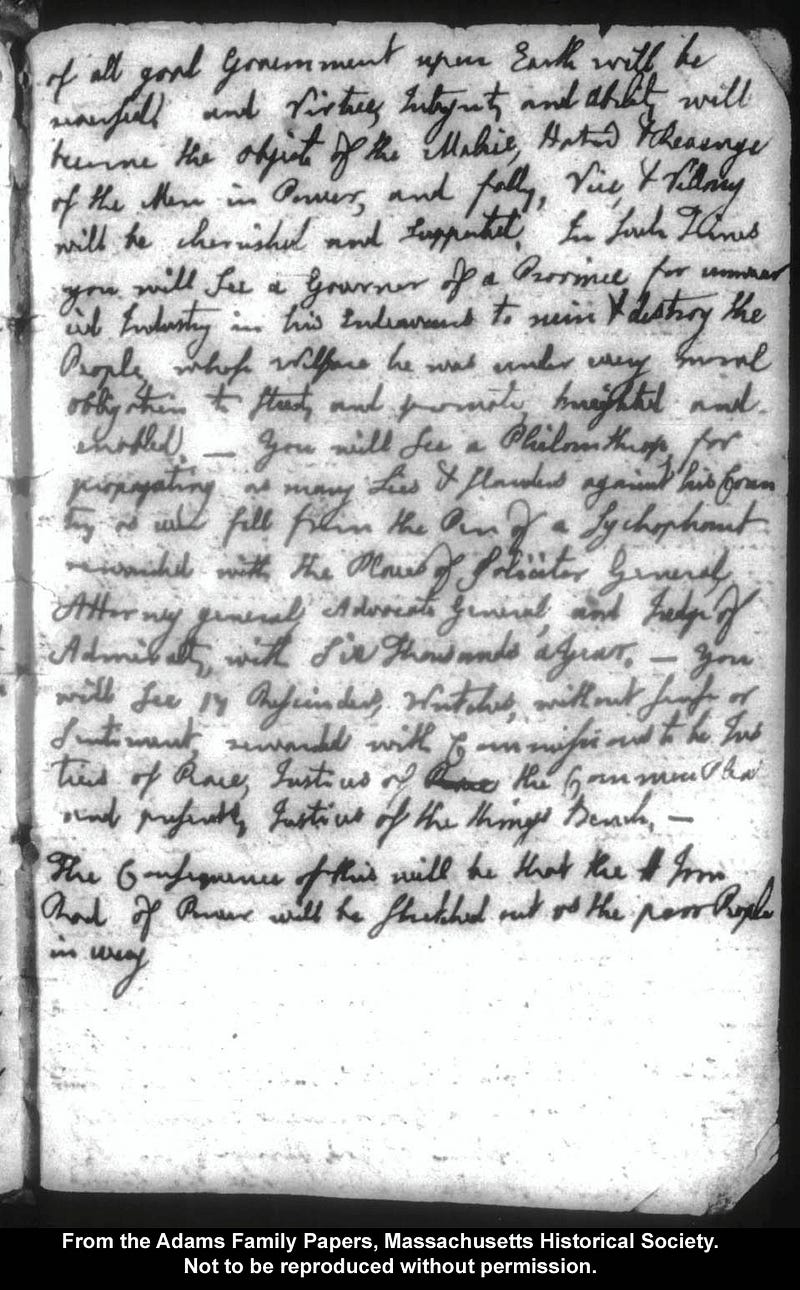
Despite some high-profile opposition, the first American Census was posted publicly, for logistics reasons, more than anything else. Transparency was the best way to ensure every citizen could inspect it for accuracy.
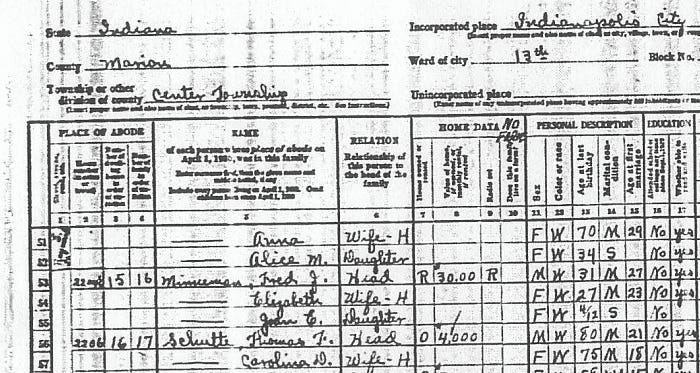
Privacy-conscious citizen did find more traction with what would become perhaps America’s first privacy law, the 1710 Post Office Act, which banned sorting through the mail by postal employees.
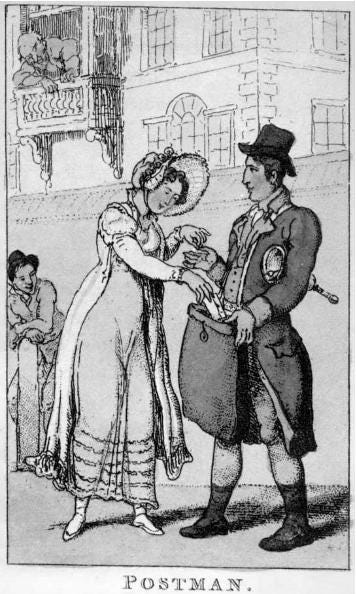
“I’ll say no more on this head, but When I have the Pleasure to See you again, shall Inform you of many Things too tedious for a Letter and which perhaps may fall into Ill hands, for I know there are many at Boston who dont Scruple to Open any Persons letters, but they are well known here.” - Dr. Oliver Noyes, lamenting the well-known fact that mail was often read.
This fact did not stop the mail’s popularity
Gilded Age: 1840–1950 — Privacy Becomes The Expectation
“Privacy is a distinctly modern product” - E.L. Godkin, 1890
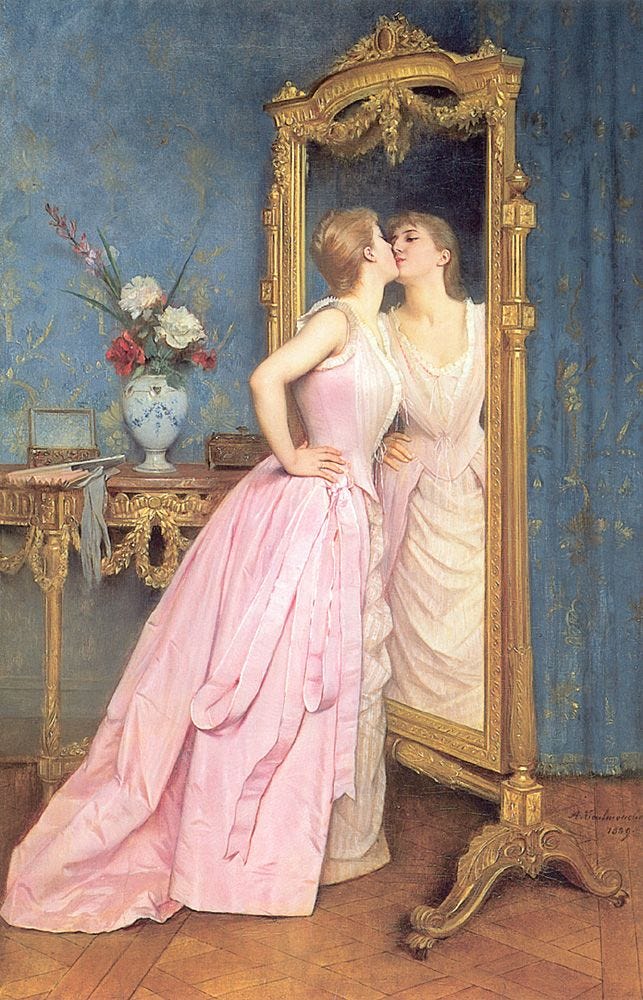
“In The Mirror, 1890” by Auguste Toulmouche
By the time the industrial revolution began serving up material wealth to the masses, officials began recognizing privacy as the default setting of human life.
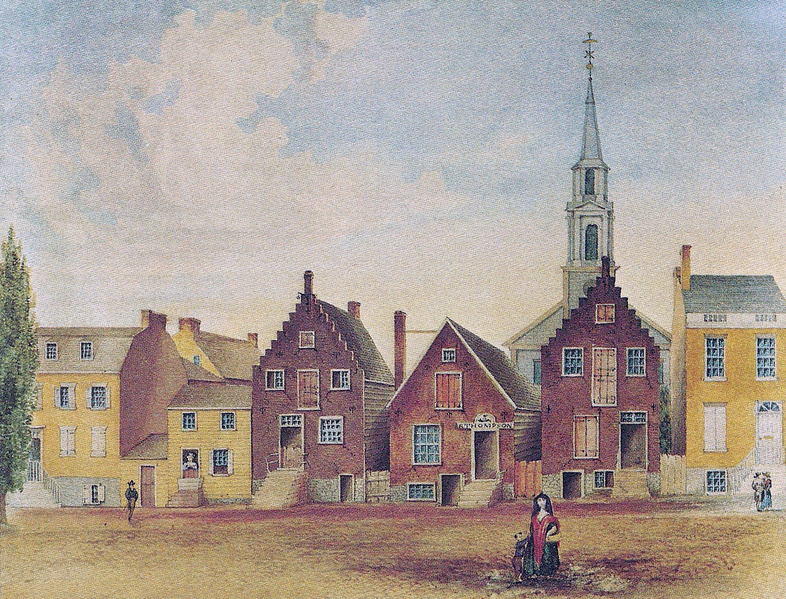
Source: Wikipedia user MattWade
“The material and moral well-being of workers depend, the health of the public, and the security of society depend on each family’s living in a separate, healthy, and convenient home, which it may purchase” - speaker at 1876 international hygiene congress in Brussels.
For the poor, however, life was still very much on display. The famous 20th-century existentialist philosopher Jean Paul-Satre observed the poor streets of Naples:
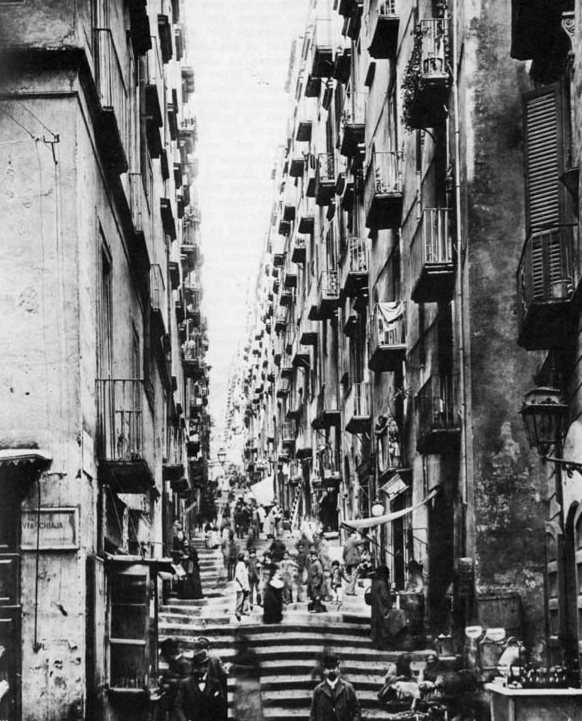
Crowded apartment dwellers spill on to the streets
“The ground floor of every building contains a host of tiny rooms that open directly onto the street and each of these tiny rooms contains a family…they drag tables and chairs out into the street or leave them on the threshold, half outside, half inside…outside is organically linked to inside…yesterday i saw a mother and a father dining outdoors, while their baby slept in a crib next to the parents’ bed and an older daughter did her homework at another table by the light of a kerosene lantern…if a woman falls ill and stays in bed all day, it’s open knowledge and everyone can see her.”
Insides of houses were no less cramped:
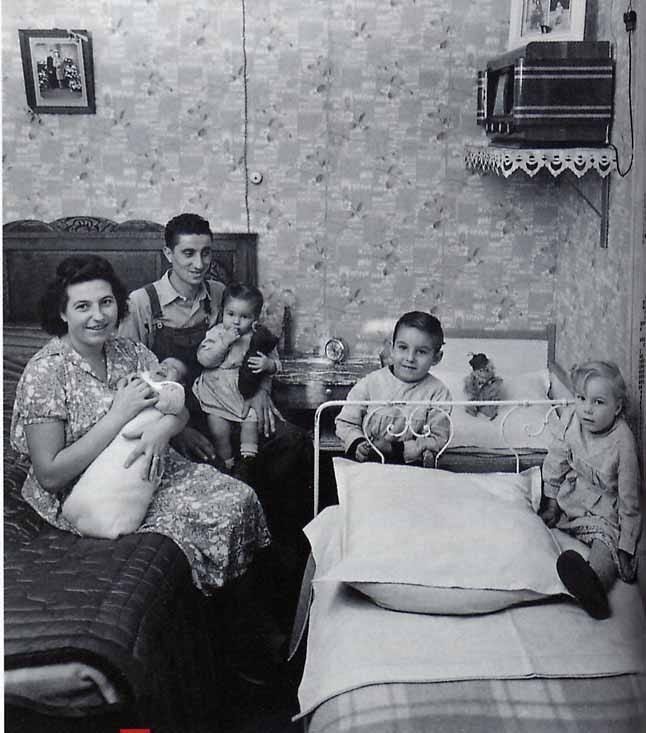
...
The “Right To Privacy “ is born
...
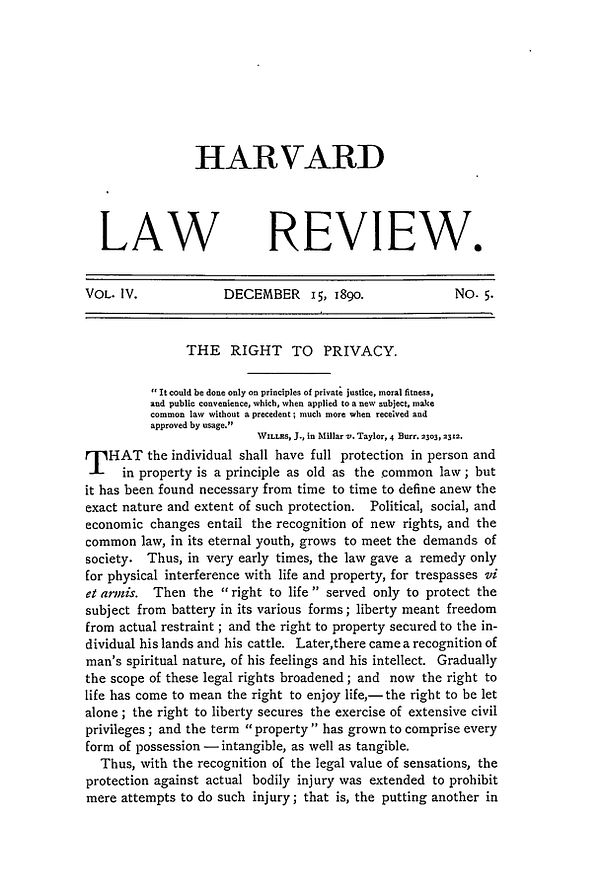
“The intensity and complexity of life, attendant upon advancing civilization, have rendered necessary some retreat from the world, and man, under the refining influence of culture, has become more sensitive to publicity, so that solitude and privacy have become more essential to the individual; but modern enterprise and invention have, through invasions upon his privacy, subjected him to mental pain and distress, far greater than could be inflicted by mere bodily injury.” - “The Right To Privacy” ~ December 15, 1890, Harvard Law Review.
Interestingly enough, the right to privacy was justified on the very grounds for which it is now so popular: technology’s encroachment on personal information.
However, the father of the right to privacy and future Supreme Court Justice, Louis Brandeis, was ahead of his time. His seminal article did not get much press—and the press it did get wasn’t all that glowing.
"The feelings of these thin-skinned Americans are doubtless at the bottom of an article in the December number of the Harvard Law Review, in which two members of the Boston bar have recorded the results of certain researches into the question whether Americans do not possess a common-law right of privacy which can be successfully defended in the courts." - Galveston Daily News on ‘The Right To Privacy’
Privacy had not helped America up to this point in history. Brazen invasions into the public’s personal communications had been instrumental in winning the Civil War.
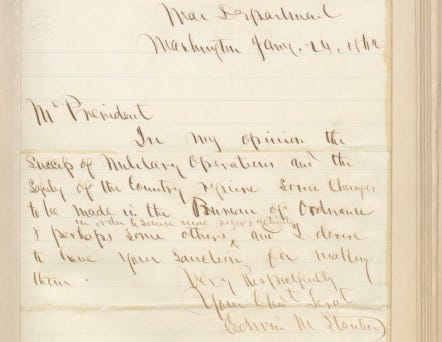
A request for wiretapping.
This is a letter from the Secretary of War, Edwin Stanton, requesting broad authority over telegraph lines; Lincoln simply scribbled on the back “The Secretary of War has my authority to exercise his discretion in the matter within mentioned. A. LINCOLN.”
It wasn’t until the industry provoked the ire of a different president that information privacy was codified into law. President Grover Cleveland had a wife who was easy on the eyes. And, easy access to her face made it ideal for commercial purposes.
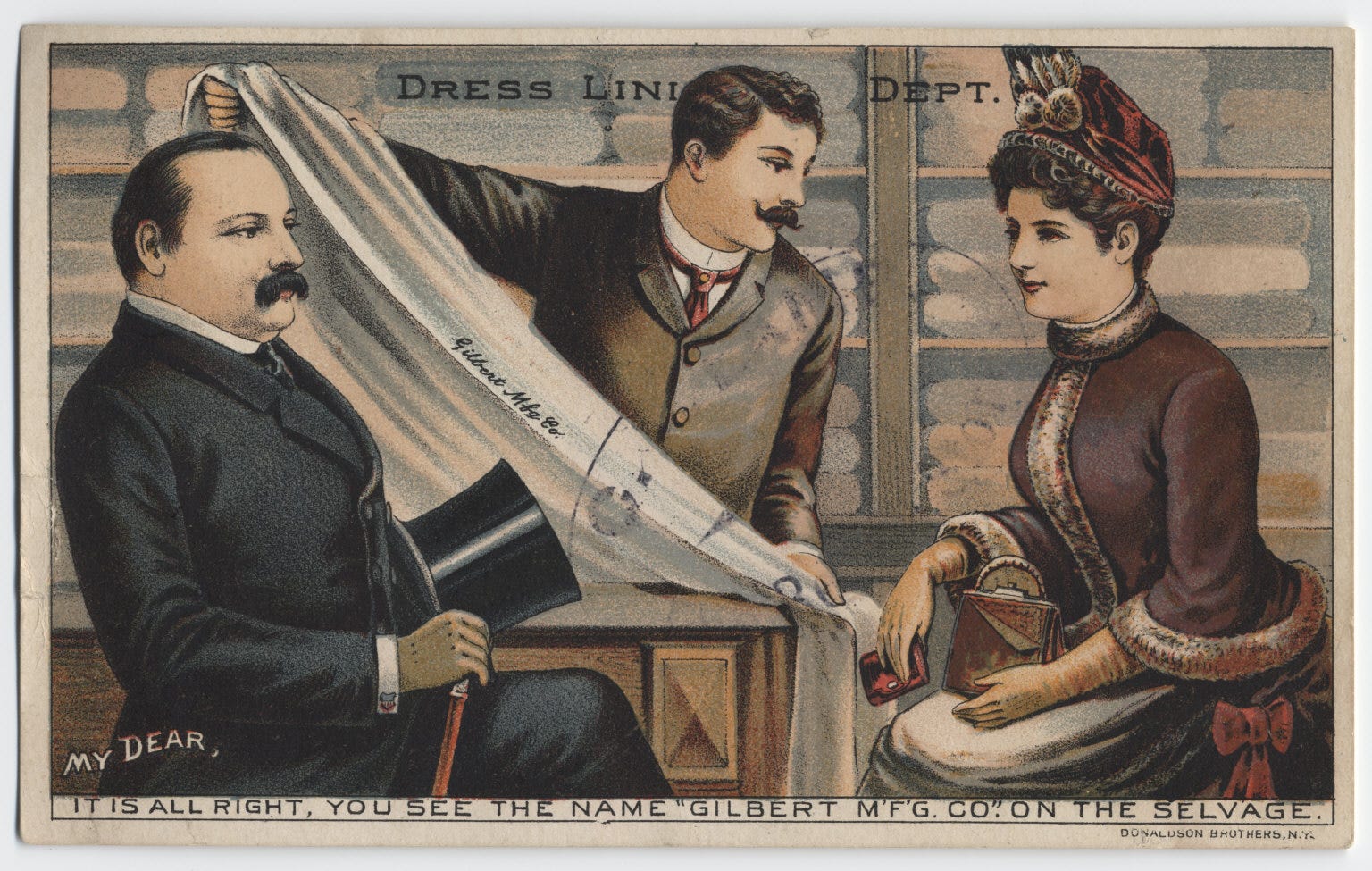
The rampant use of President Grover Cleveland’s wife, Frances, on product advertisements, eventually led to the one of the nation’s first privacy laws. The New York legislature made it a penalty to use someone’s unauthorized likeness for commercial purposes in 1903, for a fine of up to $1,000.
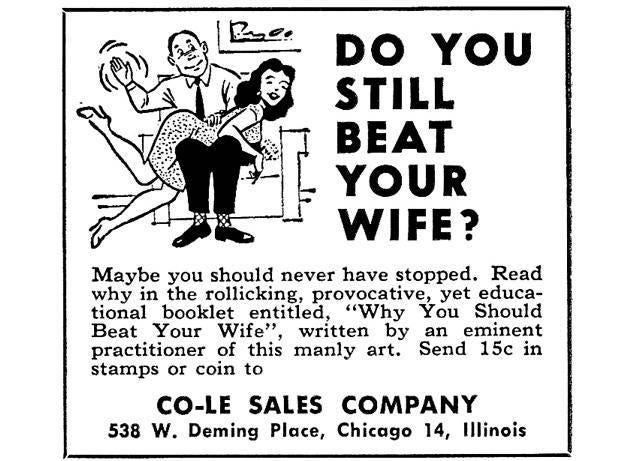
Indeed, for most of the 19th century, privacy was practically upheld as a way of maintaining a man’s ownership over his wife’s public and private life — including physical abuse.
“We will not inflict upon society the greater evil of raising the curtain upon domestic privacy, to punish the lesser evil of trifling violence”- 1868, State V. Rhodes, wherein the court decided the social costs of invading privacy was not greater than that of wife beating.
...
The Technology of Individualism
The first 150 years of American life saw an explosion of information technology, from the postcard to the telephone. As each new communication method gave a chance to peek at the private lives of strangers and neighbors, Americans often (reluctantly) chose whichever technology was either cheaper or more convenient.
Privacy was a secondary concern.
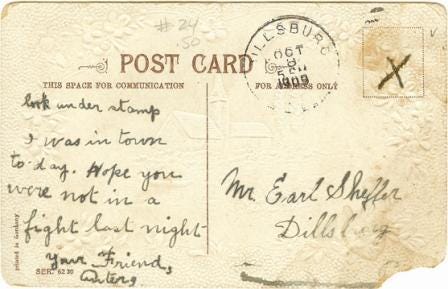
"There is a lady who conducts her entire correspondence through this channel. She reveals secrets supposed to be the most pro- found, relates misdemeanors and indiscretions with a reckless disregard of the consequences. Her confidence is unbounded in the integrity of postmen and bell-boys, while the latter may be seen any morning, sitting on the doorsteps of apartment houses, making merry over the post-card correspondence.” - Editor, the Atlantic Monthly, on Americas of love of postcards, 1905.
Even though postcards were far less private, they were convenient. More than 200,000 postcards were ordered in the first two hours they were offered in New York City, on May 15, 1873.
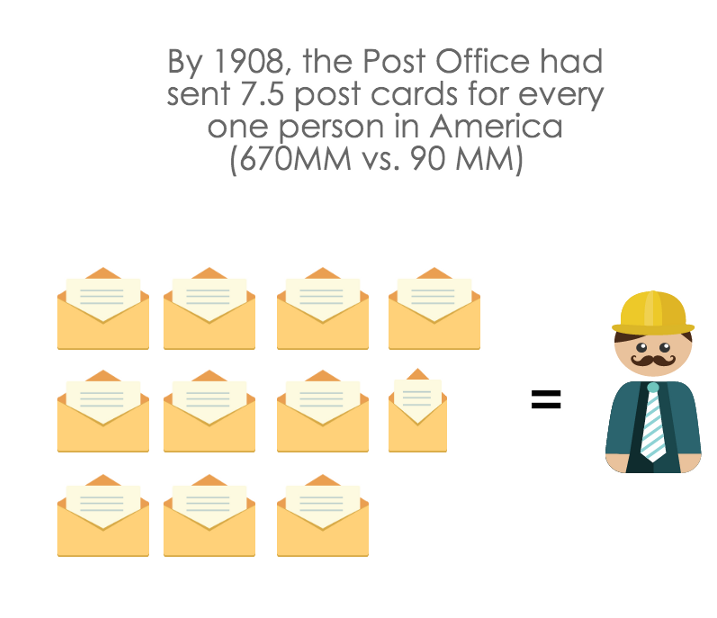
Source: American Privacy: The 400-year History of Our Most Contested Right
...
The next big advance in information technology, the telephone, was a wild success in the early 20th century. However, individual telephone lines were prohibitively expensive; instead, neighbors shared one line, known as “party lines.” Commercial ads urged neighbors to use the shared technology with “courtesy”.
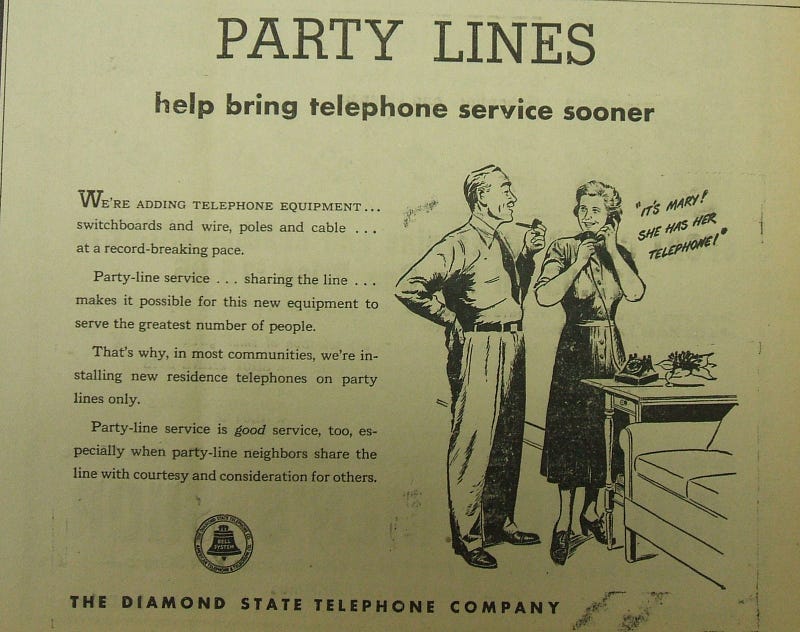
But, as this comic shows, it was common to eavesdrop.
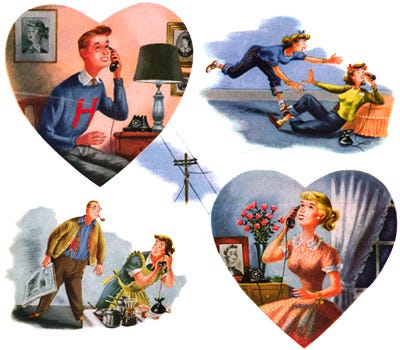
“Party lines could destroy relationships…if you were dating someone on the party line and got a call from another girl, well, the jig was up. Five minutes after you hung up, everybody in the neighborhood — including your girlfriend — knew about the call. In fact, there were times when the girlfriend butted in and chewed both the caller and the callee out. Watch what you say.” - Author, Donnie Johnson.
...
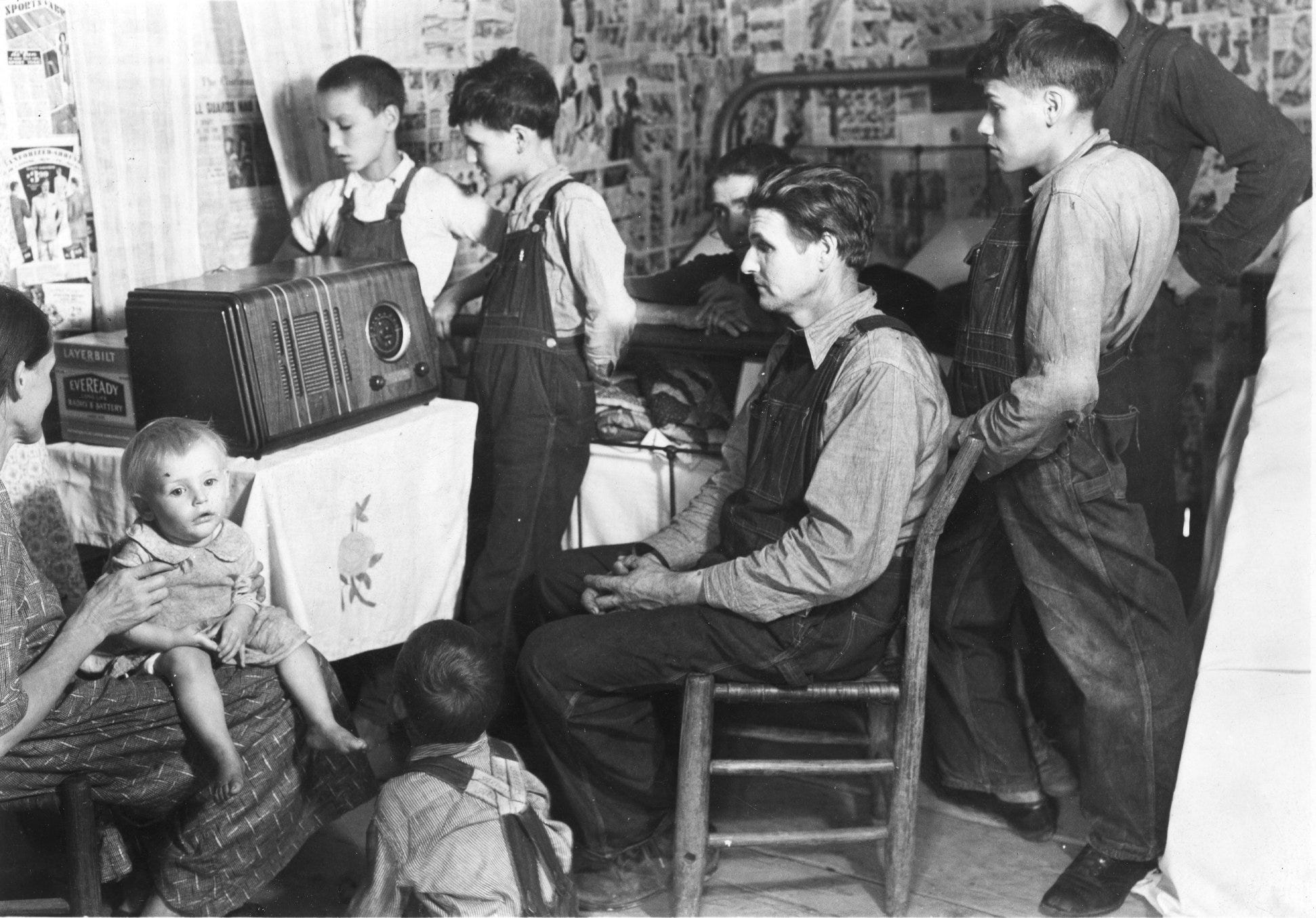
Where convenience and privacy found a happy co-existence, individualized gadgets flourished. Listening was not always an individual act. The sheer fact that audio was a form of broadcast made listening to conversations and music a social activity.
This all changed with the invention of the headphone.
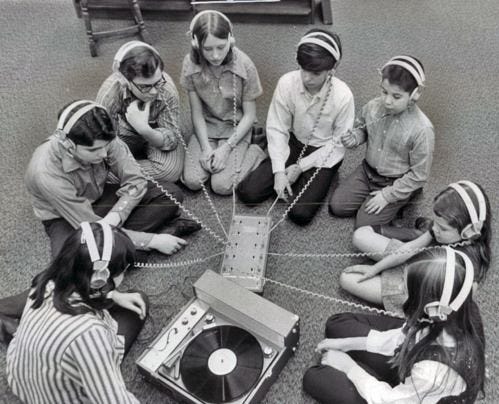
“The triumph of headphones is that they create, in a public space, an oasis of privacy”- The Atlantic’s libertarian columnist, Derek Thompson.
Late 20th Century — Fear of a World Without Privacy
By the 60's, individualized phones, rooms, and homes became the norm. 100 years earlier, when Lincoln tapped all telegraph lines, few raised any questions. In the new century, invasive surveillance would bring down Lincoln’s distant successor, even though his spying was far less pervasive.
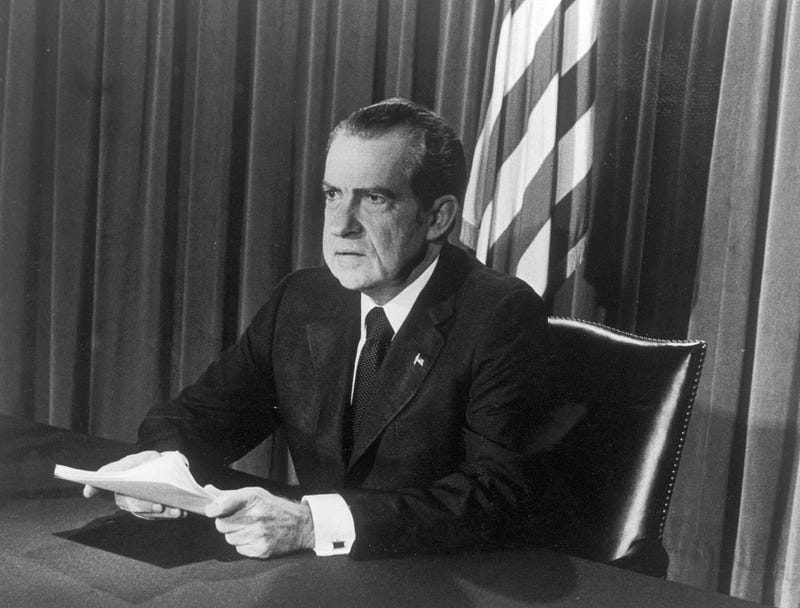
Upon entering office, the former Vice-President assured the American people that their privacy was safe.
“As Vice President, I addressed myself to the individual rights of Americans in the area of privacy…There will be no illegal tappings, eavesdropping, bugging, or break-ins in my administration. There will be hot pursuit of tough laws to prevent illegal invasions of privacy in both government and private activities.” - Gerald Ford.
Justice Brandeis had finally won
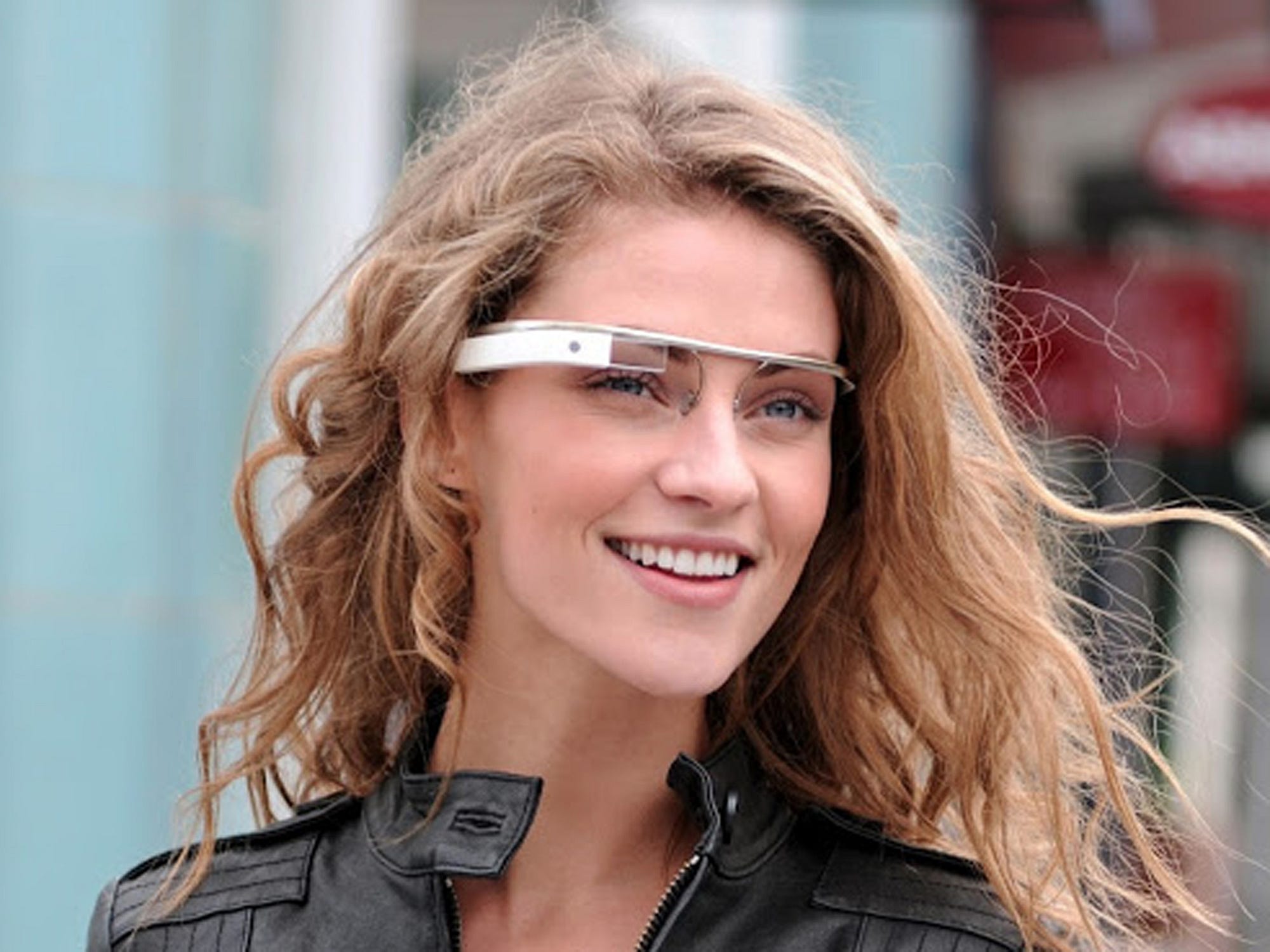
2,000 A.D. and beyond — a grand reversal
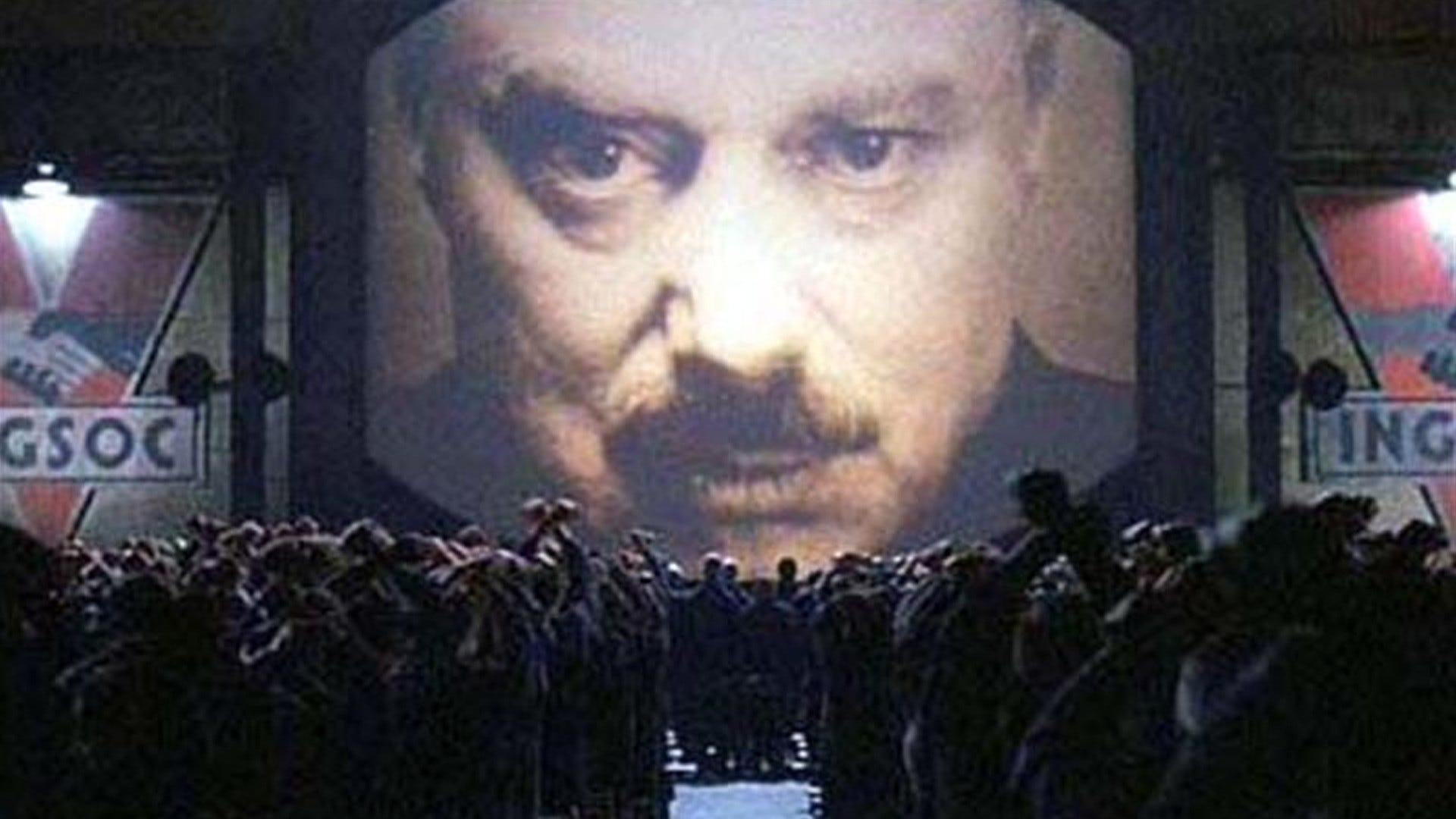
In the early 2,000s, young consumers were willing to purchase a location tracking feature that was once the stuff of 1984 nightmares.
“The magic age is people born after 1981…That’s the cut-off for us where we see a big change in privacy settings and user acceptance.” - Loopt Co-Founder Sam Altman, who pioneered paid geo-location features.
...
https://www.youtube.com/watch?v=ew94okDkCwU
...
The older generations’ fear of transparency became a subject of mockery.
“My grandma always reminds me to turn my GPS off a few blocks before I get home “so that the man giving me directions doesn’t know where I live.” - a letter to the editor of College Humor’s “Parents Just Don’t Understand” series.
...
Increased urban density and skyrocketing rents in the major cities has put pressure on communal living.
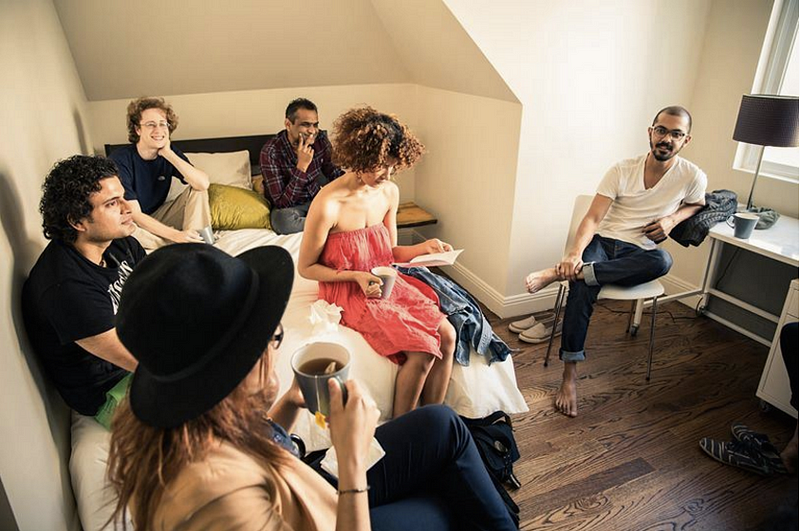
A co-living space in San Francisco / Source: Sarah Buhr, TechCrunch
“We’re seeing a shift in consciousness from hyper-individualistic to more cooperative spaces…We have a vision to raise our families together.” - Jordan Aleja Grader, San Francisco resident
At the more extreme ends, a new crop of so-called “life bloggers” publicize intimate details about their days:
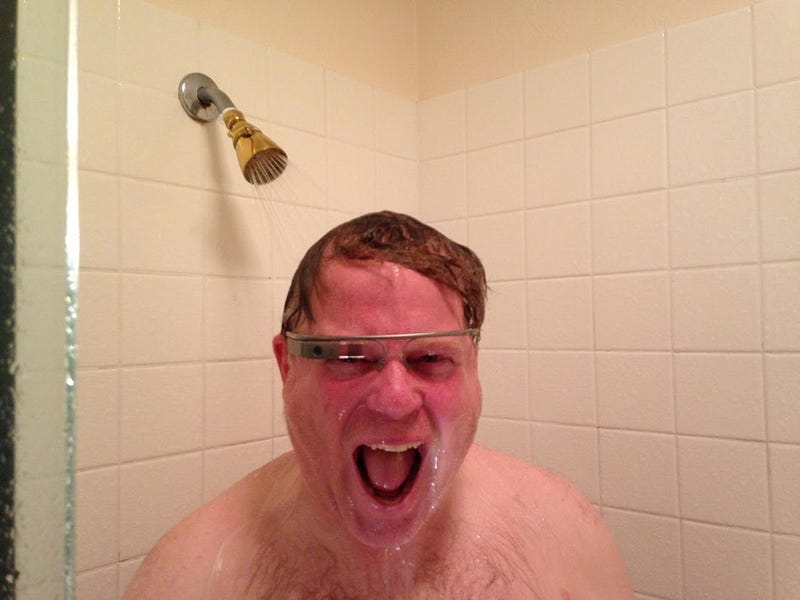
Blogger Robert Scoble takes A picture with Google Glass in the shower
At the edges of transparency and pornography, anonymous exhibitionism finds a home on the web, at the wildly popular content aggregator, Reddit, in the aptly titled community “Gone Wild”.
SECTION II:
How privacy will again fade away
For 3,000 years, most people have been perfectly willing to trade privacy for convenience, wealth or fame. It appears this is still true today.
AT&T recently rolled out a discounted broadband internet service, where customers could pay a mere $30 more a month to not have their browsing behavior tracked online for ad targeting.
“Since we began offering the service more than a year ago the vast majority have elected to opt-in to the ad-supported model.” - AT&T spokeswoman Gretchen Schultz (personal communication)
Performance artist Risa Puno managed to get almost half the attendees at an Brooklyn arts festival to trade their private data (image, fingerprints, or social security number) for a delicious cinnamon cookie. Some even proudly tweeted it out.
...
twitter.com/kskobac/status/515956363793821696/photo/1 > "Traded all my personal data for a social media cookie at #PleaseEnableCookies by @risapuno #DAF14" @kskobac
...
Tourists on Hollywood Blvd willing gave away their passwords to on live TV for a split-second of TV fame on Jimmy Kimmel Live. > https://www.youtube.com/watch?v=opRMrEfAIiI
Even for holdouts, the costs of privacy may be too great to bear. With the advance of cutting-edge health technologies, withholding sensitive data may mean a painful, early death.
For instance, researchers have already discovered that if patients of the deadly Vioxx drug had shared their health information publicly, statisticians could have detected the side effects earlier enough to save 25,000 lives.
As a result, Google’s Larry Page has embarked on a project to get more users to share their private health information with the academic research community. While Page told a crowd at the TED conference in 2013 that he believe such information can remain anonymous, statisticians are doubtful.
"We have been pretending that by removing enough information from databases that we can make people anonymous. We have been promising privacy, and this paper demonstrates that for a certain percent of a population, those promises are empty”- John Wilbanks of Sage Bionetworks, on a new academic paper that identified anonymous donors to a genetics database, based on public information
Speaking as a statistician, it is quite easy to identify people in anonymous datasets. There are only so many 5'4" jews living in San Francisco with chronic back pain. Every bit of information we reveal about ourselves will be one more disease that we can track, and another life saved.
If I want to know whether I will suffer a heart attack, I will have to release my data for public research. In the end, privacy will be an early death sentence.
Already, health insurers are beginning to offer discounts for people who wear health trackers and let others analyze their personal movements. Many, if not most, consumers in the next generation will choose cash and a longer life in exchange for publicizing their most intimate details.
What can we tell with basic health information, such as calories burned throughout the day? Pretty much everything.
With a rudimentary step and calorie counter, I was able to distinguish whether I was having sex or at the gym, since the minute-by-minute calorie burn profile of sex is quite distinct (the image below from my health tracker shows lots of energy expended at the beginning and end, with few steps taken. Few activities besides sex have this distinct shape)
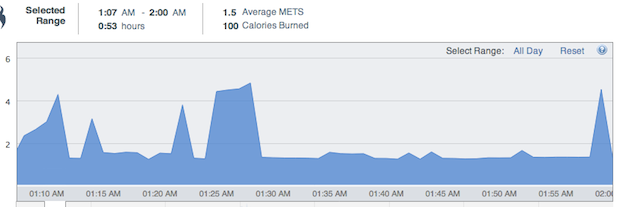
My late-night horizontal romp, as measured by calories burned per minute
...
More advanced health monitors used by insurers are coming, like embedded sensors in skin and clothes that detect stress and concentration. The markers of an early heart attack or dementia will be the same that correspond to an argument with a spouse or if an employee is dozing off at work.
No behavior will escape categorization—which will give us unprecedented superpowers to extend healthy life. Opting out of this tracking—if it is even possible—will mean an early death and extremely pricey health insurance for many.
If history is a guide, the costs and convenience of radical transparency will once again take us back to our roots as a species that could not even conceive of a world with privacy.
It’s hard to know whether complete and utter transparency will realize a techno-utopia of a more honest and innovative future. But, given that privacy has only existed for a sliver of human history, it’s disappearance is unlikely to doom mankind. Indeed, transparency is humanity’s natural state.