Sticky Postings
By fabric | ch
-----
As we continue to lack a decent search engine on this blog and as we don't use a "tag cloud" ... This post could help navigate through the updated content on | rblg (as of 09.2023), via all its tags!
FIND BELOW ALL THE TAGS THAT CAN BE USED TO NAVIGATE IN THE CONTENTS OF | RBLG BLOG:
(to be seen just below if you're navigating on the blog's html pages or here for rss readers)
--
Note that we had to hit the "pause" button on our reblogging activities a while ago (mainly because we ran out of time, but also because we received complaints from a major image stock company about some images that were displayed on | rblg, an activity that we felt was still "fair use" - we've never made any money or advertised on this site).
Nevertheless, we continue to publish from time to time information on the activities of fabric | ch, or content directly related to its work (documentation).
Wednesday, March 12. 2025
Note: fabric | ch is part of the exhibition Summoning the Ghosts of Modernity at the Museo de Arte Moderno de Medellin (MAMM), in Colombia.
The show constitutes a continuation of Beyond Matter that took place at the ZKM in 2022/23, and is curated by Lívia Nolasco-Rószás and Esteban Guttiérez Jiménez.
The exhibition will be open between the 13th of March and 15th of June 2025.
-----
By fabric | ch

Atomized (re-)Staging (2022), by fabric | ch. Exhibited during Summing the Ghosts of Modernity at the Museo de Arte Moderno de Medellin (MAMM). March 13 to June 15 2025.
More pictures of the exhibtion on Pixelfed.
Thursday, August 03. 2023
Note: Early last July, fabric | ch took part in the Moviment exhibition-festival at Centre Pompidou, in Paris.
Organized in 10 chapters (Red thread; The bedroom, the house, the city; In the spotlight; Aloud, Here and elsewhere, Other-worldly; Of gesture and time; To the max; Beyond matter; The grand finale!), this was the occasion – following the words of the curators – to "reactivate the essence of the Centre Pompidou ideals: to assemble all the different ways of encountering creativity, understanding it, participating in it; to be a monument in motion, a "moviment."
It was truly a success, with outstanding guests and a very interesting hybrid museum format, somewhere in-between exhibition and performance, talks and workshops.
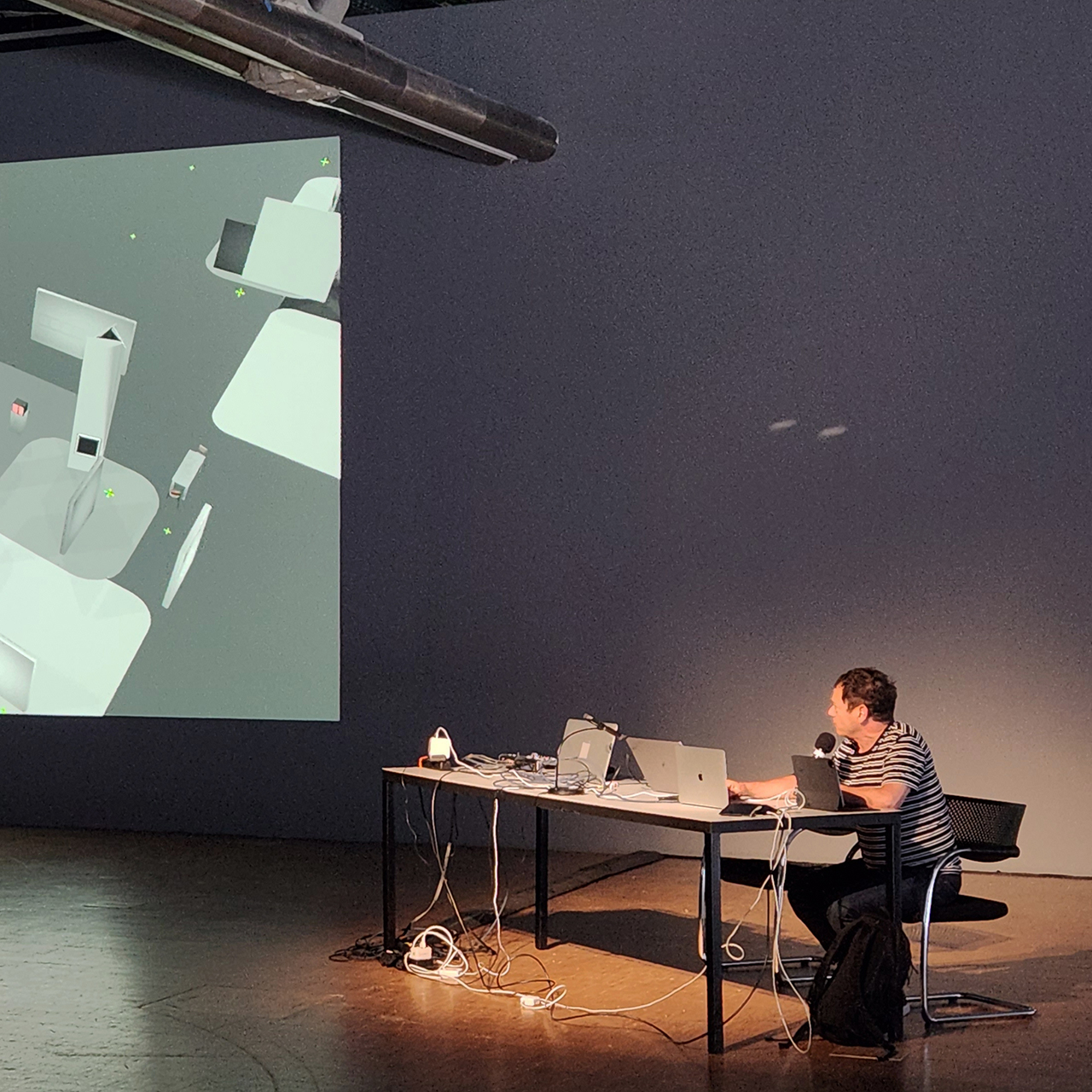
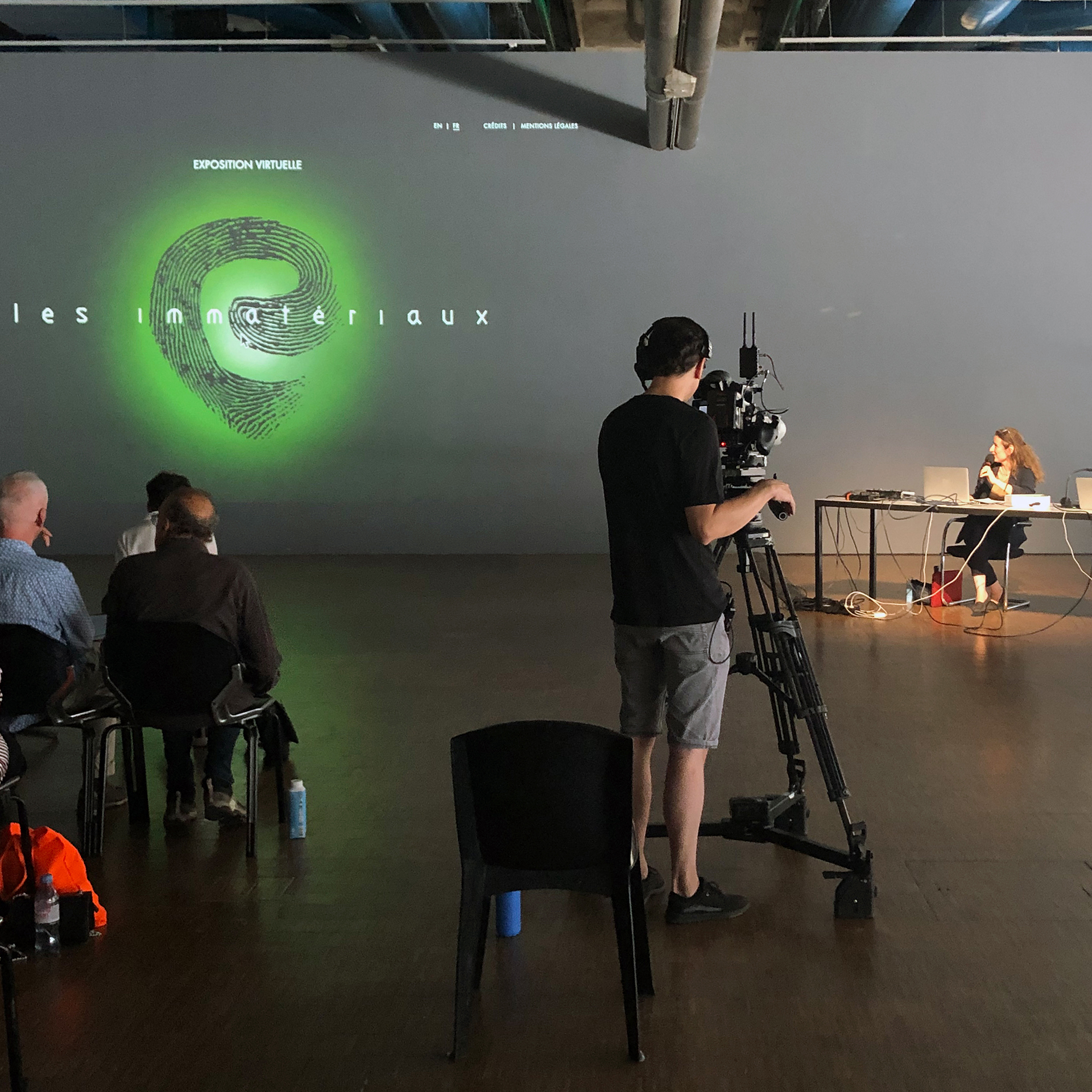
In this context and during "Chapitre 9: Par-delà la matière" curated by Marcella Lista & Philippe Bettinelli, fabric | ch presented recent works about digital exhibitions.
-----
By fabric | ch
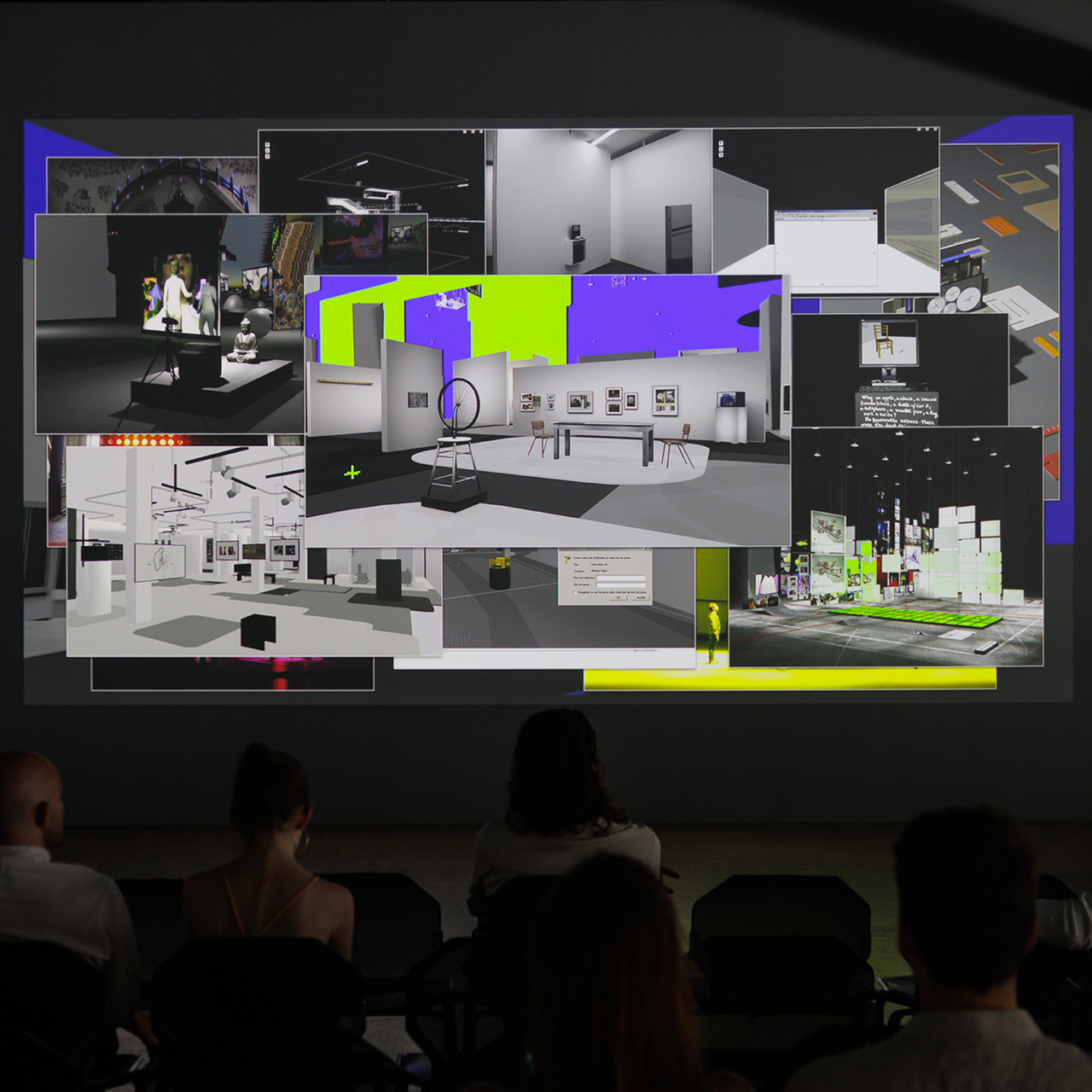
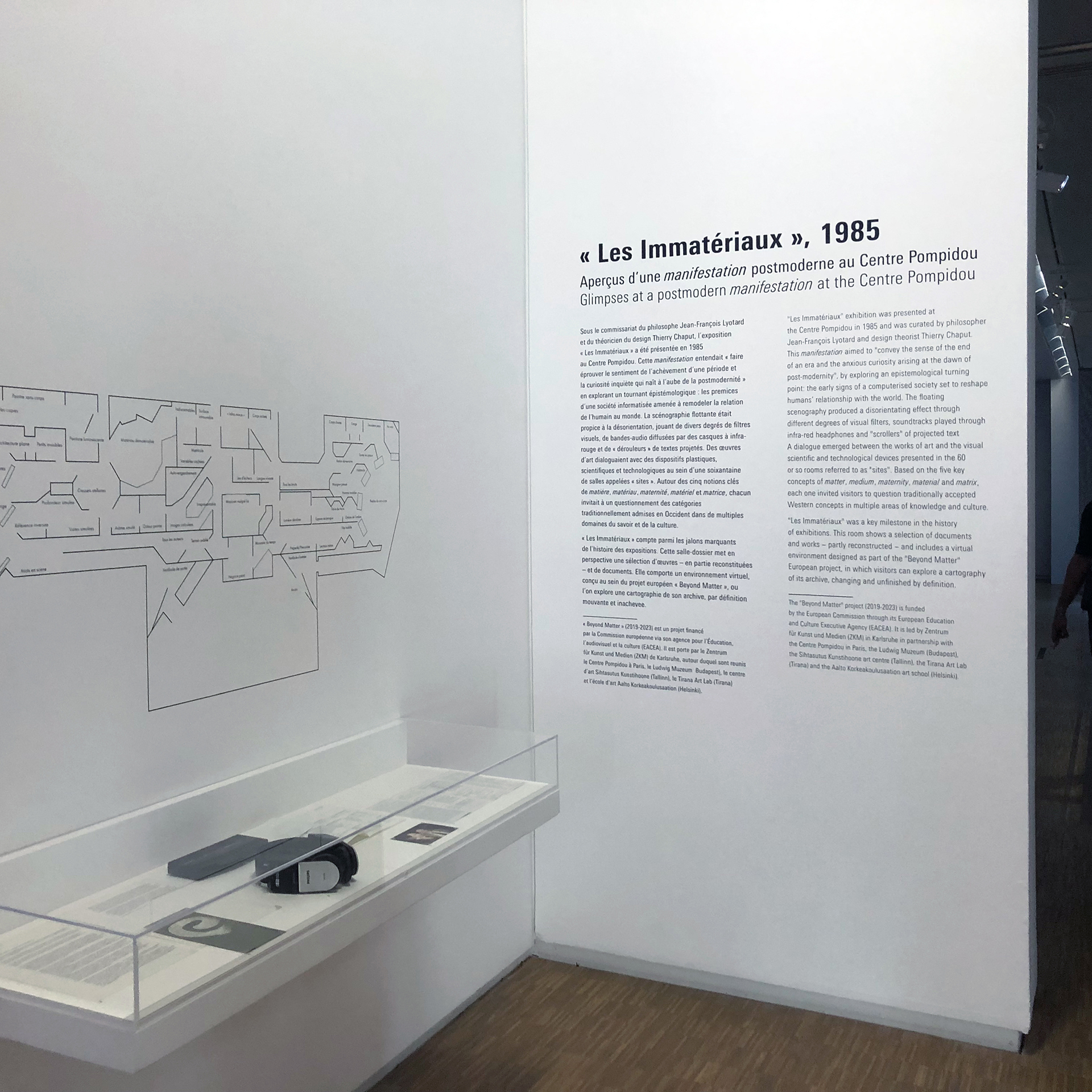
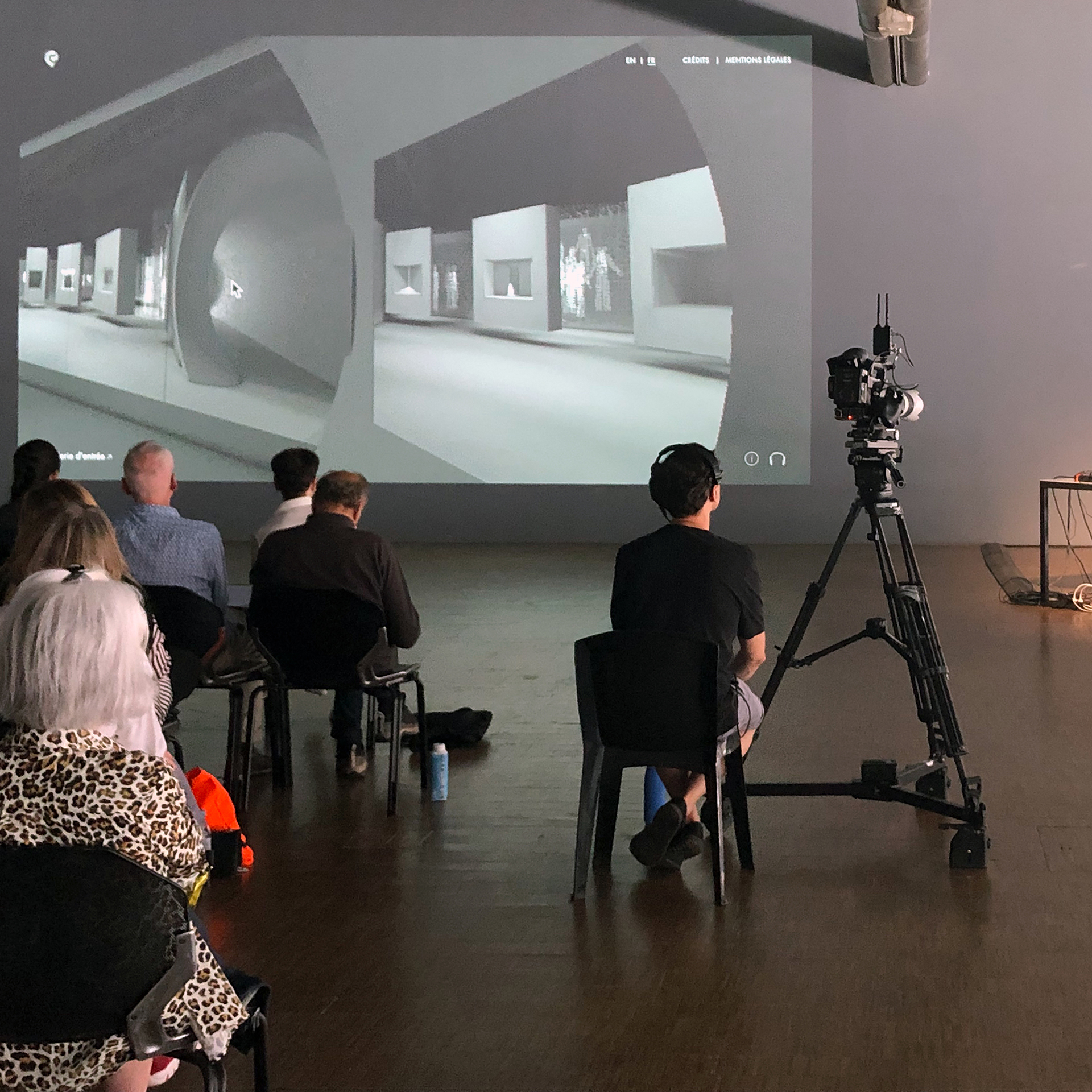
A few pictures from Moviment / Chapter 9:
(with fabric | ch, M. Lista & Les Immatériaux, M. Klonaris & K. Thomadaki, H.U. Obrist – "Résistances" project with LUMA Foundation and P. Parreno, J.-L. Boissier - Electra / Pictures by C. Babski & H. Veronese)
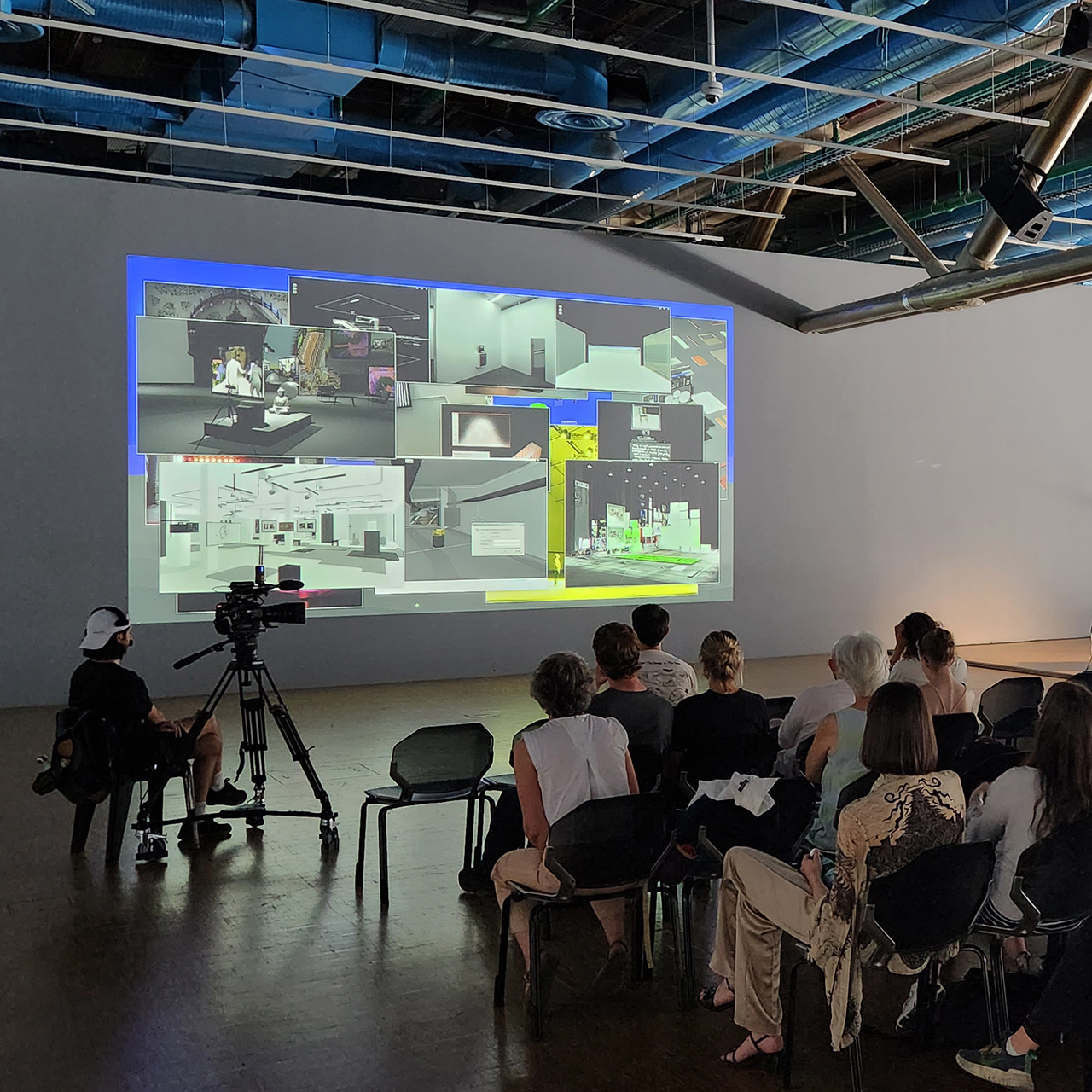 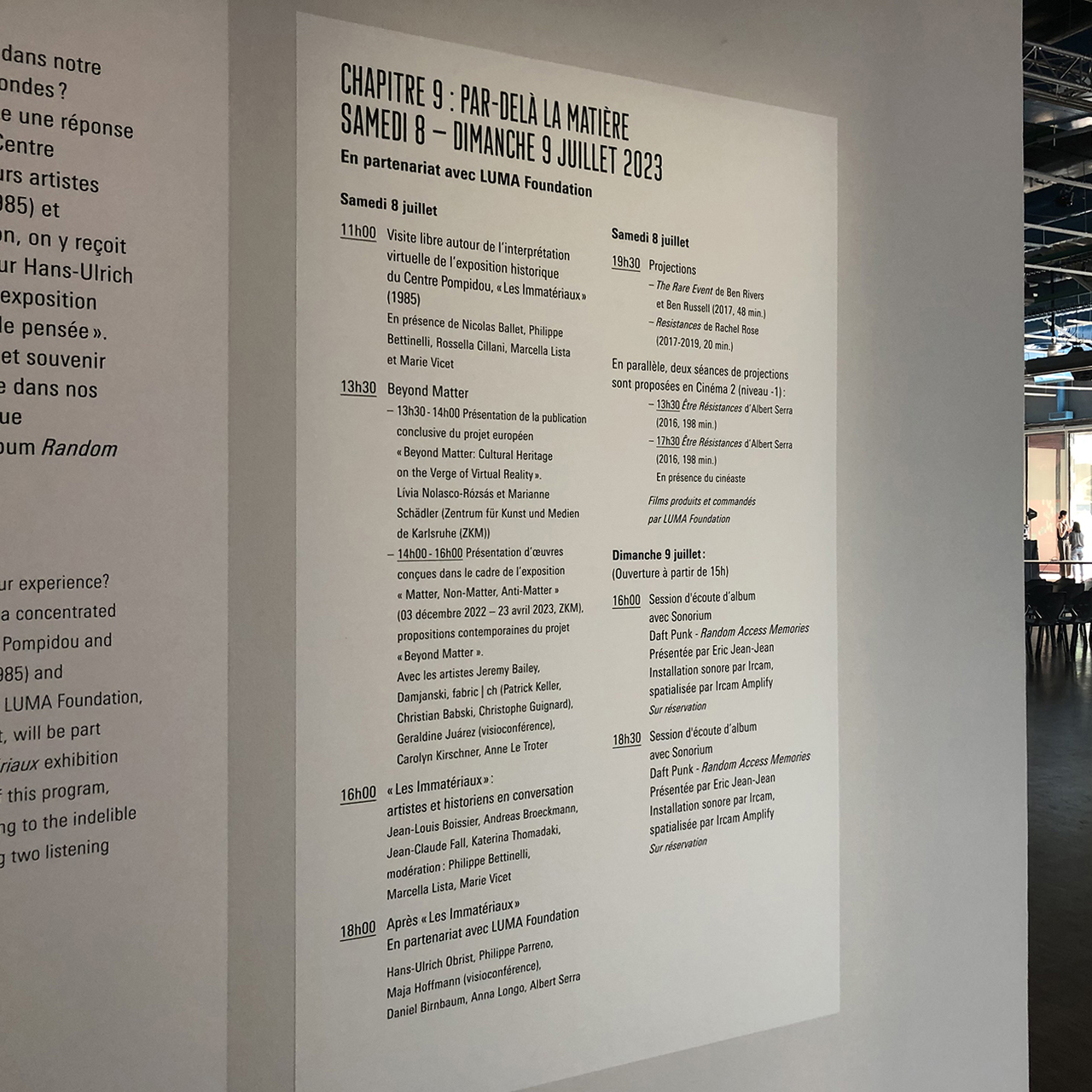 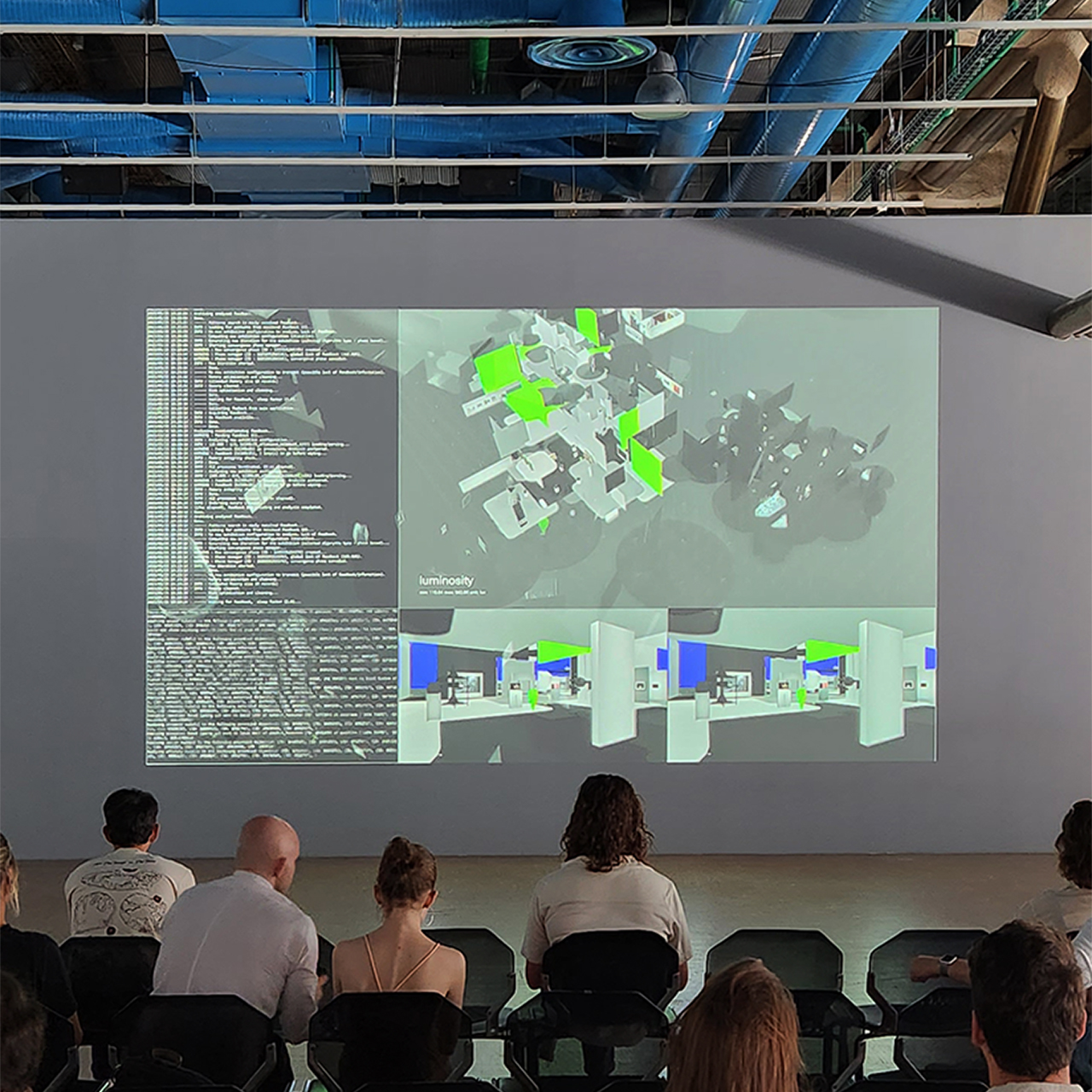
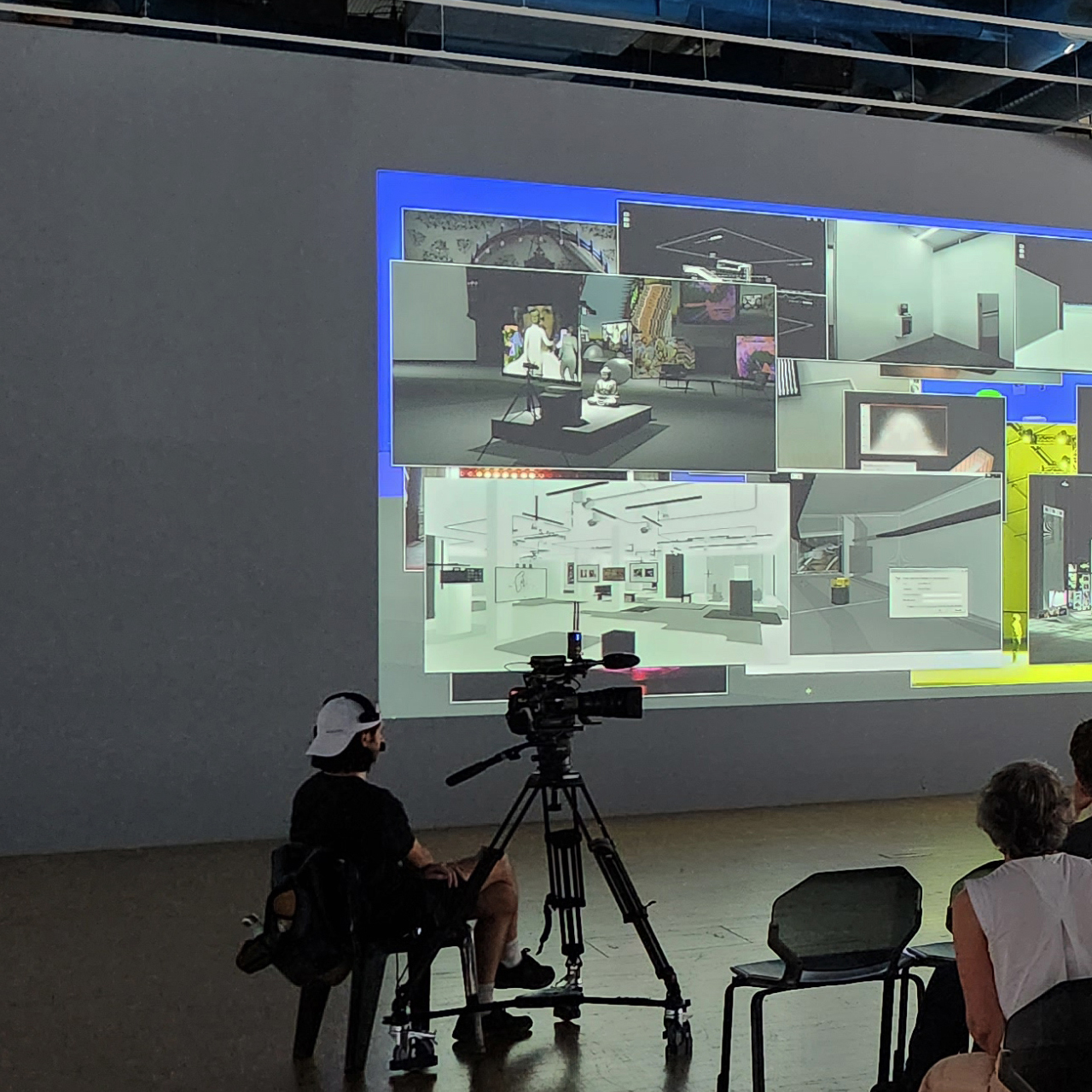 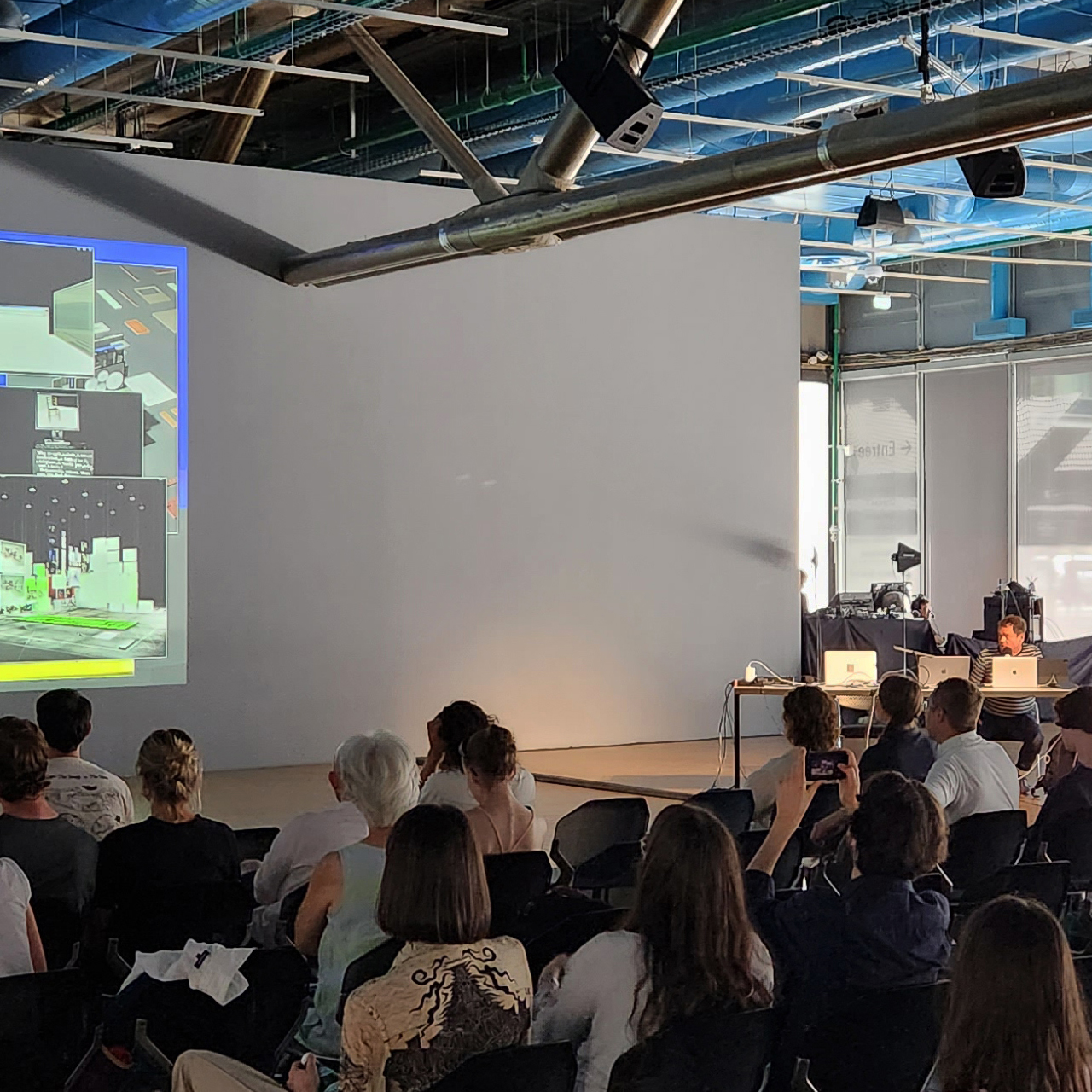 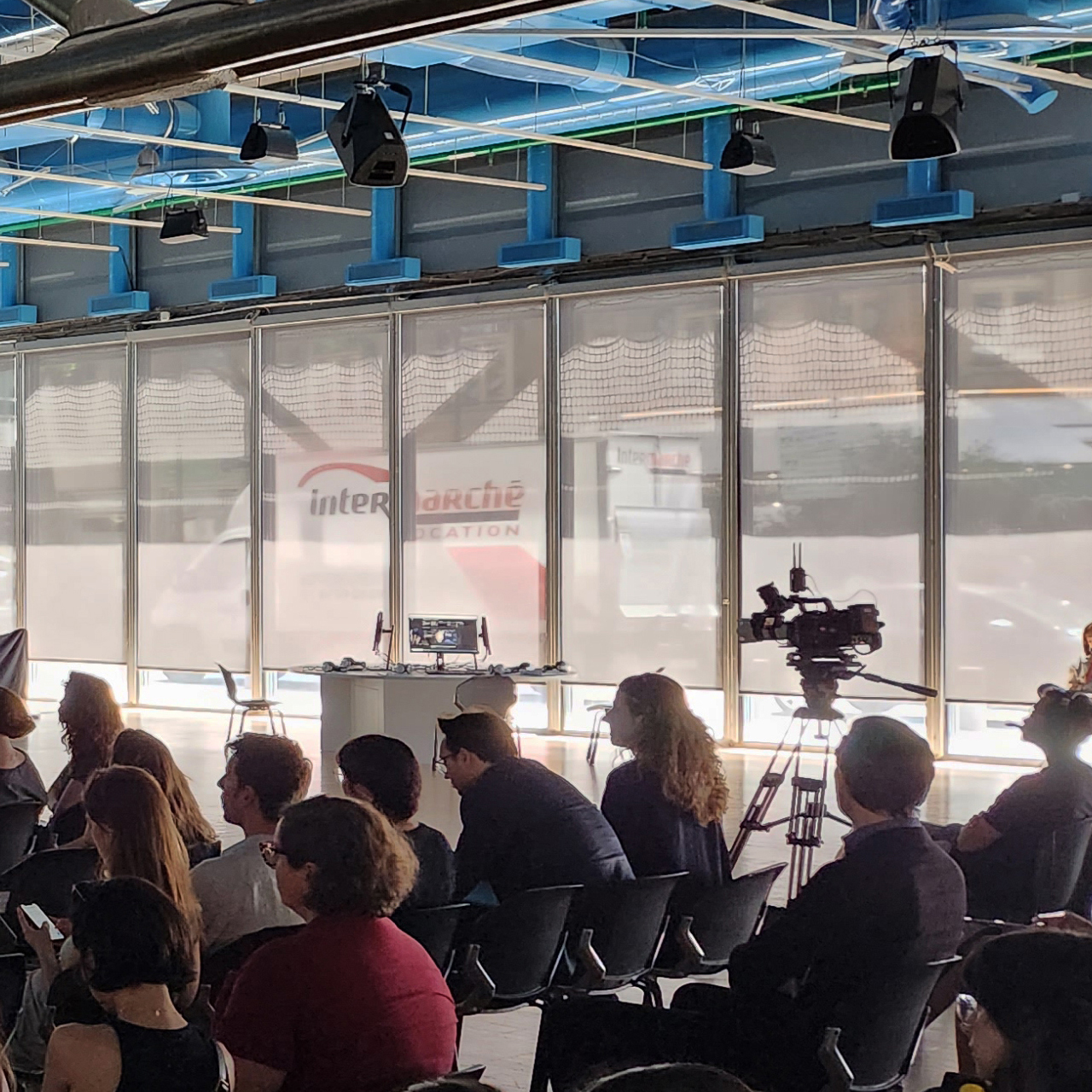
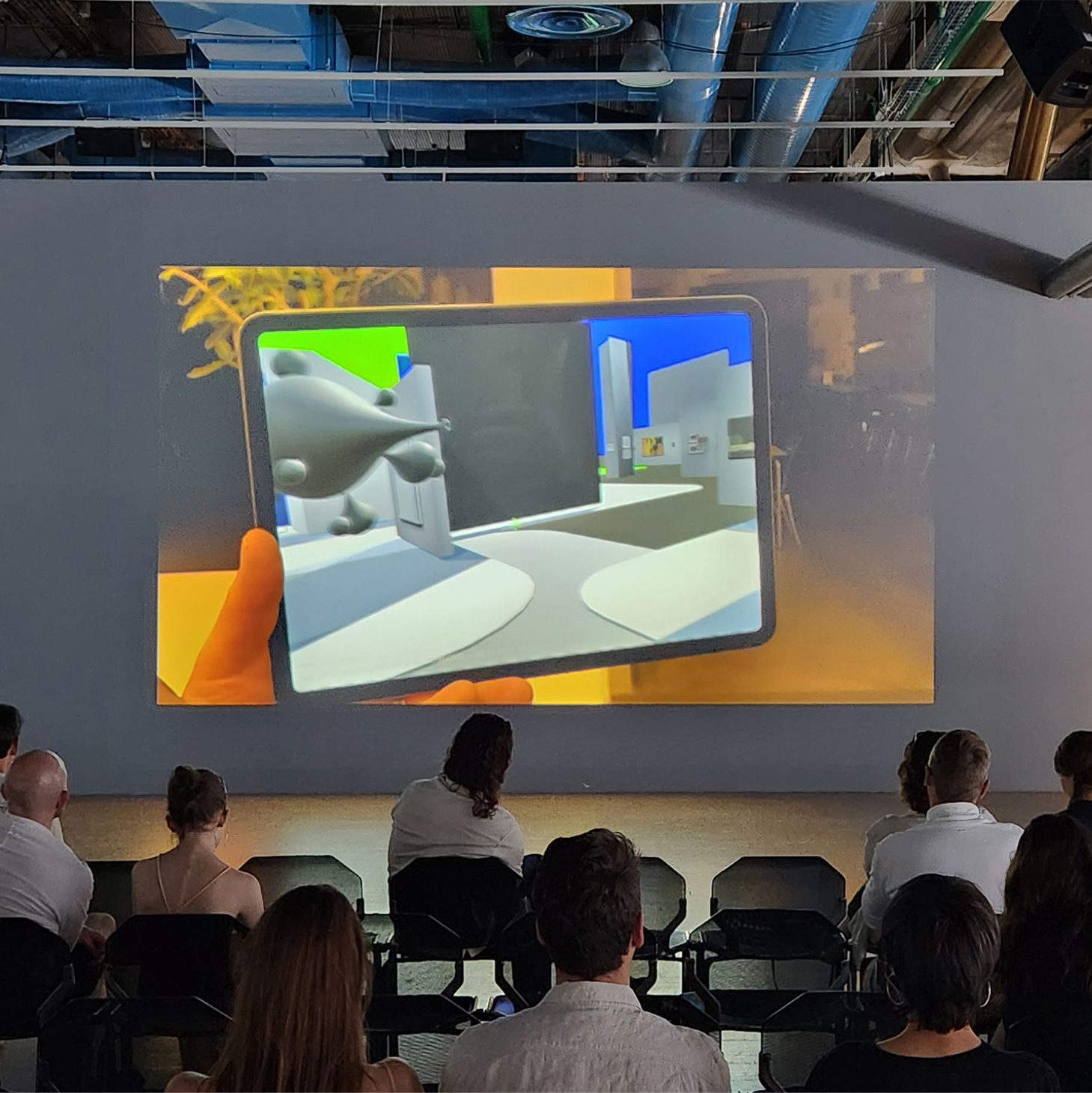  
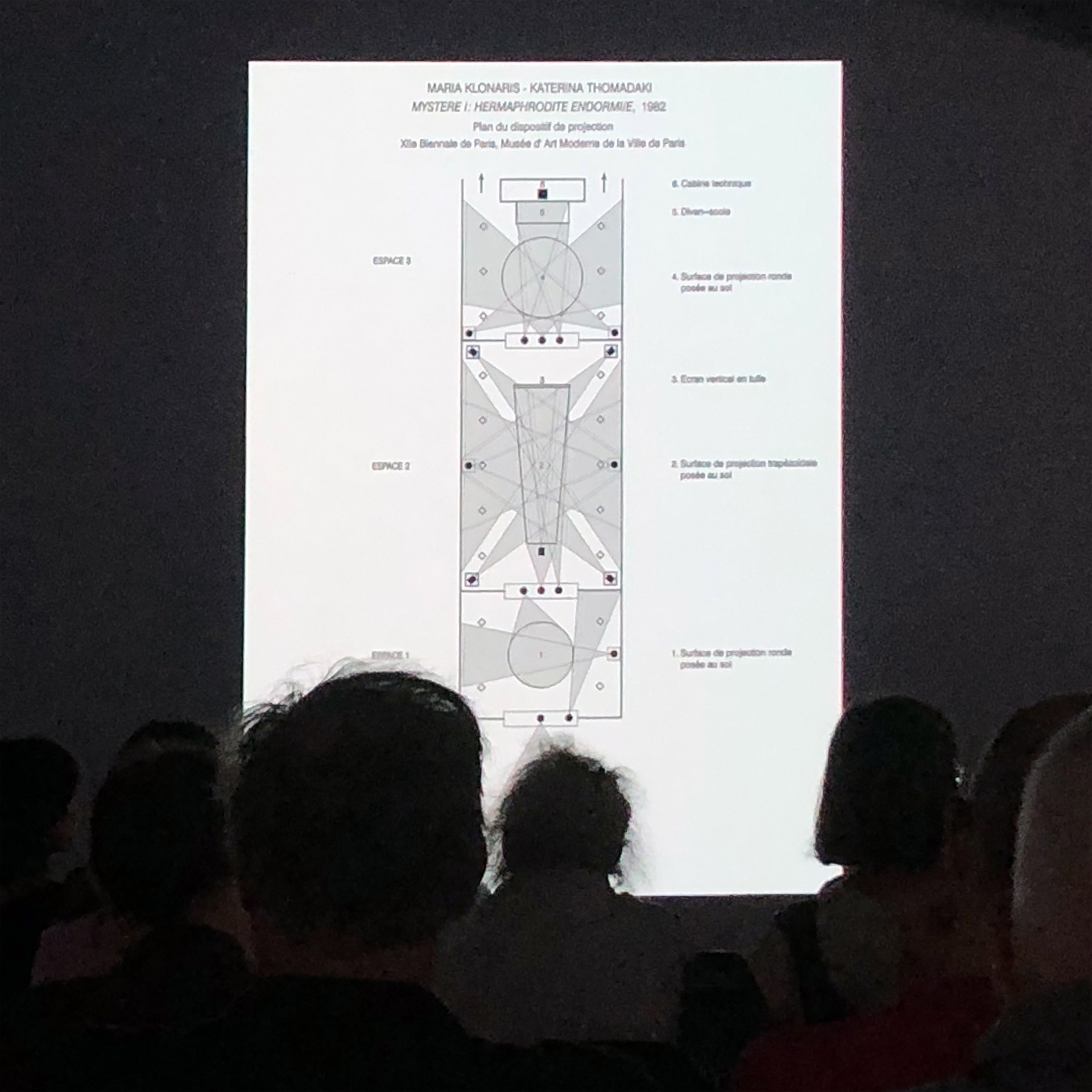 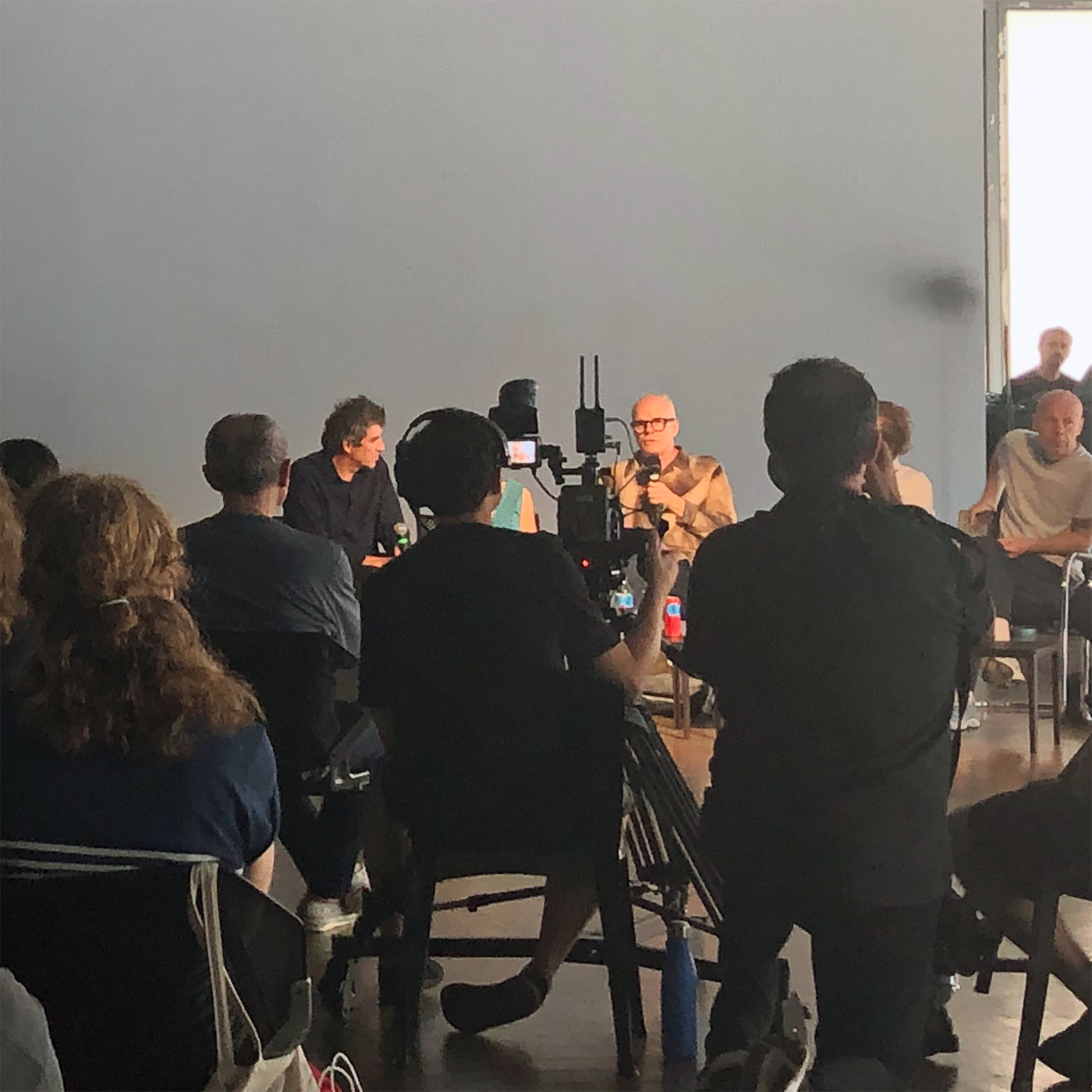 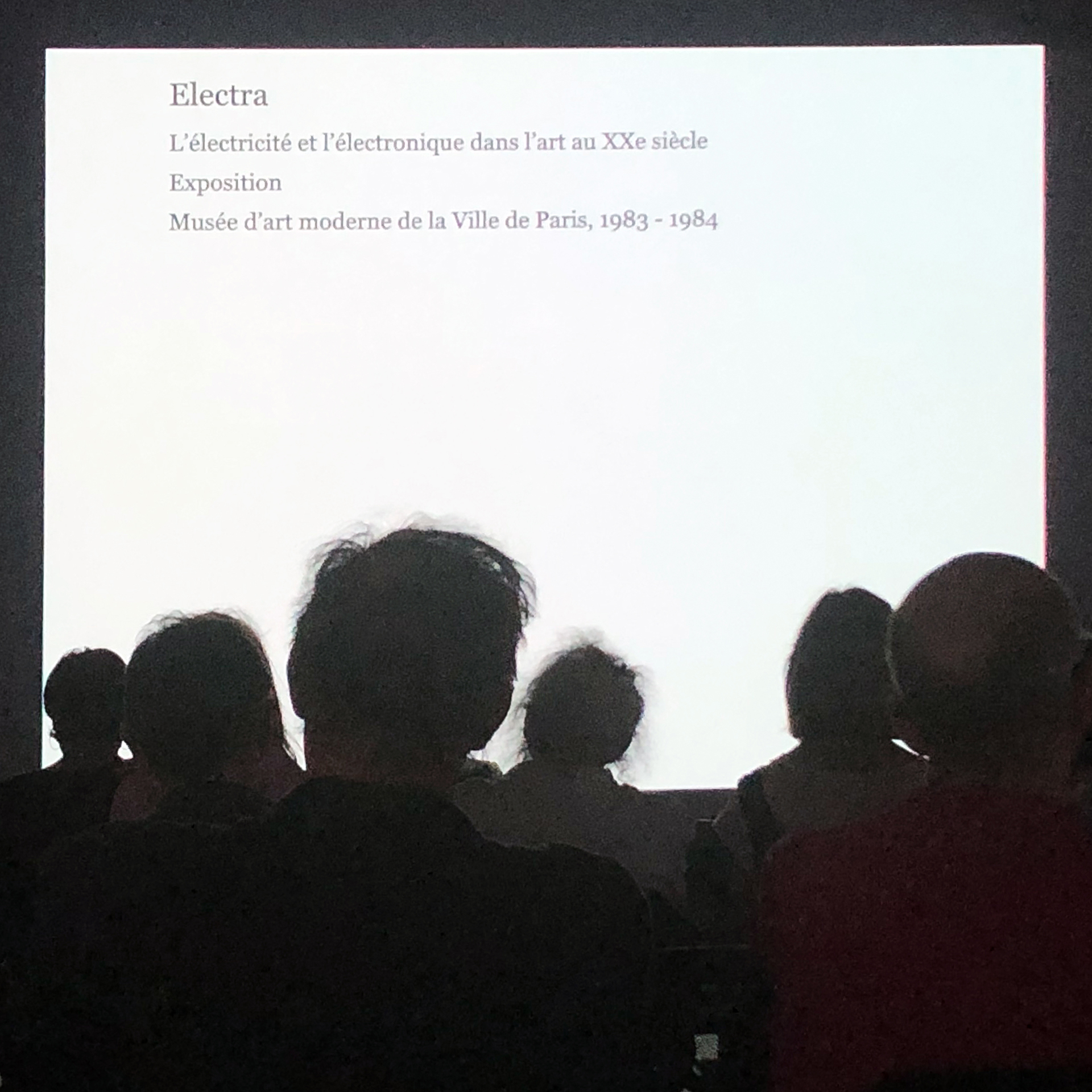
Via Centre Pompidou
-----
Beyond Matter / Par-delà la matière
Sat 8 – Sun 9 July 2023
Combining technology and memory, the penultimate chapter of Moviment looks back at two major cultural events in the world of art and music, and the ways in which they can be perpetuated, revived or experienced beyond their materiality and topicality.
In partnership with LUMA Foundation
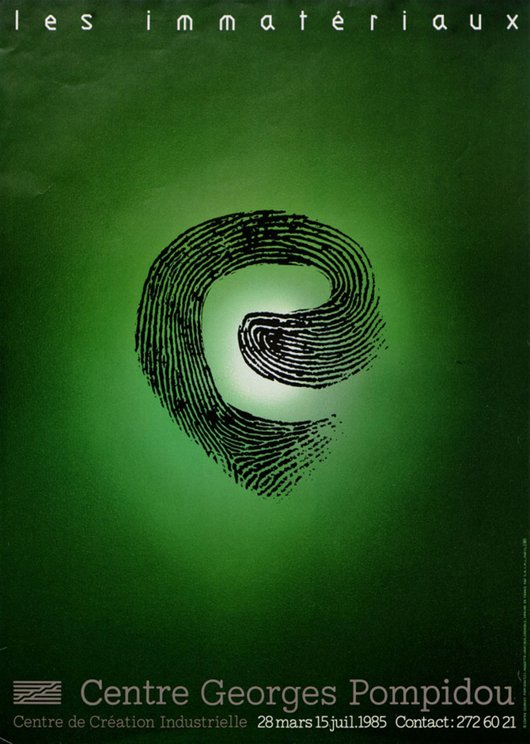
Affiche de l’exposition "Les Immatériaux", 1985 – © Centre Pompidou. Conception graphique : Grafibus.
Retour sur « Les Immatériaux »
Arts plastiques, Nouveaux médias Exposition, rencontres
Organisé par les commissaires Jean-François Lyotard et Thierry Chaput en 1985, « Les Immatériaux » était un essai aux fondements philosophiques adoptant l’exposition comme média ou interface. En faisant dialoguer œuvres d’art, technologies et documents scientifiques, les commissaires interrogeaient la condition humaine à l’ère des nouvelles technologies, dans différents domaines de la vie physique et psychique. La scénographie, particulièrement novatrice, privilégiait la désorientation, la stimulation de tous les sens et l’interactivité. Les visiteurs, dont le parcours n’était pas contraint mais « induit » par des écrans suspendus à l’opacité variable, étaient munis d’un casque diffusant une bande sonore variant au gré de leur déambulation dans la soixantaine de sites et les vingt-six zones audio de l’exposition.
Cette exposition historique a récemment fait l’objet d’une reconstitution virtuelle dans le cadre du projet de recherche « Beyond Matter ».
Exposition en continu, samedi 8 juillet 2023
« Beyond Matter »
Financé par la Commission européenne, le projet de recherche « Beyond Matter: Cultural Heritage on the Verge of Virtual Reality » vise à développer des outils technologiques et théoriques pour la reconstitution virtuelle d’expositions historiques et la documentation d’expositions en cours. Les recherches menées dans le cadre de ce projet ont notamment porté sur deux expositions pionnières : « Iconoclash » (4 mai–1er septembre 2002, ZKM) et « Les Immatériaux » (28 mars–15 juillet 1985, Centre Pompidou).
Lívia Nolasco-Rózsás et Marianne Schädler du Zentrum für Kunst und Medien de Karlsruhe (ZKM) présenteront la publication conclusive du projet européen.
Les artistes Jeremy Bailey, Damjanski, fabric | ch (Patrick Keller, Christian Babski, Christophe Guignard), Geraldine Juárez (en visioconférence), Carolyn Kirschner et Anne Le Troter présenteront ensuite les œuvres qu’ils et elles ont pu concevoir dans le cadre de l’exposition « Matter, Non-Matter, Anti-Matter » (3 décembre 2022–23 avril 2023, ZKM), restituant une partie des résultats du projet « Beyond Matter ».
Samedi 8 juillet 2023, 13h30–16h
« Les Immatériaux » : Artistes et historiens en conversation
Le chercheur Andreas Broeckmann, ainsi que les artistes Katerina Thomadaki, Jean-Louis Boissier et Jean-Claude Fall reviennent sur « Les Immatériaux », exposition pionnière à laquelle ils ont participé.
Séance modérée par Marcella Lista, Philippe Bettinelli et Marie Vicet.
Samedi 8 juillet 2023, 16h-18h
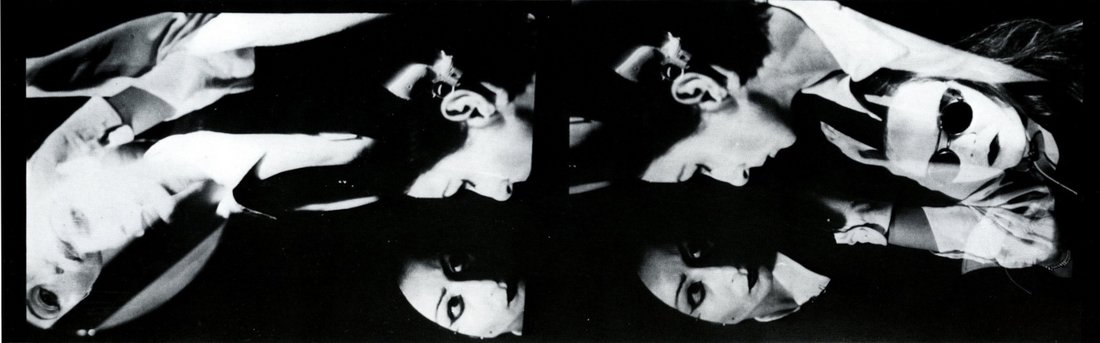
Maria Klonaris, Katerina Thomadaki, "Orlando-Hermaphrodite II", 1985, photographies noir et blanc sur panneau.
Courtesy Katerina Thomadaki.
Après « Les Immatériaux »
Projet porté par le curateur Hans Ulrich Obrist et l’artiste Philippe Parreno avec le soutien de LUMA Foundation, « Résistances » fait écho à l’exposition « Les Immatériaux » imaginée par Jean-François Lyotard. Resté inachevé, ce projet se trouve tout à la fois continué et réimaginé à travers des rencontres et la production de « films de pensée ».
Samedi 8 juillet 2023, 18h–19h30
La conversation se déroulera en français et en anglais, suivie d’une projection des « films de pensée ».
Films de pensée :
Produits et commandés par LUMA Foundation
Courtesy Maja Hoffmann / Luma Foundation Collection
- Être Résistances d’Albert Serra (2016, 198 min.)
« Être Résistances est un film qui résiste à en être un, c'est-à-dire qu'il résiste à la conscience et au langage cinématographique. C'est un film qui traite de théorie, de corps, de bruits, de discours, d'images, de jeu et d'ironie. C'est un film inspiré par son propre sujet invisible : l'exposition inexistante de Lyotard qui devrait résister à la communication. Le film est finalement cette exposition devenue réalité, mais comme un mirage et comme une illusion. » Albert Serra.
Séances, samedi 8 juillet 2023, à 13h30 et 17h30
Introduction par Albert Serra à 17h30
Cinéma 2, niveau –1
- The Rare Event de Ben Rivers et Ben Russell (2017, 48 min.) sous-titrage en français
Tourné dans un studio d'enregistrement parisien au plancher de bois grinçant, lors d'un « forum des idées » inaugural de trois jours consacré aux multiples possibilités de la Résistance – titre de l'exposition de Jean-François Lyotard qui devait faire suite à son exposition « Les Immatériaux » de 1985 –, les collaborateurs occasionnels Ben Rivers et Ben Russell (avec la contribution de l'artiste américain Peter Burr) ont produit ce qui apparaît d'abord comme un document structuraliste d'une discussion philosophique performée qui se transforme lentement en The Rare Event, un portail qui réunit toutes les dimensions en une seule.
- Resistances de Rachel Rose (2017-2019, 20 min.) VO en anglais
Ce court-métrage documente la deuxième rencontre sur les « Résistances » qui a eu lieu en février 2017 à New York, offrant ainsi un aperçu des conversations et des réflexions qui se sont déployées au cours de ce « forum des idées » organisé par Maja Hoffmann. Parmi les intervenants figurent Tyrone Hayes, Isabelle Thomas Fogiel, Reza Negarestani, Ariana Reines, Fred Moten, et de nombreux autres invités.
Projection, samedi 8 juillet 2023, à 19h30
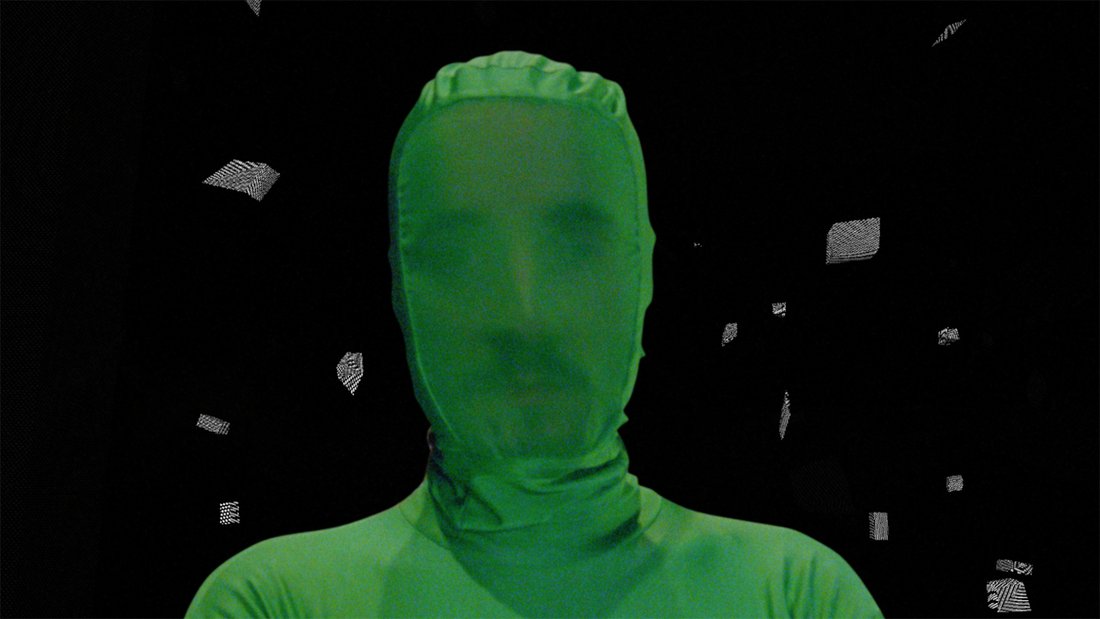
Plan fixe du film "THE RARE EVENT" de Ben Rivers et Ben Russell.
Courtesy Maja Hoffmann / Luma Foundation Collection.
En lien avec la présentation temporaire au Musée, niveau 4, Espace de consultation des collections vidéos, films, sons et œuvres numériques :
« Les Immatériaux » (1985). Aperçus d'une manifestation postmoderne au Centre Pompidou. Du 5 juillet au 30 octobre 2023
Présentation détaillée
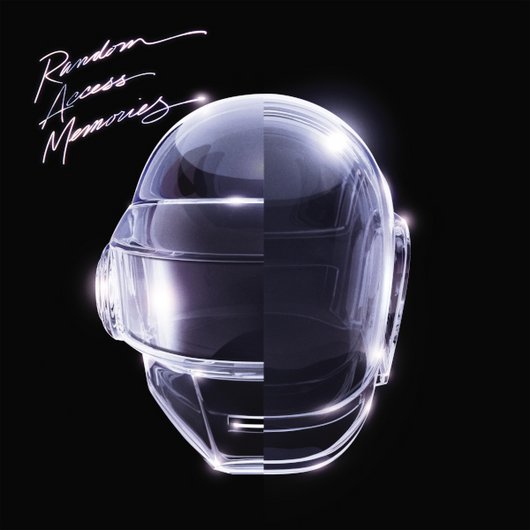
Couverture de l'album Daft Punk, "Random Access Memories" © Zaina
Daft Punk, Random Access Memories
Session d’écoute avec Sonorium
Musique Session d'écoute, rencontre
5 Grammy Awards et un triomphe instantané, un tube planétaire ("Get Lucky"), une production incroyable de précision et des collaborations prestigieuses (Pharrell Williams, Julian Casablancas, Panda Bear, Giorgio Moroder…), Random Access Memories, le dernier album de Daft Punk, a marqué les esprits et installé le duo comme une figure majeure de la pop contemporaine.
À l'occasion de l'édition 10e anniversaire de l'album culte le 12 mai dernier, le Centre Pompidou et Sonorium vous invitent à une session d'écoute de l'album en intégralité, dans des conditions exceptionnelles grâce à une installation sonore immersive réalisée par l’Ircam et une nouvelle technologie immersive développée par sa filiale Ircam Amplify.
Dimanche 9 juillet 2023 – gratuit sur réservation
Sessions précédées d'une introduction par Éric Jean-Jean et suivies d'une discussion avec le public
Réservation gratuite
Day-by-day program
Saturday, 8 July 2023
| |
|
Continuous
11am-1pm
|
Performance
Christian Falsnaes, First (2016)
|
|
Exhibition
Reconstitution virtuelle de l'exposition « Les Immatériaux »
|
| 1:30pm-2pm |
Meeting
« Beyond Matter »
Présentation de la publication conclusive du projet européen « Beyond Matter: Cultural Heritage on the Verge of Virtual Reality »
|
| 1:30pm-5pm |
Screening
Après « Les Immatériaux » : Films de pensée
Être Résistances d’Albert Serra (2016, 198 min.)
Cinéma 2, niveau –1
|
| 2pm-4pm |
Meeting
« Beyond Matter »
Présentation d'œuvres conçues dans le cadre de l'exposition « Matter, Non-matter, Anti-Matter »
Avec les artistes Jeremy Bailey, Damjanski, fabric | ch (Patrick Keller, Christian Babski, Christophe Guignard), Geraldine Juárez (en visioconférence), Carolyn Kirschner et Anne Le Troter
|
| 4pm-6pm |
Meeting
« Les Immatériaux » : Artistes et historiens en conversation
Avec Andreas Broeckmann, Katerina Thomadaki, Jean-Louis Boissier et Jean-Claude Fall
Modérée par Marcella Lista, Philippe Bettinelli et Marie Vicet (Centre Pompidou)
|
| 5:30pm-9pm |
Screening
Après « Les Immatériaux » : Films de pensée
Être Résistances d’Albert Serra (2016, 198 min.)
Cinéma 2, niveau –1
En présence du cinéaste
|
| 6pm-7:30pm |
Meeting
Après « Les Immatériaux » : Rencontre en partenariat avec LUMA Foundation
Avec Hans Ulrich Obrist, Philippe Parreno, Daniel Birnbaum, Anna Longo, Maja Hoffmann (en visioconférence) et Albert Serra
|
| 7:30pm-9pm |
>Screening
Après « Les Immatériaux » : Films de pensée
- The Rare Event de Ben Rivers et Ben Russell (2017, 48 min.)
- Resistances de Rachel Rose (2017-2019, 20 min.)
|
Sunday, 9 July 2023
| |
|
Reconstitution virtuelle de l'exposition « Les
Immatériaux »
|
Closing of the gallery 3 at the beginning of the day |
|
Continuous
3pm-9pm
|
Performance
Christian Falsnaes, First (2016)
|
|
4pm-6pm
6:30pm-8:30pm
|
Listening session, meeting
Daft Punk, Random Access memories
Introduction par Éric Jean-Jean
Session d'écoute
Discussion avec le public
|
Guests
|
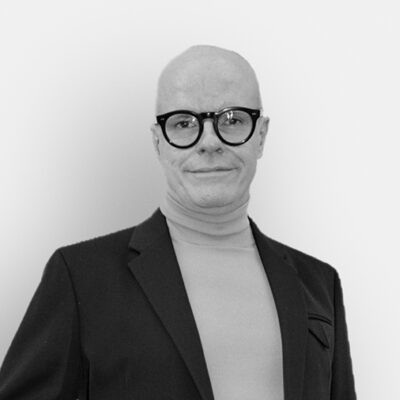
Visual arts
|
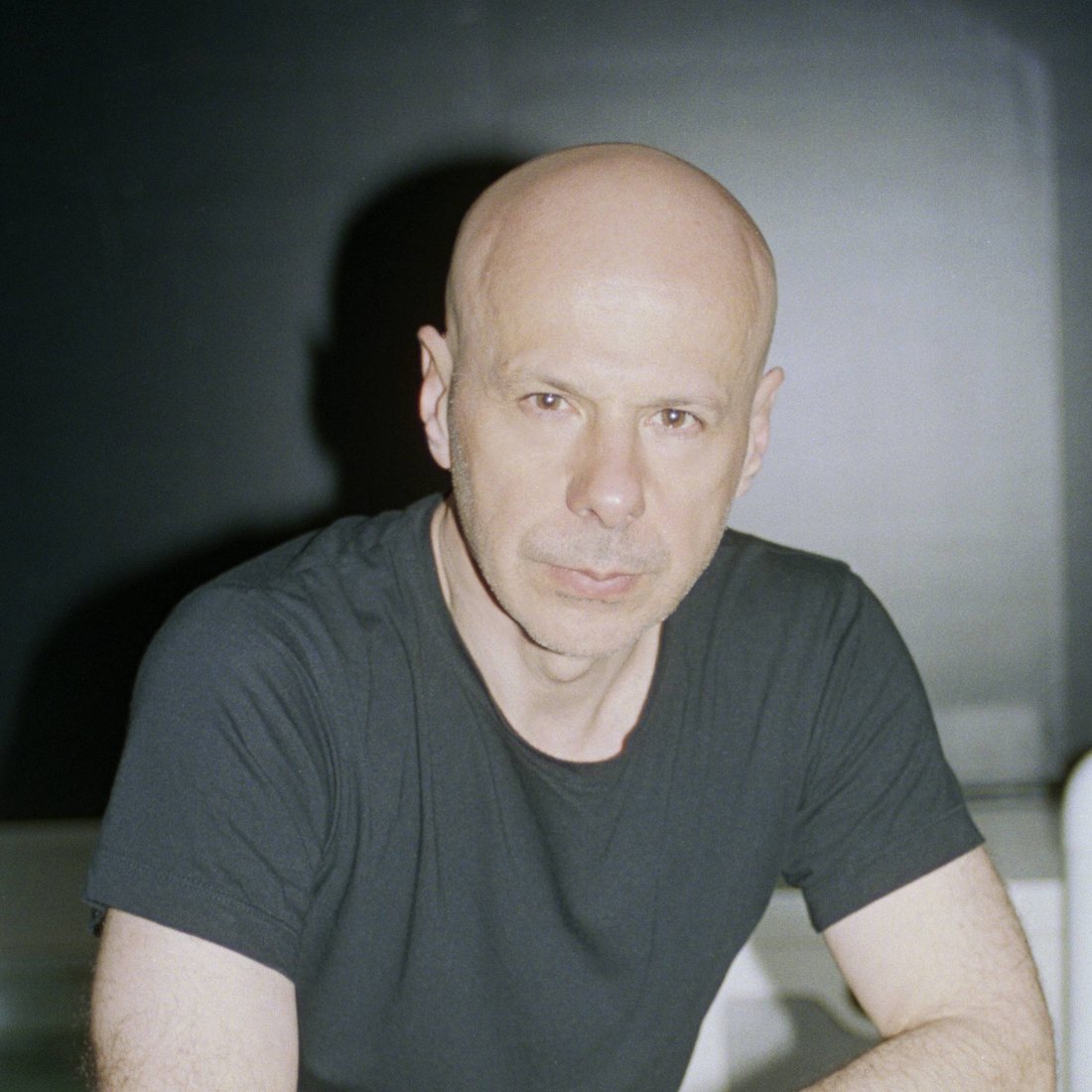
Visual arts
|
|
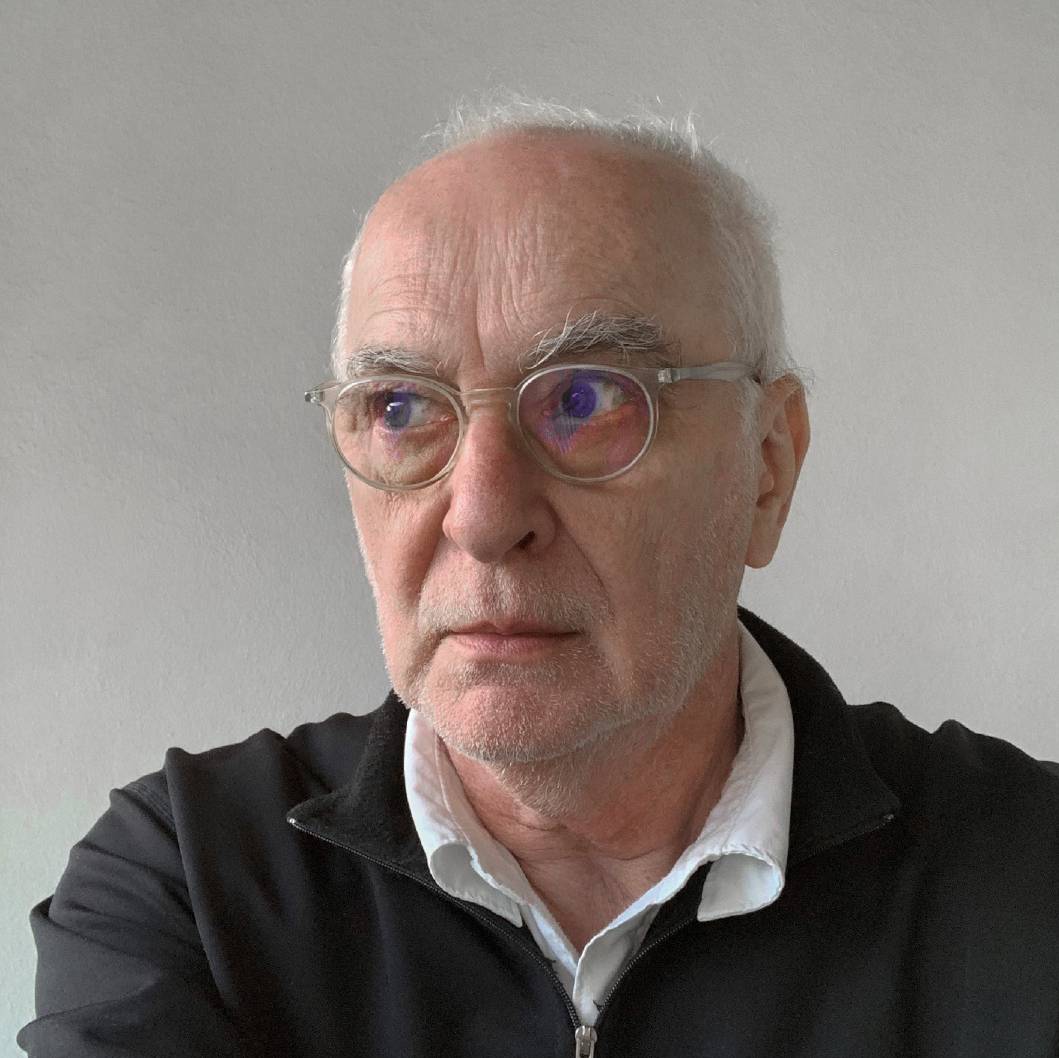
New media
|
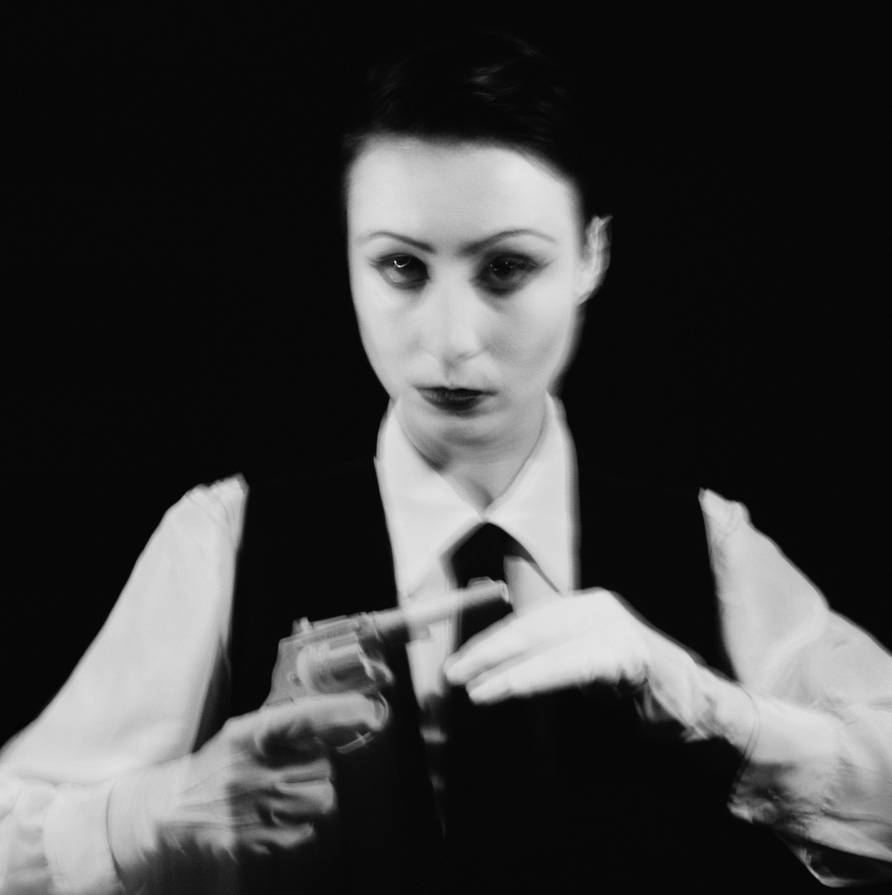
New media
|
Also in the presence of:
Jeremy Bailey, Daniel Birnbaum, Andreas Broeckmann, Damjanski, fabric | ch (Patrick Keller, Christian Babski, Christophe Guignard), Jean-Claude Fall, Maja Hoffmann, Éric Jean-Jean, Geraldine Juárez, Carolyn Kirschner, Anna Longo, Marianne Schädler, Albert Serra, Anne Le Troter.
Tuesday, July 18. 2023
Note: fabric | ch presented its recent works at the Centre Pompidou in early July, as part of the Moviment program of exhibitions/performances/conferences/projections. We took part in Chapter 9: Beyond Matter.
The focus of the weekend was a return to the historic exhibition "Les Immatériaux" (1985, cur. T. Chaput & J.F. Lyotard) and the contemporary questioning of the postmodern period.
Participants included artists who took part in Les Immatériaux (J.-L. Boissier, K. Thomadaki, J.-C. Fall), as well as contemporary curators such as H.-U. Obrist and D. Birnbaum, so as artists and filmmakers P. Parreno, A. Serra and philosopher A. Longo.
Via @ptrckkllr
-----
Monday, May 08. 2023
Note: this was a talk fabric | ch gave online, along with Aiiiii Art Center later last year, in the context of Swissnex Shanghai Art & Science talks.
The online session was moderated by Cissy Sun, Head of Art-Science at Swissnex and the topic was the "hot topic" of the time: "AI" and curation. fabric | ch has recently worked on several experimental or research projects related to this topic, as well as developed in-house tools along the way, and this was an opportunity to explain how we approach this question. In particular by rooting it in architectural thinking and our previous works.
Via Swissnex China
-----
By Cissy Sun
On 6th September, we had an inspiring discussion on curation and artificial intelligence with Mr. Patrick Keller, Architect & Co-founder of fabric | ch - studio for architecture, interaction & research, and Ms. Xi Li, Curator & Director of Aiiiii Art Center.
Mr. Patrick Keller introduced the architecture studio, fabric | ch, where architects and computer scientists work together on a variety of experimental projects that combine architecture, networks, data, and algorithms.
Delving into these projects, Patrick first introduced the work - Platform of Future-Past, which was shown at HOW Art Museum in Shanghai in 2022. “Platform of Future-Past” is an architectural device and monitoring installation, it is equipped in three zones with environmental monitoring devices. The sensors record as much data as possible over time, generated by the continuously changing conditions, presences, and uses in the exhibition space. The data is then stored on Platform Future-Past’s servers and replayed in a loop on its computers. It is a “recorded moment”, “frozen” on the data servers, that could potentially replay itself forever or is waiting for someone to reactivate it. A “data center” on the deck, with its set of interfaces and visualizations screens, lets the visitors-observers follow the ongoing recording process. However, as the exhibition was interrupted by the pandemic, the museum was closed for a few months, and the data from the real exhibition space was very limited. Thus the artists fed the platform the prepared data to generate the moving images. With the touch on artificial data, Patrick reminded us to think about massive ways to treat datasets while talking about artificial intelligence.
 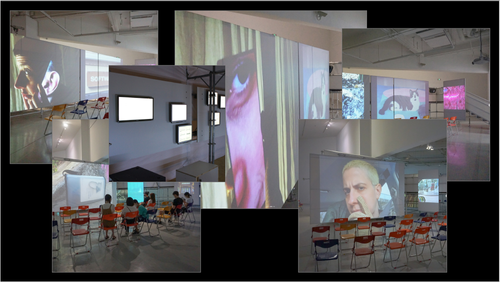
Platform of Future-Past, fabric | ch, 2022
The practice of using networks, data, and algorithms led the artists to develop a systematic approach to combining digital information with physical elements according to certain rules. Furthermore, such practices brought the artists to the exhibitions and curation projects. In the context of Entangled Realities, Living with Artificial Intelligence at the House of Electronic Arts (Basel), 2019, fabric | ch developed the work of Atomized (curatorial) Functioning (A(*)F), which was later also exhibited during Art and Science in the Age of Artificial Intelligence at the National Museum of China (Beijing), 2019.
A(*)F is an architectural project based on automated algorithmic principles, to which a machine learning layer can be added as required. It is a software piece that endlessly creates and saves new spatial configurations for a given situation, converges towards a “solution”, in real-time 3d and according to dynamic data and constraints. During the exhibition at HeK, the sensors collected data both from the artworks and the physical environment, including the walls and the lighting. The information collected by the sensors mapped out the space and helped the curators to organize the exhibition flows.

Atomized (curatorial) Functioning, fabric | ch, 2019
As an ending note, Patrick shared with us the ongoing research project between fabric | ch, the Nam June Paik Art Center (Yongin, South Korea), and ECAL / University of Art and Design, Lausanne (HES-SO), on "viewing rooms" and "digital exhibitions". The research is to give access to the collection of the art center in new ways and forms, out of the physical museum and through digital means. In addition to the research project, fabric | ch is also working on a new project about the digital presentation of the past exhibitions at ZKM (Center for Art and Media, Karlsruhe), the exhibition is planned to open at ZKM at the end of the year.
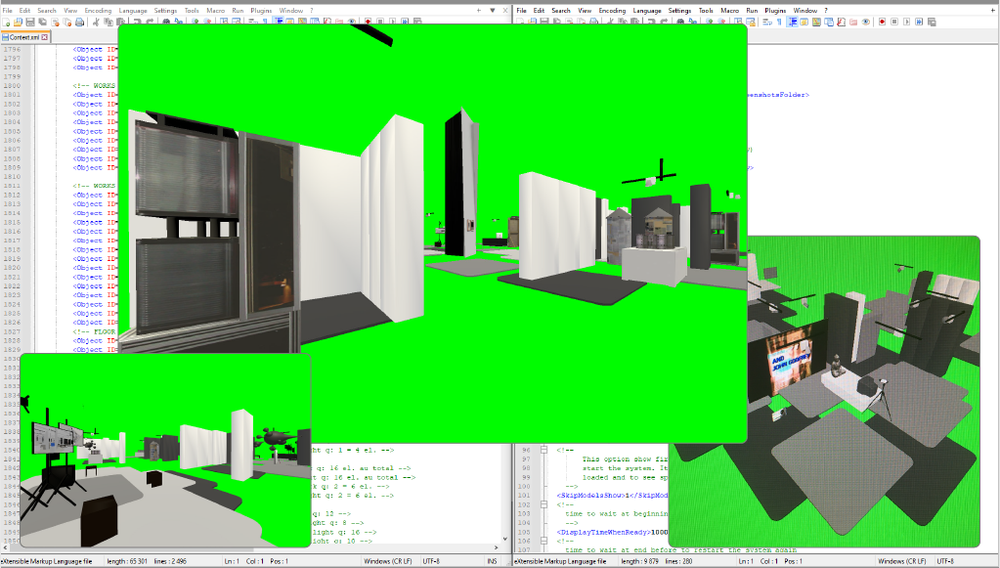
Ongoing project by fabric | ch
The International Conference on AI Art was co-organized by the Aiiiii Art Center and the Art and Artificial Intelligence Lab of Tongji University. With the theme of “AI and Authorship” (2021) and “Artificial Imagination” (2022), the conference combines the most radical of research from a diverse international curation of fields ranging from art, design, computational science, cultural critique as well as political philosophy. This network is established to pioneer and push the boundaries of artificial intelligence and creative production.
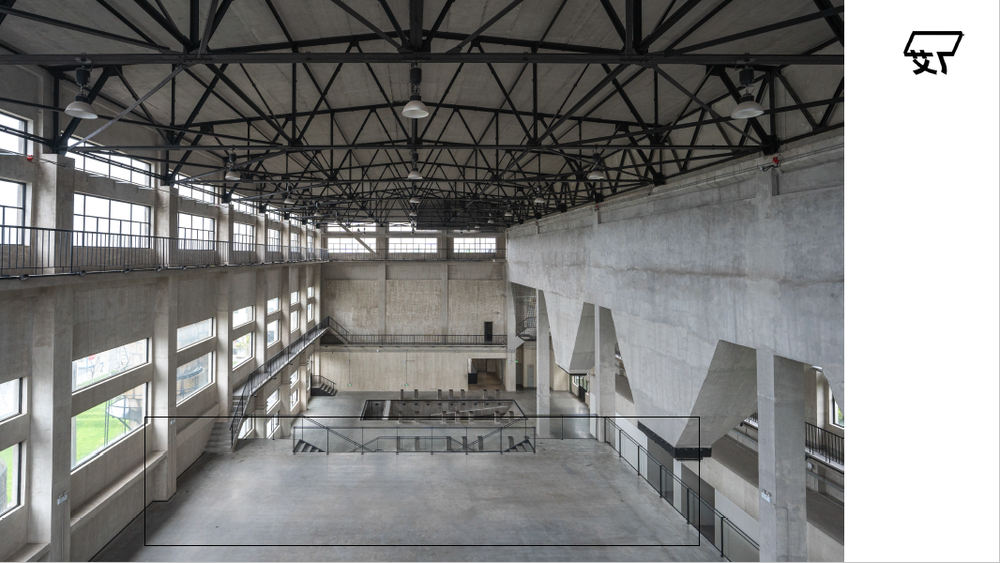
Exhibition space of Aiiiii Art Center
While looking at the exhibition space, two questions came to Xi’s mind: how to physicalize the digital artwork into the space and how to visualize AI art. The two questions lead Xi and her team to the curation concept of the Book of Sand. She chose literature to narrate the exhibition to catch the public attention and tell a good story of AI art. The exhibition starts by employing literary imagination to juxtapose seemingly infinite, random generative art and Borges’ “Book of Sand”, a book that possesses neither a beginning nor an end, just like sand. A book in which “I”, the subject, can turn the pages but cannot predict the outcome, just as we cannot fully comprehend the operational logic of the “black box” embedded by and into a neural network. Against the joy of possessing the book grows the fear that the book is not really infinite, just as we fear that the infinite productivity of AI will make us its captives, as well as the fear that its “infinite creativity” is simply the outcome of intelligent permutations of existing human ideas.
 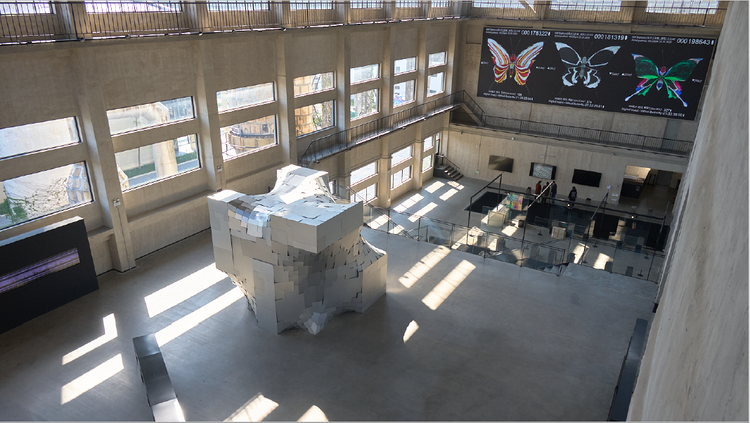
Artificial Remnants, Entangled Others Studio (left) & The Mind Scrap, Certain Measures (right)
“The Book of Sand” is an exhibition done by the joint efforts of machines and humans — the output of the machines interferes with human curatorial and artistic practices. By showcasing the works of Jake Elwes and Dabeiyuzhou, Xi explained further how they worked with the artists to turn web-based artwork into spatial installations.
 
The ZIZI Show, Jake Elwes (left) & Text Gene Project, Dabeiyuzhou (right)
It is inevitable to talk about what AI art is and who the author is when curating the programs and research projects at Aiiiii Art Center. However, such questions are not at the core of their curatorial practice but to discover the potential of AI itself and deliver the message appropriately to the target audience. With the involvement of machines in the creation and curation process, the question of the role of the machine became a challenging topic. Moreover, it also leads us to think – is there have to be a curator/creator’s name in the exhibition?
Responding to Xi’s question, Patrick pointed out that there are different cases dealing with the question. Taking their own practices, for example, the algorithm is at the core of their work. With the help of AI, the artists could dig deeper into their works, but the concept and the way of working are developed by the collective over years of research and practice. It is important to have their names in the exhibition as they are the creators of the work. Nevertheless, it might be challenging to define the creator for other works using open-source software and text-image software. However, in Patrick’s view, any machine learning program is fed with a huge dataset, without this, the algorithms could not do anything. The things the machines are trained to do and how they are trained to make it essential to define the creator.
Wednesday, March 22. 2023
Note: fabric | ch is taking part next week in this webinar about digital museums, organized by ZKM. Participants include members from ZKM Hertz-Lab, Ars Electronica Futurelab, CCCB in Barcelona, Aalto University and Futurium in Berlin.
Via ZKM | Karlsruhe (research project & exhibition: Beyond Matter)
-----
Monday, March 13. 2023
Note: a brief video documentation about one of fabric | ch's latest project – Atomized (Re)Staging – that was exhibited at ZKM during Matter. Non-Matter. Anti-Matter.
The exhibition was curated by Lívía Nolasco-Roszás and Felix Koberstein and took place ibn the context of the European research project Beyond Matter.
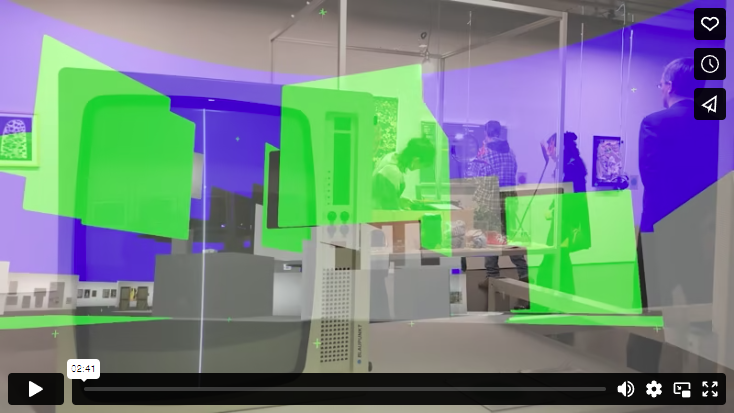
Via fabric | ch's Vimeo
-----
Friday, December 03. 2021
Note: We had the chance at fabric | ch to initiate a new research / project last Spring, in collaboration with the Nam June Paik Art Center (warning: long loading time!) in South Korea and ECAL / University of Art and Design Lausanne (HES-SO).
In this context, we're having the opportunity to work with some of the amazing material of the museum's collection and archive. It contains some of Paik's major works (single & multi-channel video in particular), that have been difficult to see since the passing of the artist, and most of its archives.
The museum indeed has the largest collection Paik's video, as well as some important installations and a large primary and secondary material about the production of the artworks themselves. The research undertaken is looking to give access to this material in new ways and forms, out of the physical museum and through digital means. For this task, we're planning to further dig into the archives and look at works that were realized, or not, during the Fluxus period ("Symphony for 20 Rooms", "Exhibition of Music, Electronic Television").
The aim of this research is to work on automated curating and digital display (likely AR) of exhibitions at anybody's place (home, appartment, office, warehouse, "garage", etc.), resonating with the concept of "Viewing Rooms" and therefore the title of this first phase of the research: (Re-)Viewing Paik. We are seeking forms of personal exhibitions, for specific spatial configurations and in which the artworks organize their presence themselves, according to an objective understanding of the space.
To achieve these research objectives, we'll work with fabric | ch's software and ongoing project that allows us to automate the creation of environments, based on sensors inputs: Atomized (*) Functioning (pdf), which is based on customizable/scriptable algorithmic and AI procedures. In the specific case of (Re-)Viewing Paik, it is used for curation and exhibition design purposes, therefore Atomized (curatorial) Functioning (pdf). Like we already did for this exhibition at HeK, in 2019.
-----
By fabric | ch
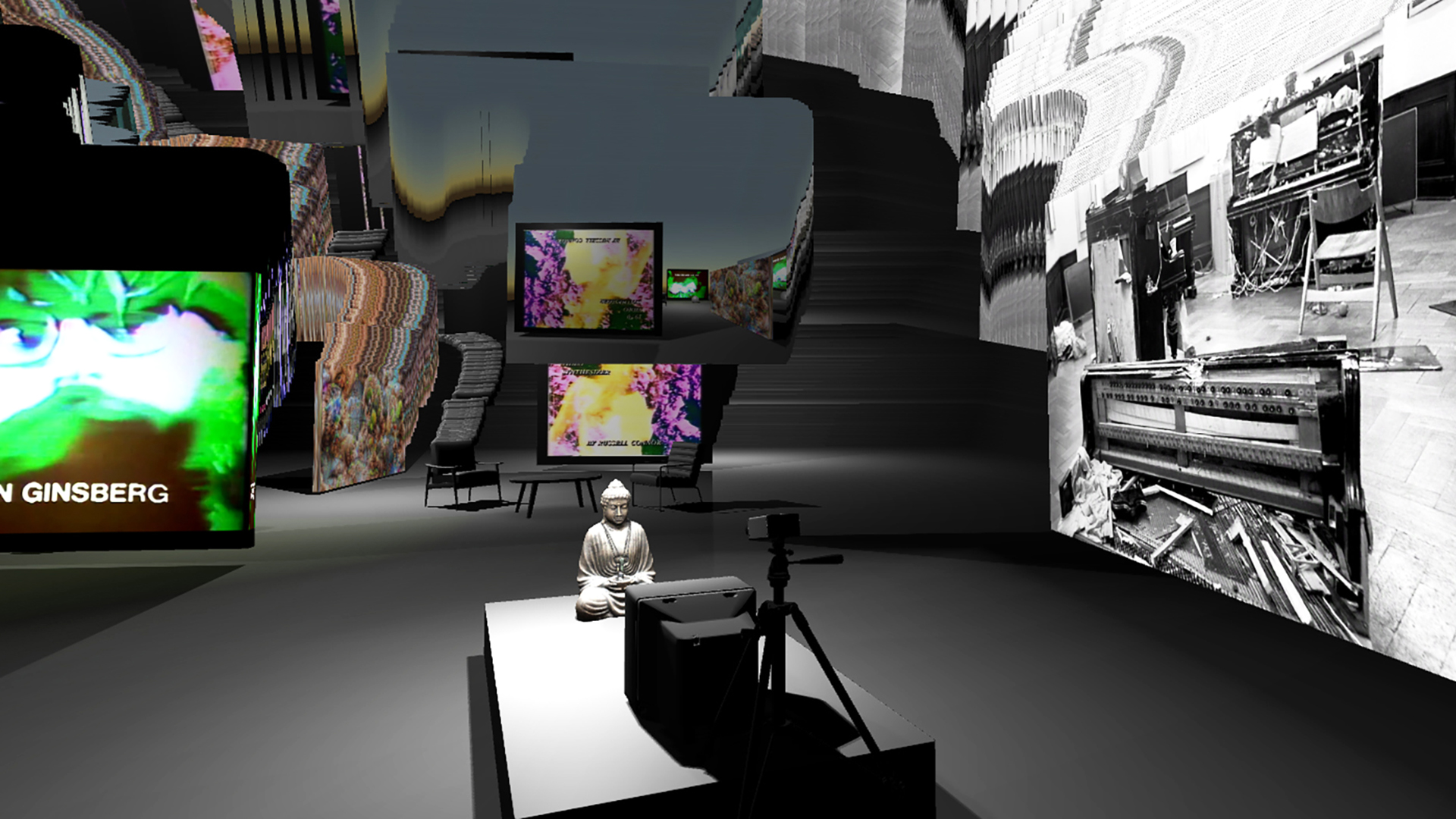
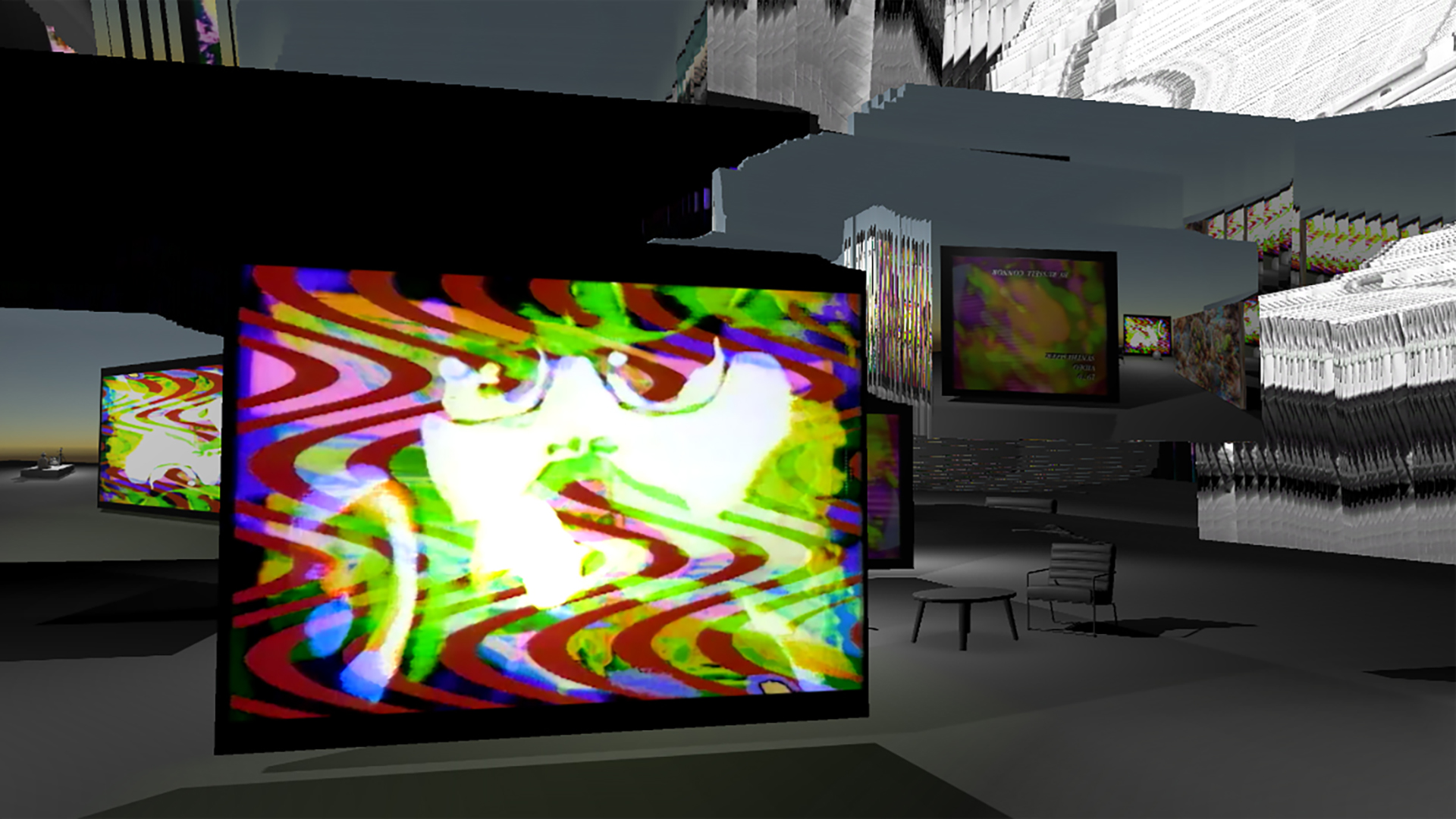
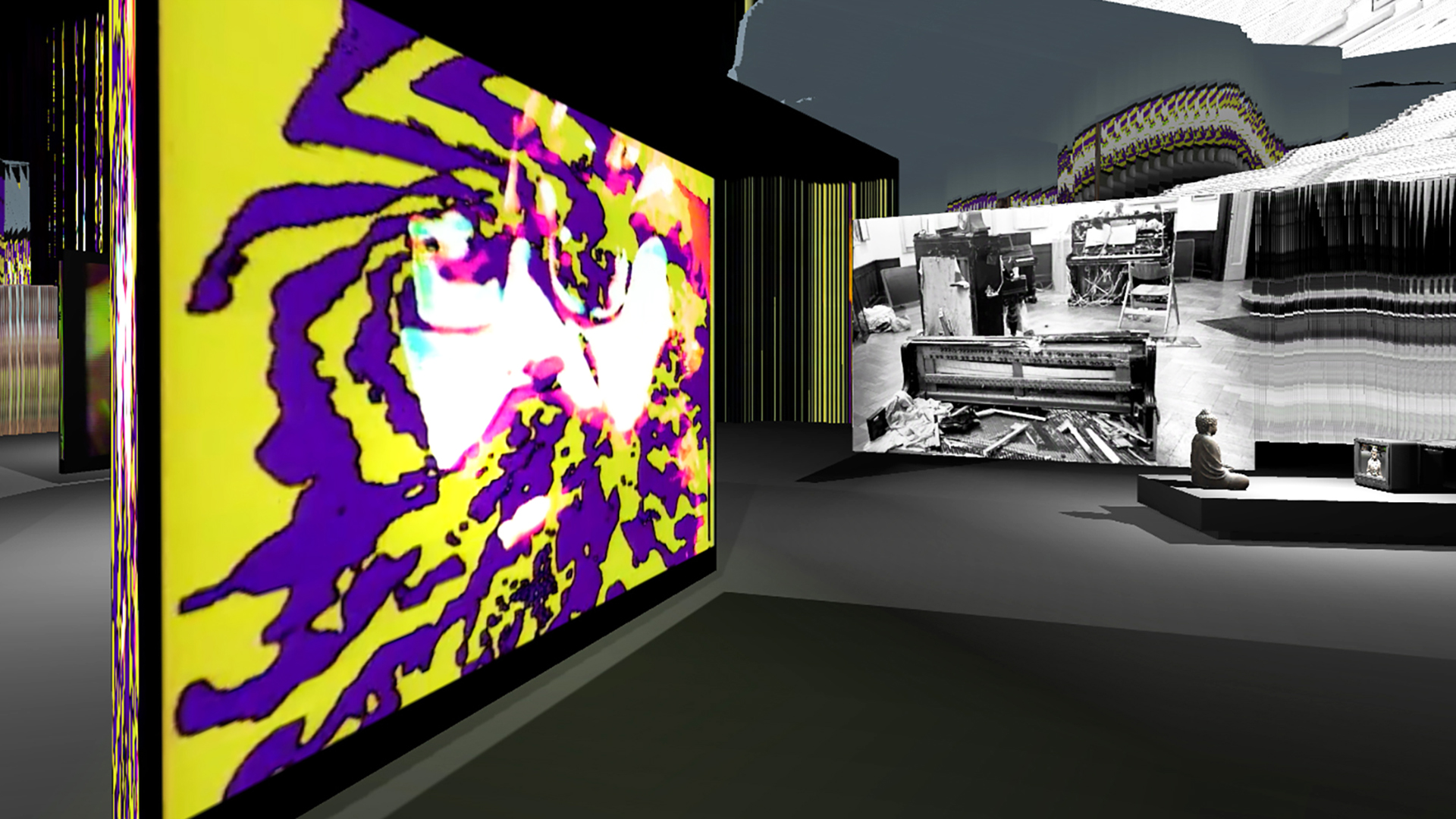
Below are early tests with a digital transposition/reconstruction of TV Buddha (literally), the zen media buddha in between a glitched and mirrored digital environment containing other artworks (video and photographies of the famous 1963 exhibition: Exposition of Music - Electronic Television).
This early phase of the work will see us work with the pieces selected by Nam June Paik Art Center curator and archivst Sans Ae Park. These pieces were selected mainly to test different artwork types and durations into their new display setup.
...

Monday, June 21. 2021
Note: an online talk with Patrick Keller, lead archivist and curator Sang Ae Park from Nam June Paik Art Center (NJPAC) in Seoul, and Christian Babski from fabric | ch.
The topic will be related to an ongoing design research into automated curating, jointly led between NJPAC, ECAL and fabric | ch.
-----
Via Nam June Paik Art Center
How would Augmented Reality change exhibition curating and design in the future? Join our June Science Club and learn how the ECAL and Nam June Paik Art Center are collaborating to develop a novel range of museums. This talk program is hosted by Swissnex and Embassy of Switzerland in the Republic of Korea. All talks shall be in English.
---
Date
June 24, 2021. 17:00 – 18:00
Venue
Zoom
Panels
Patrick Keller (Associate Professor, ECAL / University of Art and Design Lausanne (HES-SO))
Sang Ae Park (Archivist, Nam June Paik Art Center)
Christian Babski (Co-founder fabric | ch)
---
Inquiry
library@njpartcenter.kr
Friday, August 28. 2020
Note: the discussion about "Data Materialization" between Nathalie Kane (V&A Museum, London) and Patrick Keller (fabric | ch, ECAL / University of Art and Design Lausanne (HES-SO)), on the occasion of the ECAL Research Day, has been published on the dedicated website, along with other interesting talks.
-----
Via ECAL
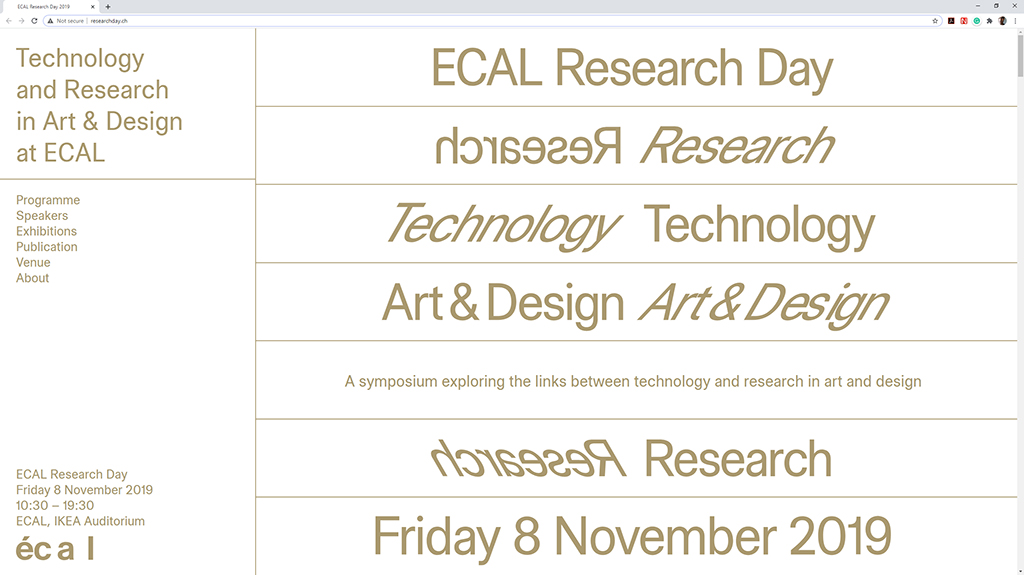
Research Day 2019 Natalie D. Kane from ECAL on Vimeo.
|

