Wednesday, November 30. 2022
Atomized (re-)Staging, new work by fabric | ch on @beyondmatter and @zkm | #exhibition #digital #autonomous
Friday, November 25. 2022
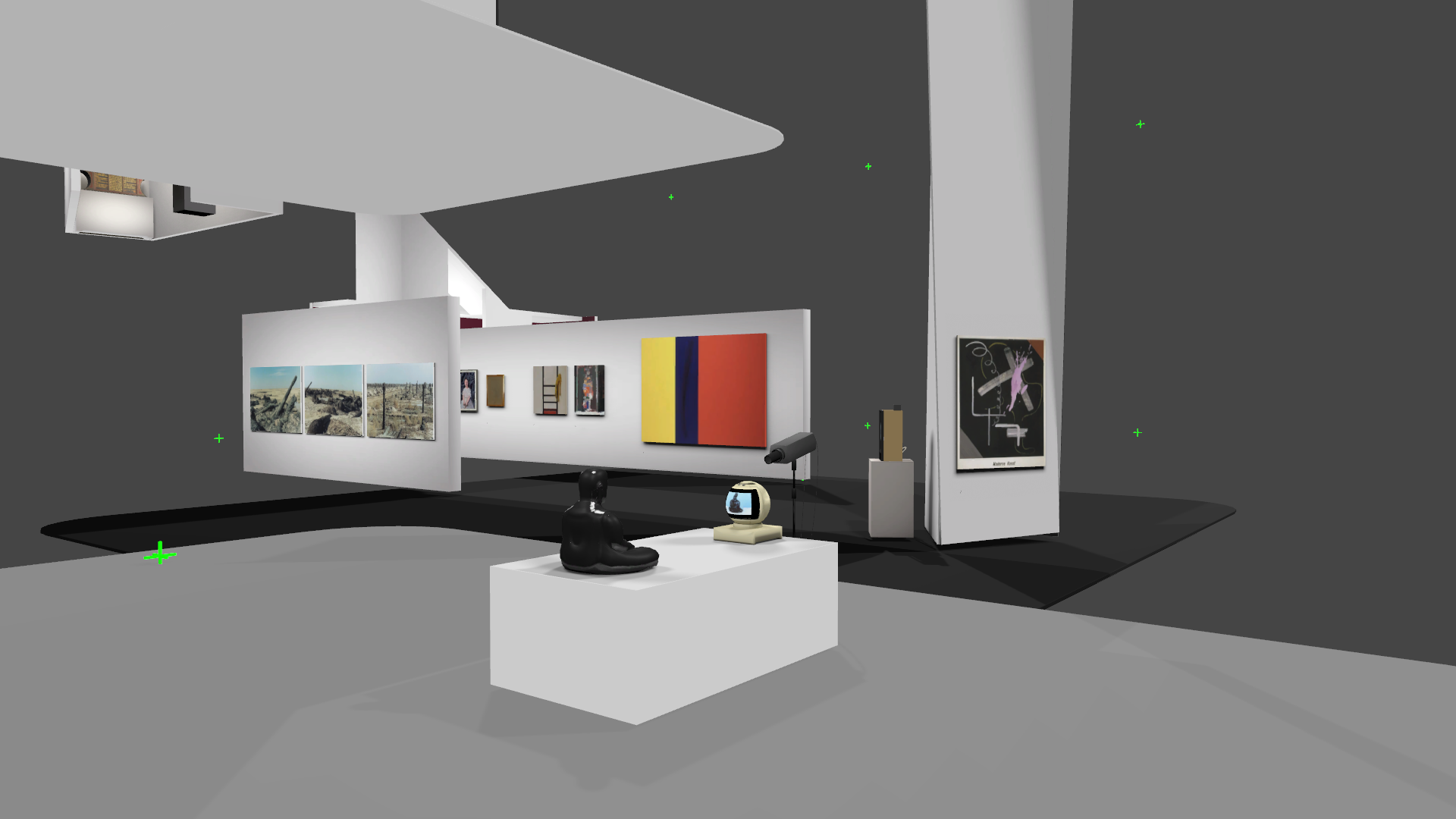
Matter. Non-Matter. Anti-Matter Exhibition @ZKM | #digital #exhibition #iconoclash #immateriaux #zkm #beaubourg
Note:
An upcoming exhibition for fabric | ch, which will open next week at the ZKM in Karlsruhe.
We'll present a new work in this context (Atomized (re-)Staging), about which we'll hopefully find time to post some documentation on this blog later.
Via @beyondmatter
---
Matter. Non-Matter. Anti-Matter delves into the significance of digitality and computer-generated environments in the context of the material understanding of art production and the showcasing of it.
The exhibition presents the digital models of Les Immatériaux (Centre Pompidou, 1985) and Iconoclash. Beyond the Image Wars in Science, Religion, and Art (ZKM, 2002) on the newly developed Immaterial Display.
Furthermore, a selection of artworks and artifacts, mainly from the collections of the @centrepompidou and @zkmkarlsruhe, attest to a conceptual dematerialization and digital re-materialization of artworks.
---
Via @ptrckkllr
Wednesday, January 26. 2022
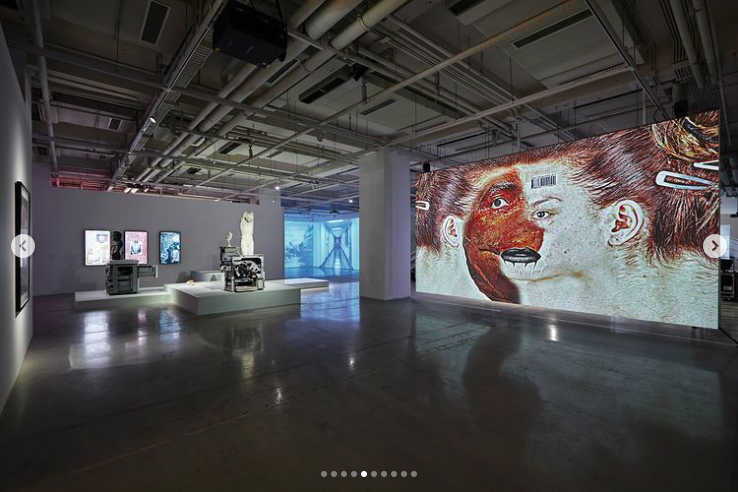
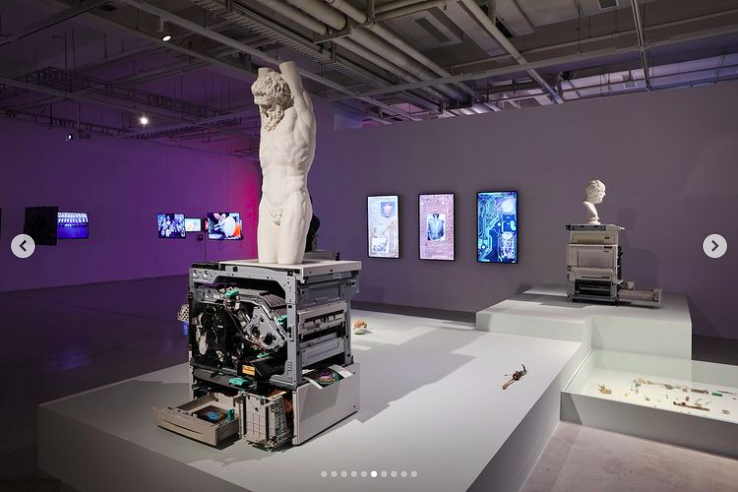
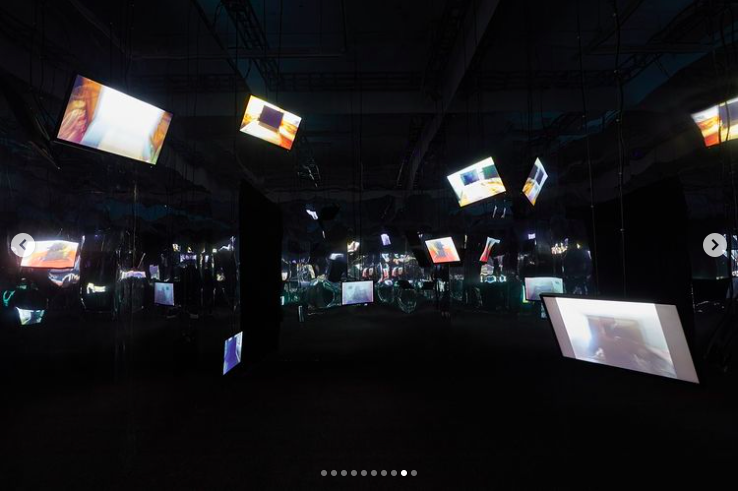
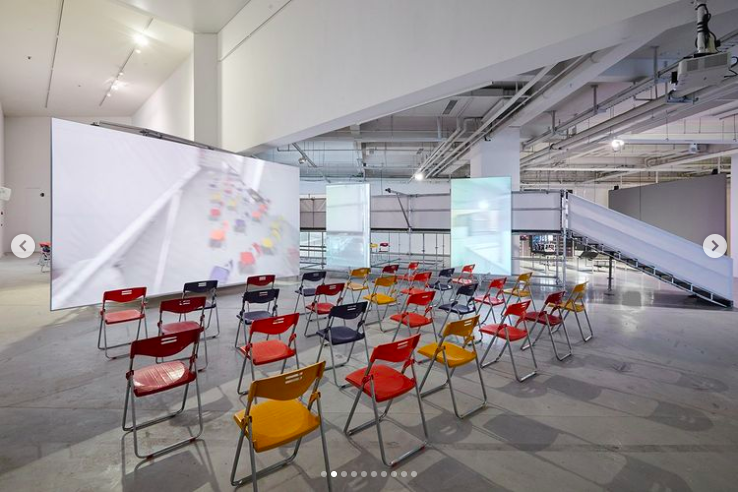
Platform of Future-Past (2022) at HOW Art Museum in Shanghai | #data #monitering #installation
Note:
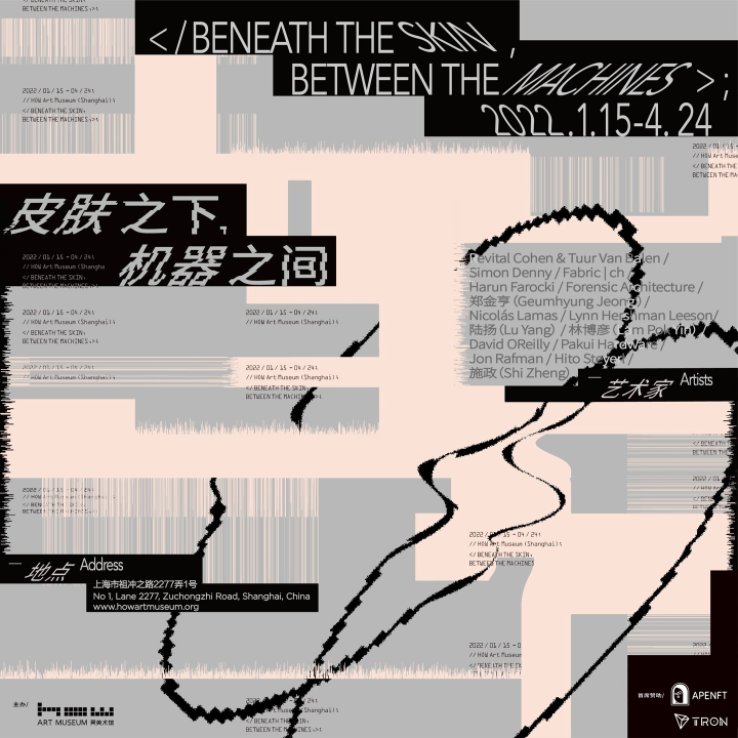
The exhibition Beneath the Skin, Between the Machines just opened at HOW Art Museum (Hao Art Gallery) and fabric | ch was keen to be invited to create a large installation for the show, also intented to be used during a symposium that will be entirely part of the exhibition (panels and talks as part of the installation therefore). The exhibition will be open between January 15 - April 24 2022 in Shanghai.
Along with a selection of chinese and international artists, curator Liaoliao Fu asked us to develop a proposal based on a former architectural device, Public Platform of Future-Past, which in itself was inspired by an older installation of ours... Heterochrony.
This new work, entitled Platform of Future-Past, deals with the temporal oddity that can be produced and induced by the recording, accumulation and storage of monitoring data, which contributes to leaving partial traces of "reality", functioning as spectres of the past.
We are proud to present this work along artists such as Hito Steyerl, Geumhyung Jeong, Lu Yang, Jon Rafman, Forensic Architecture, Lynn Hershman Leeson and Harun Farocki.
...
Last but not least and somehow a "sign of the times", this is the first exhibition in which we are participating and whose main financial backers are a blockchain and crypto-finance company, as well as a NFT platform. Both based in China.
More information about the symposium will be published.
Via Pro Helvetia
-----

-----
Curatorial Statement
By Fu Liaoliao and the curatorial team
"Man is only man at the surface. Remove the skin, dissect, and immediately you come to machinery.” When Paul Valéry wrote this down, he might not foresee that human beings – a biological organism – would indeed be incorporated into machinery at such a profound level in a highly informationized and computerized time and space. In a sense, it is just as what Marx predicted: a conscious connection of machine[1]. Today, machine is no longer confined to any material form; instead, it presents itself in the forms of data, coding and algorithm – virtually everything that is “operable”, “calculable” and “thinkable”. Ever since the idea of cyborg emerges, the man-machine relation has always been intertwined with our imagination, vision and fear of the past, present and future.
In a sense, machine represents a projection of human beings. We human beings transfer ideas of slavery and freedom to other beings, namely a machine that could replace human beings as technical entities or tools. Opposite (and similar, in a sense,) to the “embodiment” of machine, organic beings such as human beings are hurrying to move towards “disembodiment”. Everything pertinent to our body and behavior can be captured and calculated as data. In the meantime, the social system that human beings have created never stops absorbing new technologies. During the process of trial and error, the difference and fortuity accompanying the “new” are taken in and internalized by the system. “Every accident, every impulse, every error is productive (of the social system),”[2] and hence is predictable and calculable. Within such a system, differences tend to be obfuscated and erased, but meanwhile due to highly professional complexities embedded in different disciplines/fields, genuine interdisciplinary communication is becoming increasingly difficult, if not impossible.
As a result, technologies today are highly centralized, homogenized, sophisticated and commonized. They penetrate deeply into our skin, but beyond knowing, sensing and thinking. On the one hand, the exhibition probes into the reconfiguration of man by technologies through what’s “beneath the skin”; and on the other, encourages people to rethink the position and situation we’re in under this context through what’s “between the machines”. As an art institute located at Shanghai Zhangjiang Hi-Tech Industrial Development Zone, one of the most important hi-tech parks in China, HOW Art Museum intends to carve out an open rather than enclosed field through the exhibition, inviting the public to immerse themselves and ponder upon the questions such as “How people touch machines?”, “What the machines think of us?” and “Where to position art and its practice in the face of the overwhelming presence of technology and the intricate technological reality?”
Departing from these issues, the exhibition presents a selection of recent works of Revital Cohen & Tuur Van Balen, Simon Denny, Harun Farocki, Nicolás Lamas, Lynn Hershman Leeson, Lu Yang, Lam Pok Yin, David OReilly, Pakui Hardware, Jon Rafman, Hito Steyerl, Shi Zheng and Geumhyung Jeong. In the meantime, it intends to set up a “panel installation”, specially created by fabric | ch for this exhibition, trying to offer a space and occasion for decentralized observation and participation in the above discussions. Conversations and actions are to be activated as well as captured, observed and archived at the same time.
[1] Karl Marx, “Fragment on Machines”, Foundations of a Critique of Political Economy
[2] Niklas Luhmann, Social Systems
-----
Schedule
Duration: January 15-April 24, 2022
Artists: Revital Cohen & Tuur Van Balen, Simon Denny, fabric | ch, Harun Farocki, Geumhyung Jeong, Nicolás Lamas, Lynn Hershman Leeson, Lu Yang, Lam Pok Yin, David OReilly, Pakui Hardware, Jon Rafman, Hito Steyerl, Shi Zheng
Curator: Fu Liaoliao
Organizer: HOW Art Museum, Shanghai
Lead Sponsor: APENFT Foundation
Swiss participation is supported by Pro Helvetia Shanghai, Swiss Arts Council.
(Swiss speakers and performers appearing in the educational events will be updated soon.)
-----
Work by fabric | ch
HOW Art Museum has invited Lausanne-based artist group fabric | ch to set up a “panel installation” based on their former project “Public Platform of Future Past” and adapted to the museum space, fostering insightful communication among practitioners from different fields and the audiences.
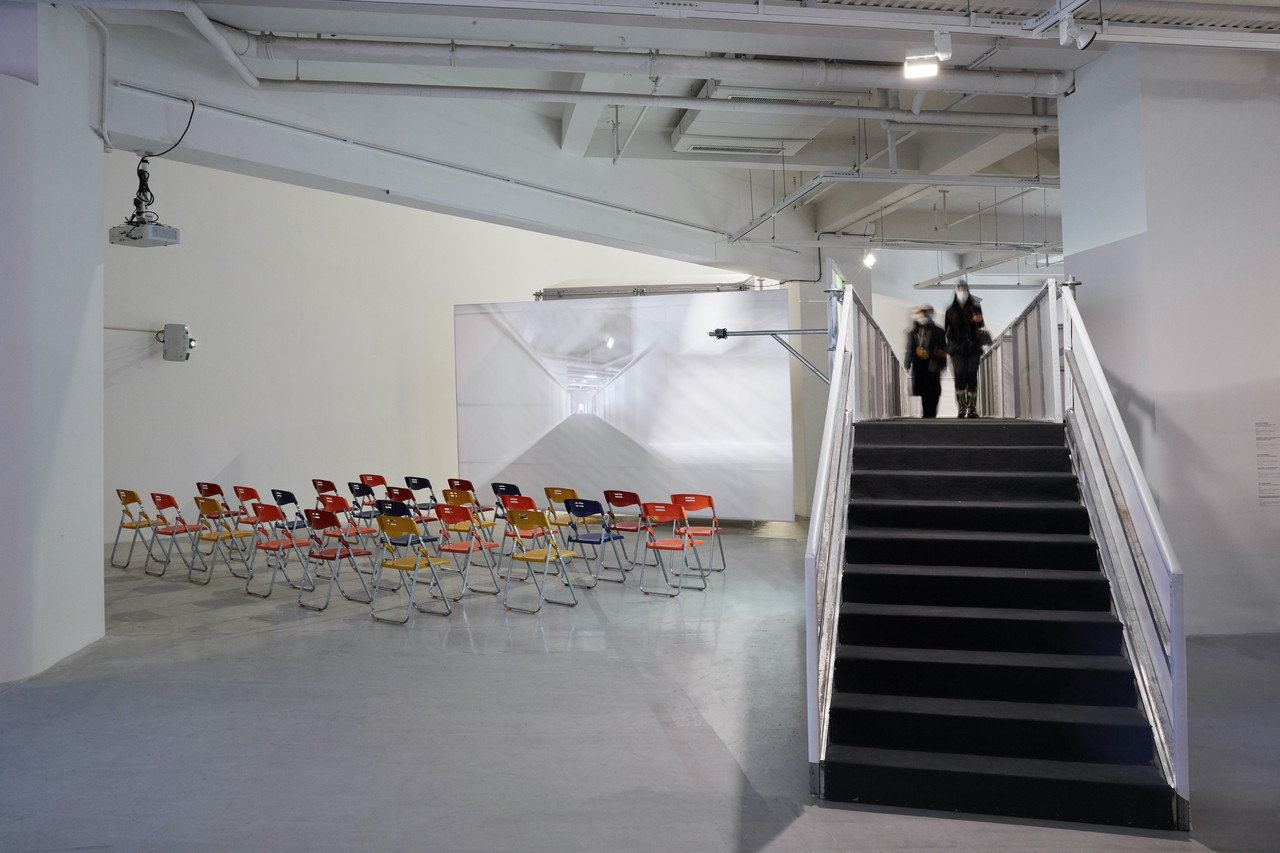
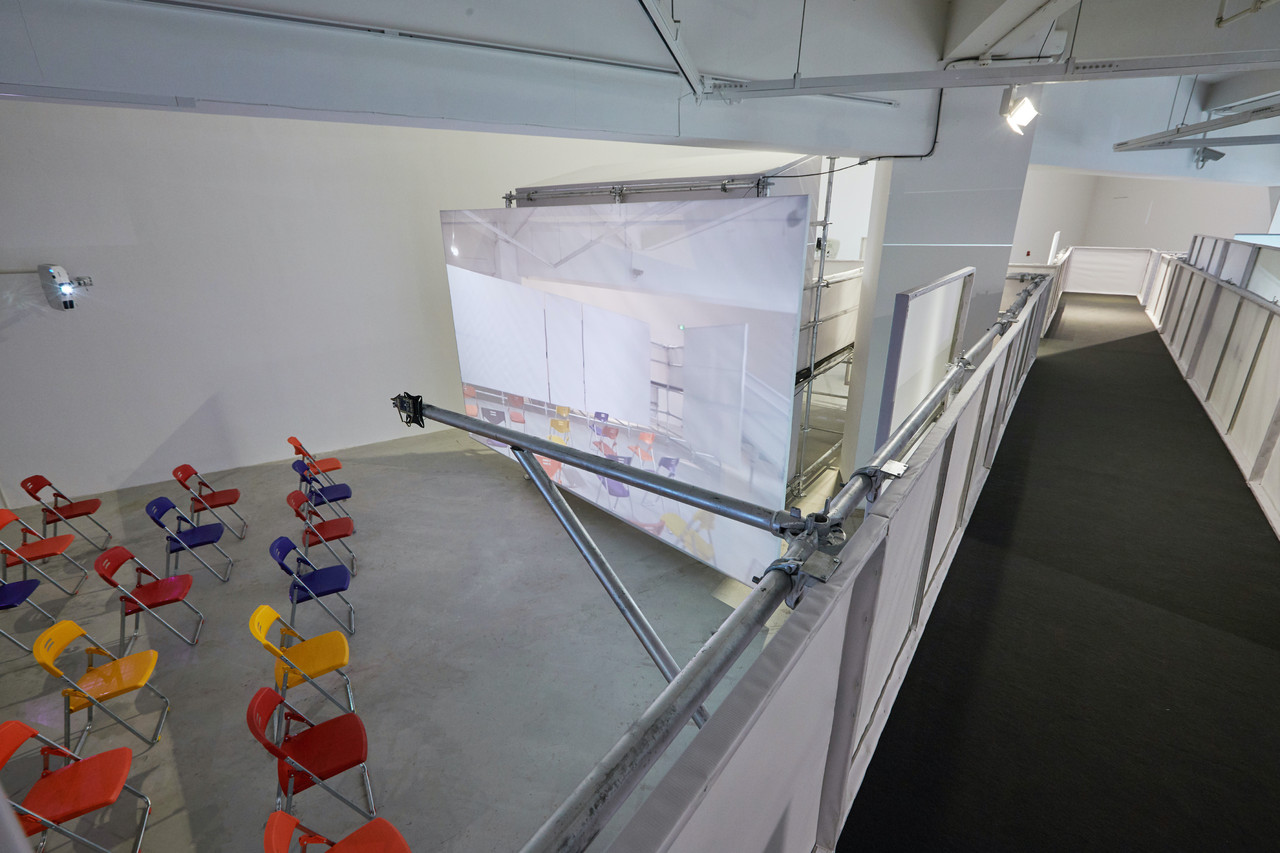
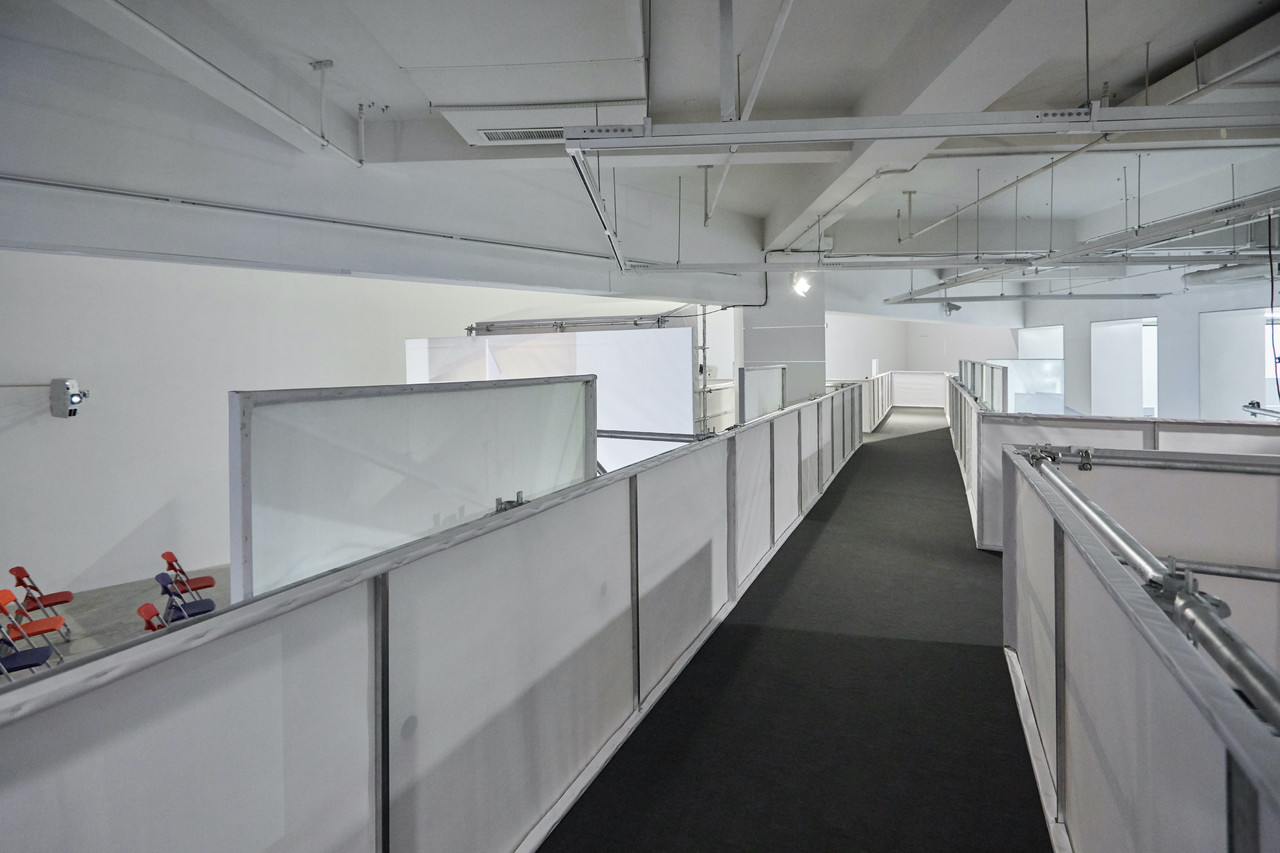
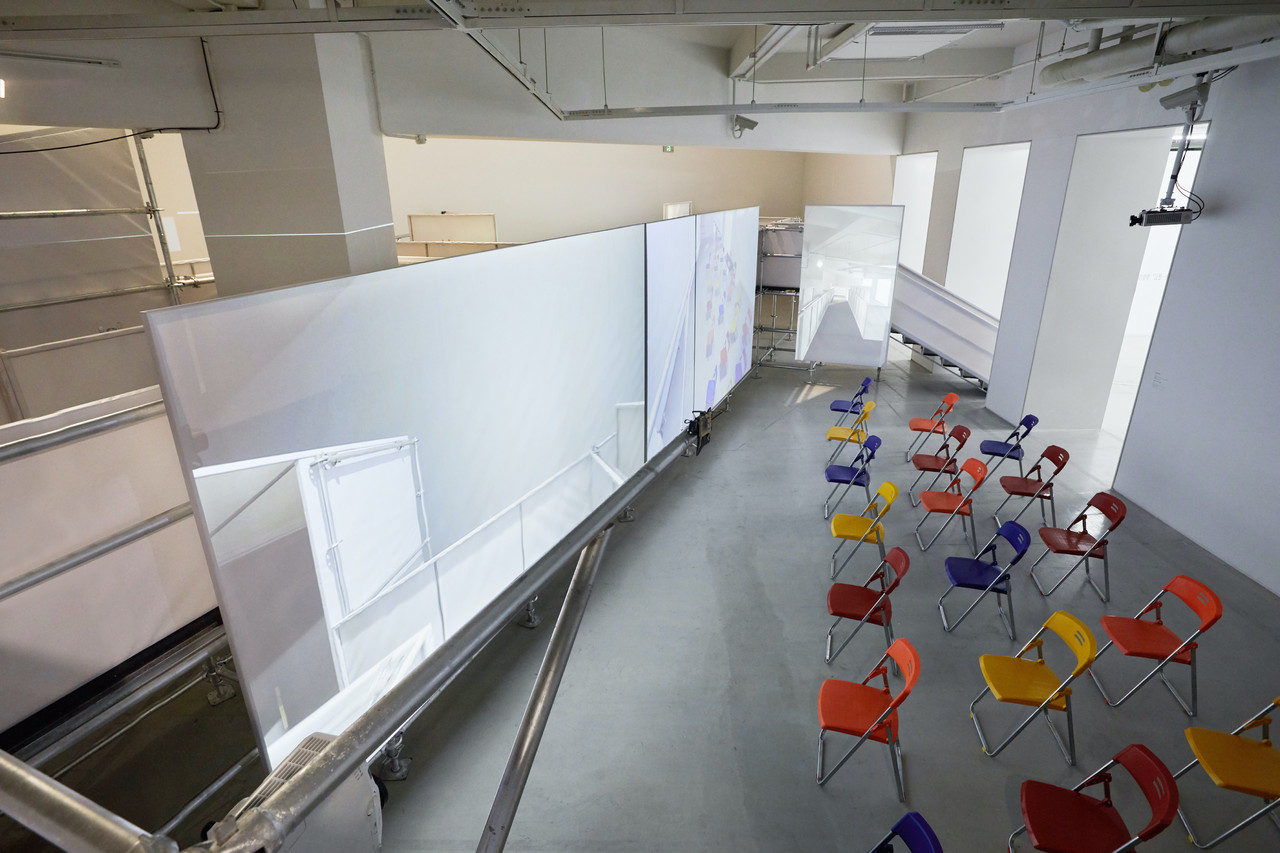
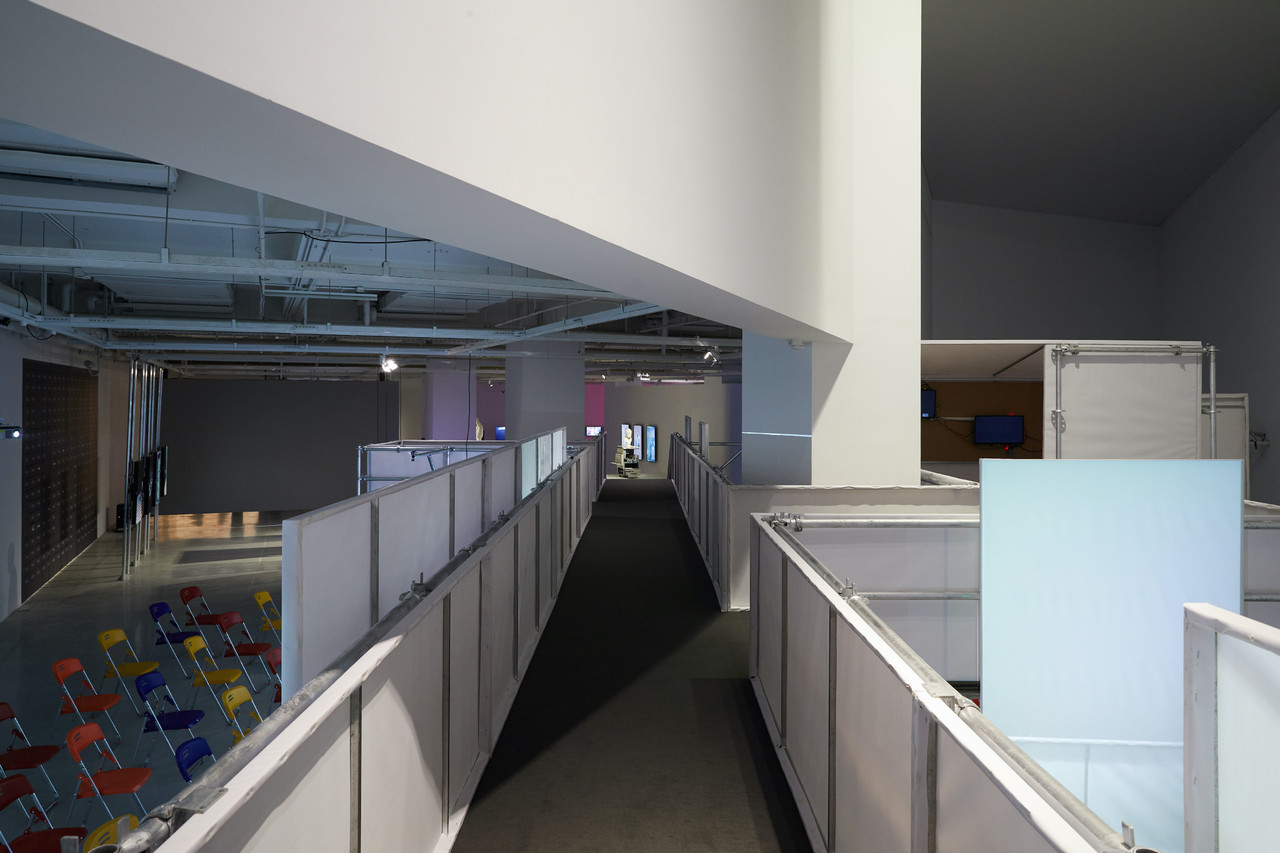
“Platform of Future-Past” is a temporary environmental device that consists in a twenty meters long walkway, or rather an observation deck, almost archaeological: a platform that overlooks an exhibition space and that, paradoxically, directly links its entrance to its exit. It thus offers the possibility of crossing this space without really entering it and of becoming its observer, as from archaeological observation decks. The platform opens- up contrasting atmospheres and offers affordances or potential uses on the ground.
The peculiarity of the work consists thus in the fact that it generates a dual perception and a potential temporal disruption, which leads to the title of the work, Platform of Future-Past: if the present time of the exhibition space and its visitors is, in fact, the “archeology” to be observed from the platform, and hence a potential “past,” then the present time of the walkway could be understood as a possible “future” viewed from the ground…
“Platform of Future-Past” is equipped in three zones with environmental monitoring devices. The sensors record as much data as possible over time, generated by the continuously changing conditions, presences and uses in the exhibition space. The data is then stored on Platform Future-Past’s servers and replayed in a loop on its computers. It is a “recorded moment”, “frozen” on the data servers, that could potentially replay itself forever or is waiting for someone to reactivate it. A “data center” on the deck, with its set of interfaces and visualizations screens, lets the visitors-observers follow the ongoing process of recording.
The work could be seen as an architectural proposal built on the idea of massive data production from our environment. Every second, our world produces massive amounts of data, stored “forever” in remote data centers, like old gas bubbles trapped in millennial ice.
As such, the project is attempting to introduce doubt about its true nature: would it be possible, in fact, that what is observed from the platform is already a present recorded from the past? A phantom situation? A present regenerated from the data recorded during a scientific experiment that was left abandoned? Or perhaps replayed by the machine itself ? Could it already, in fact, be running on a loop for years?
Platform of Future-Past, Scaffolding, projection screens, sensors, data storage, data flows, plywood panels, textile partitions
-----
Platform of Future-Past (2022)


-----
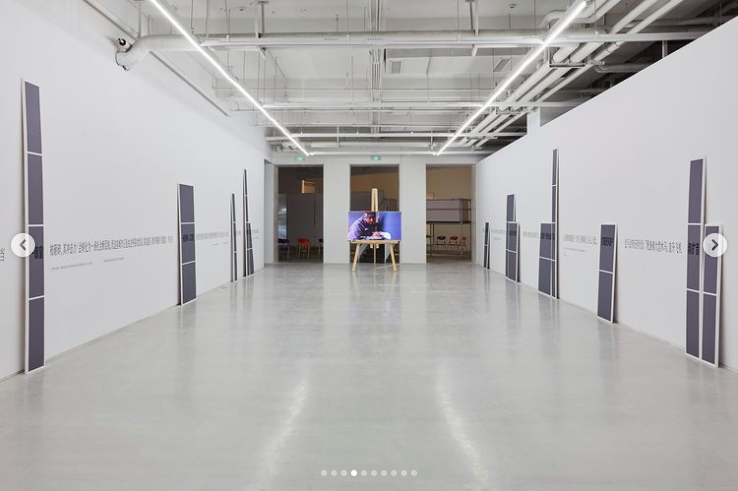
Beneath the Skin, Between the Machines (exhibition, 01.22 - 04.22)
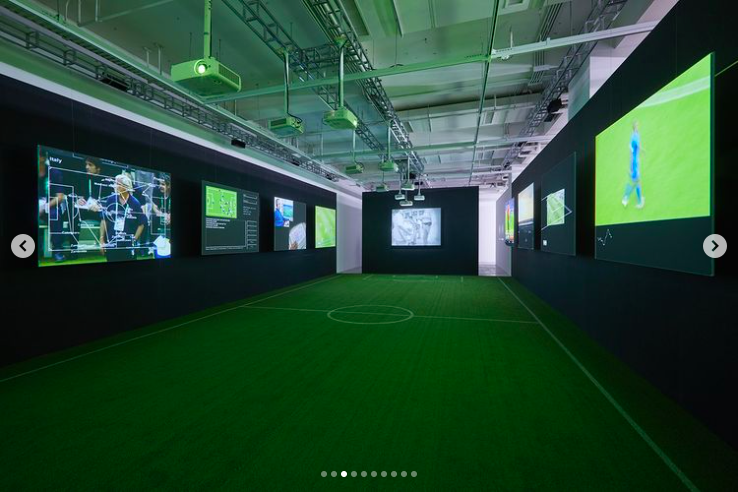
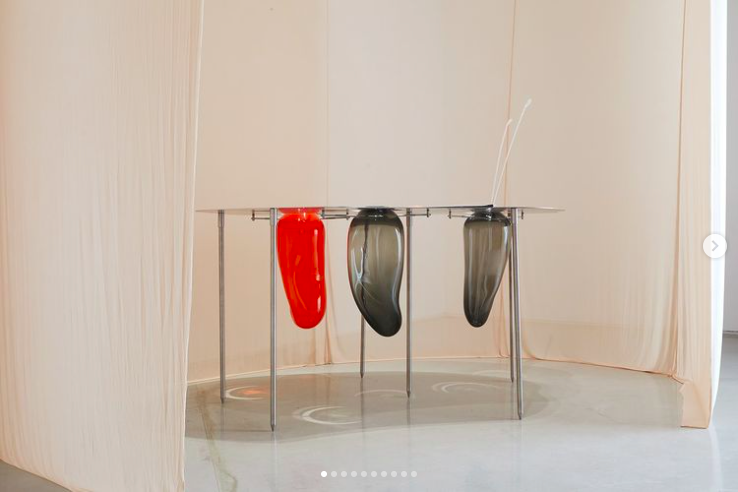
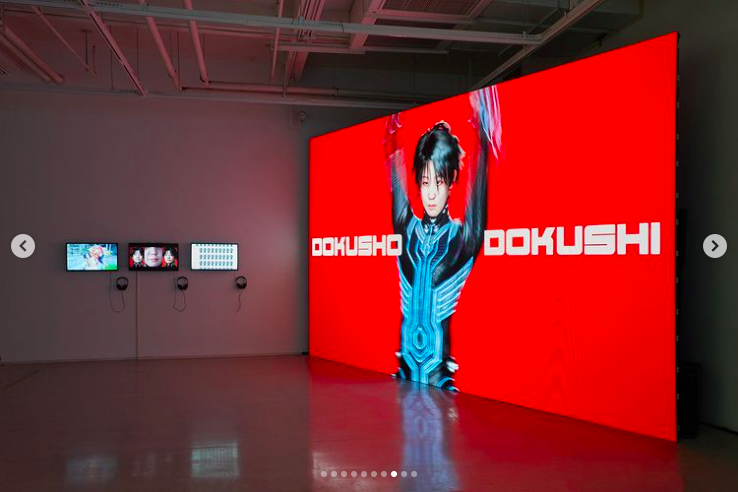
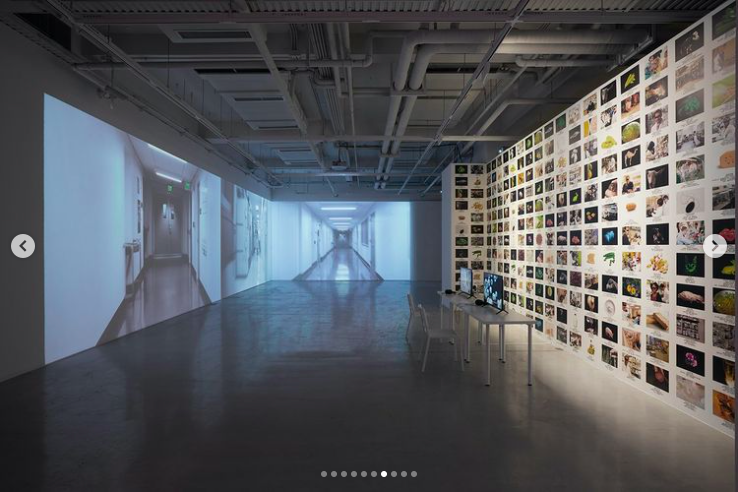
-----
Platform of Future-Past was realized with the support of Pro Helvetia.
Tuesday, August 31. 2021
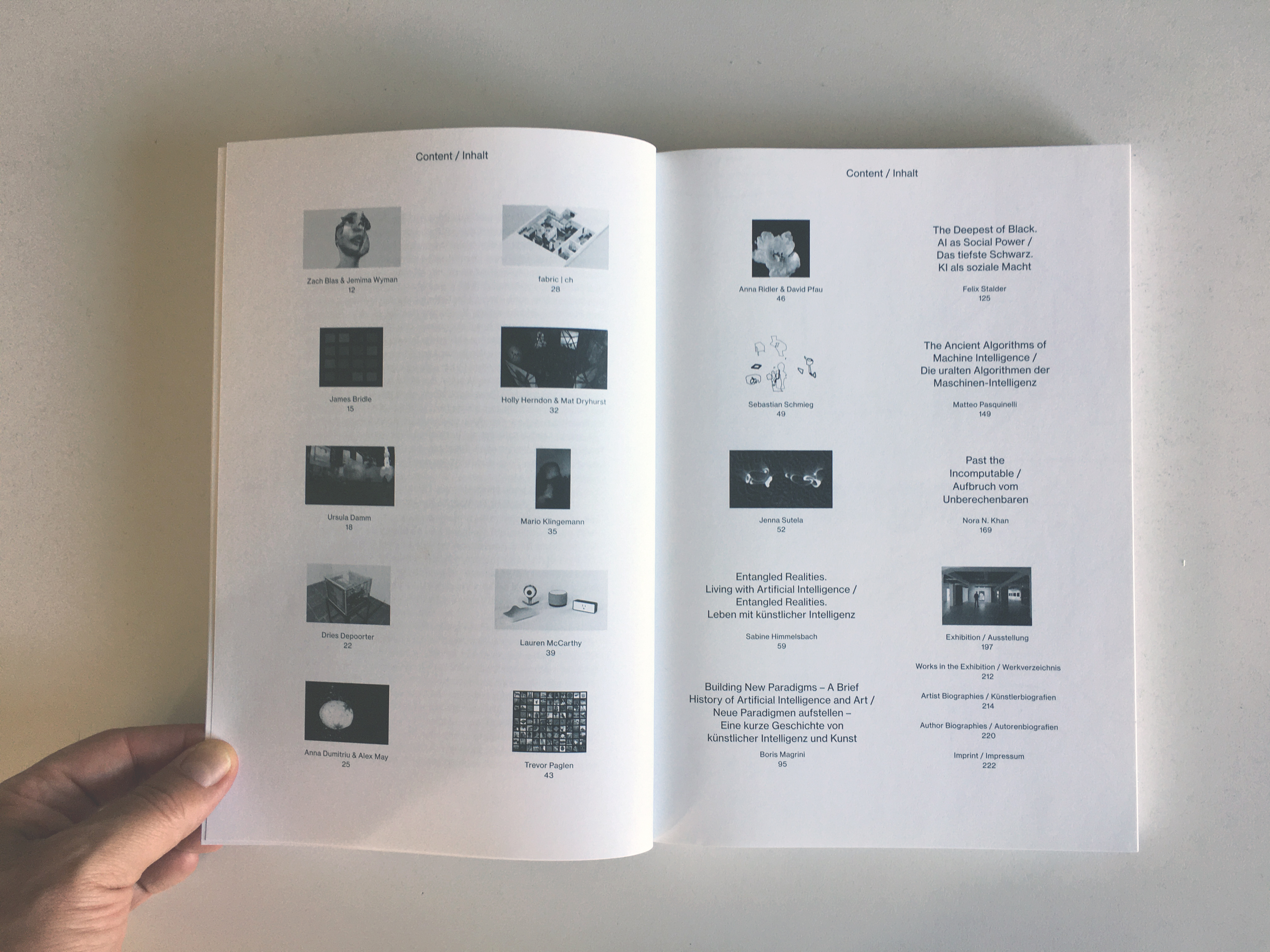
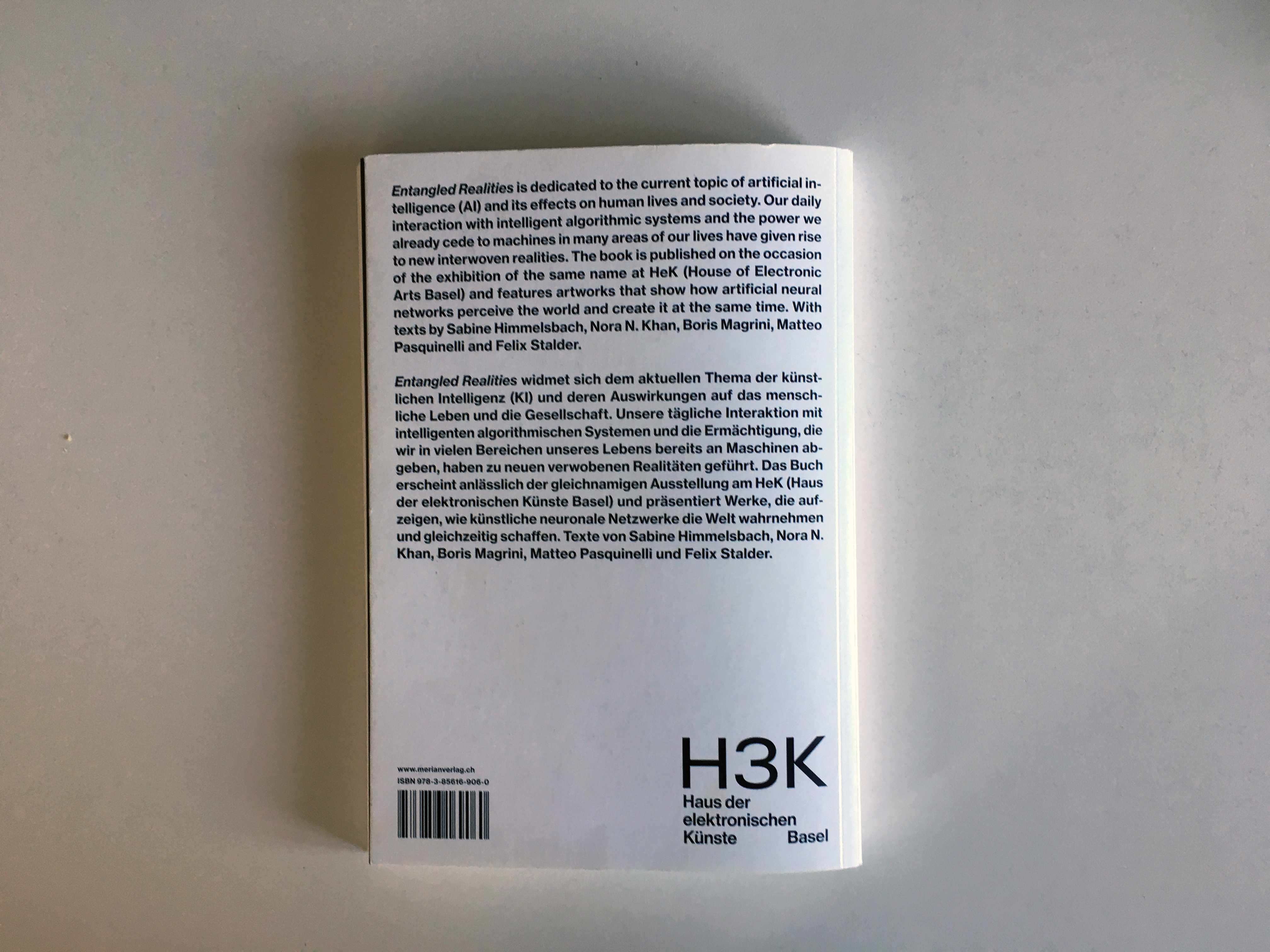
Entangled Realities, HeK exhibition catalogue (eds. S. Himmelsbach & B. Magrini), C. Merian Verlag (Basel, 2021) | #AI #art #environments
Note: this publication was released at the occasion of the exhibition Entangled Realities - Living with Artificial Intelligence, curated by Sabine Himmelsbach & Boris Magrini at Haus der elektronischen Künste, in Basel.
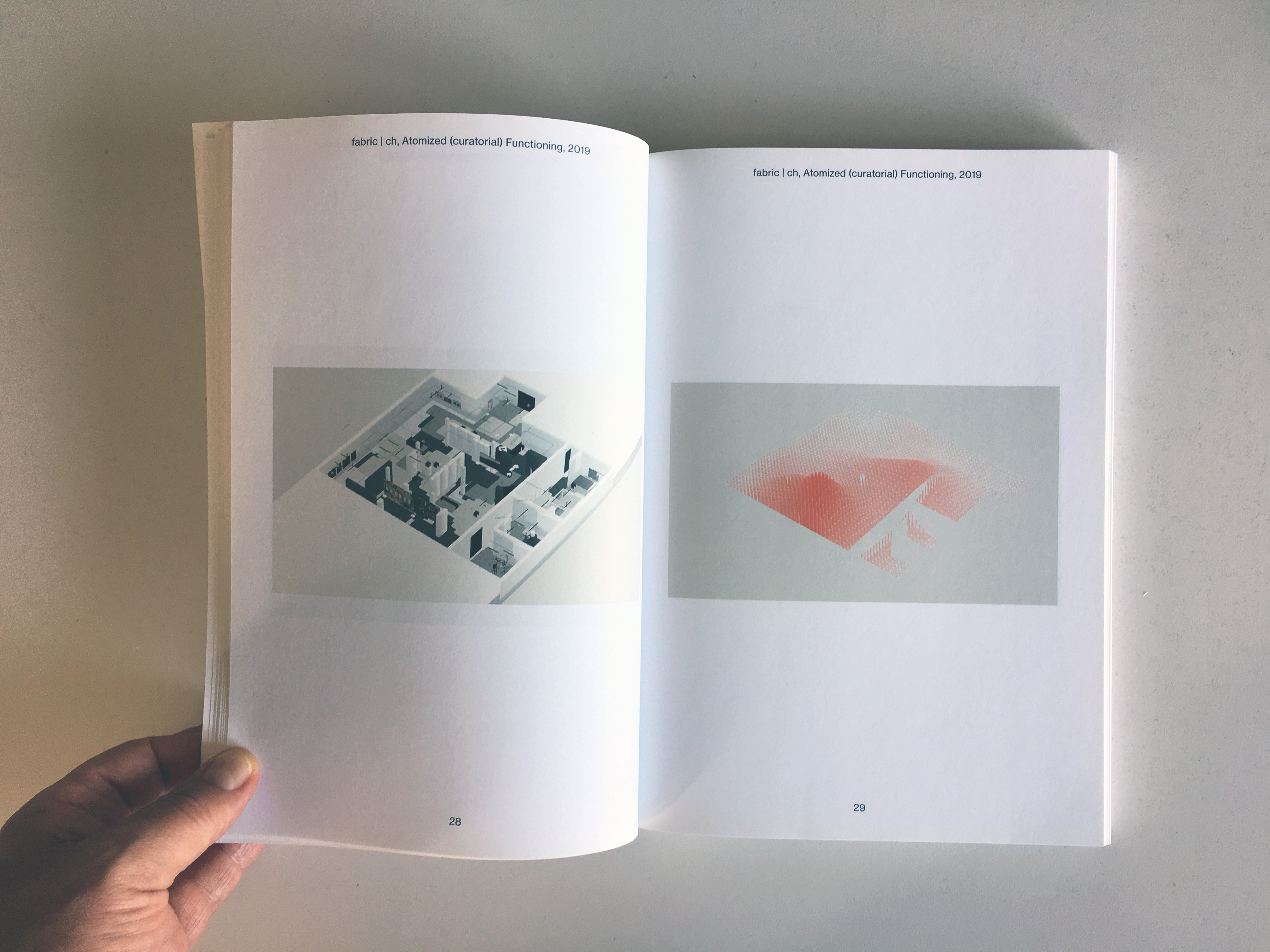
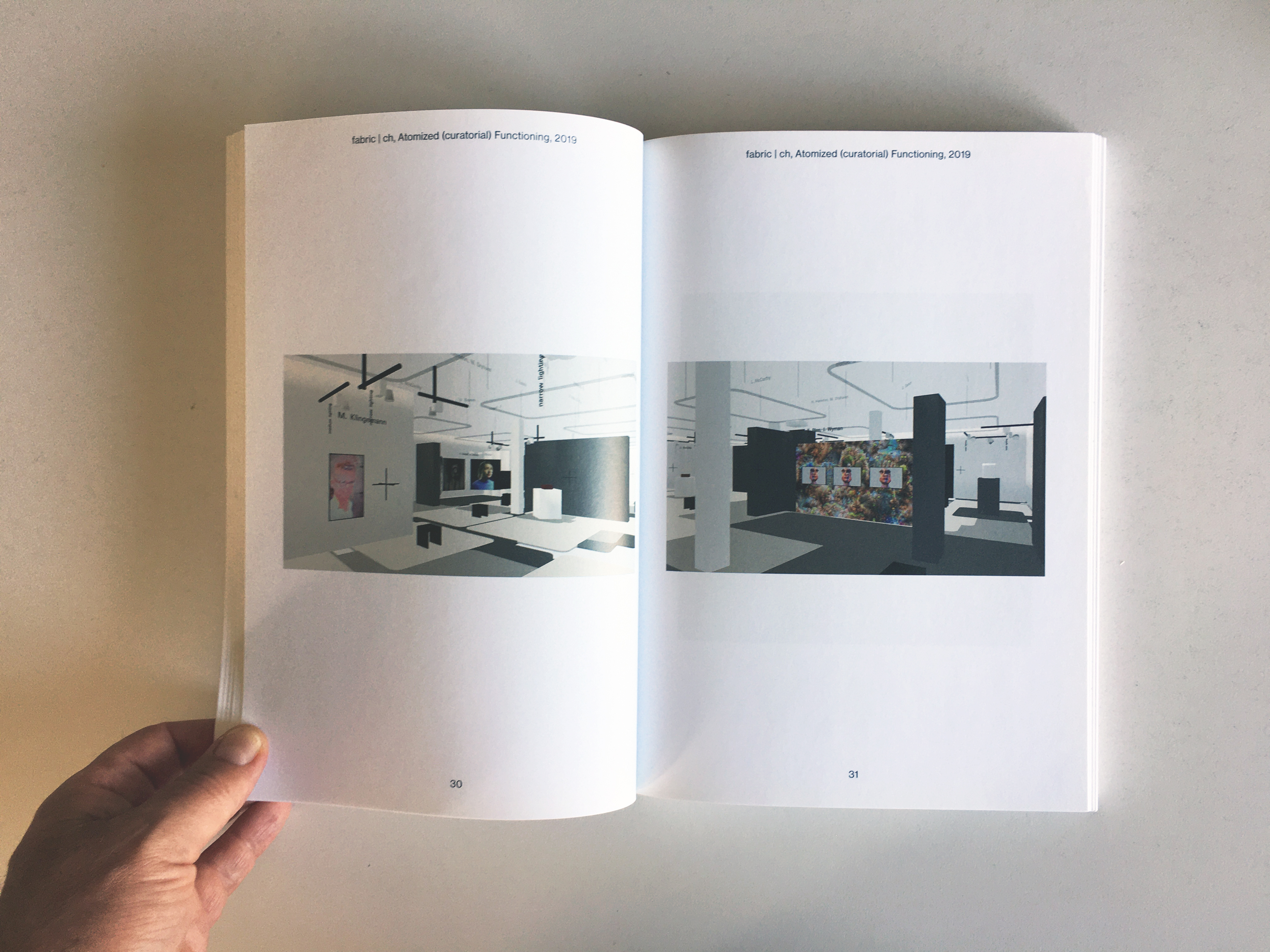
The project Atomized (curatorial) Functioning (pdf), part of the Atomized (*) Functioning serie, was presented, used and debatedi n this context.
-----
By Patrick Keller




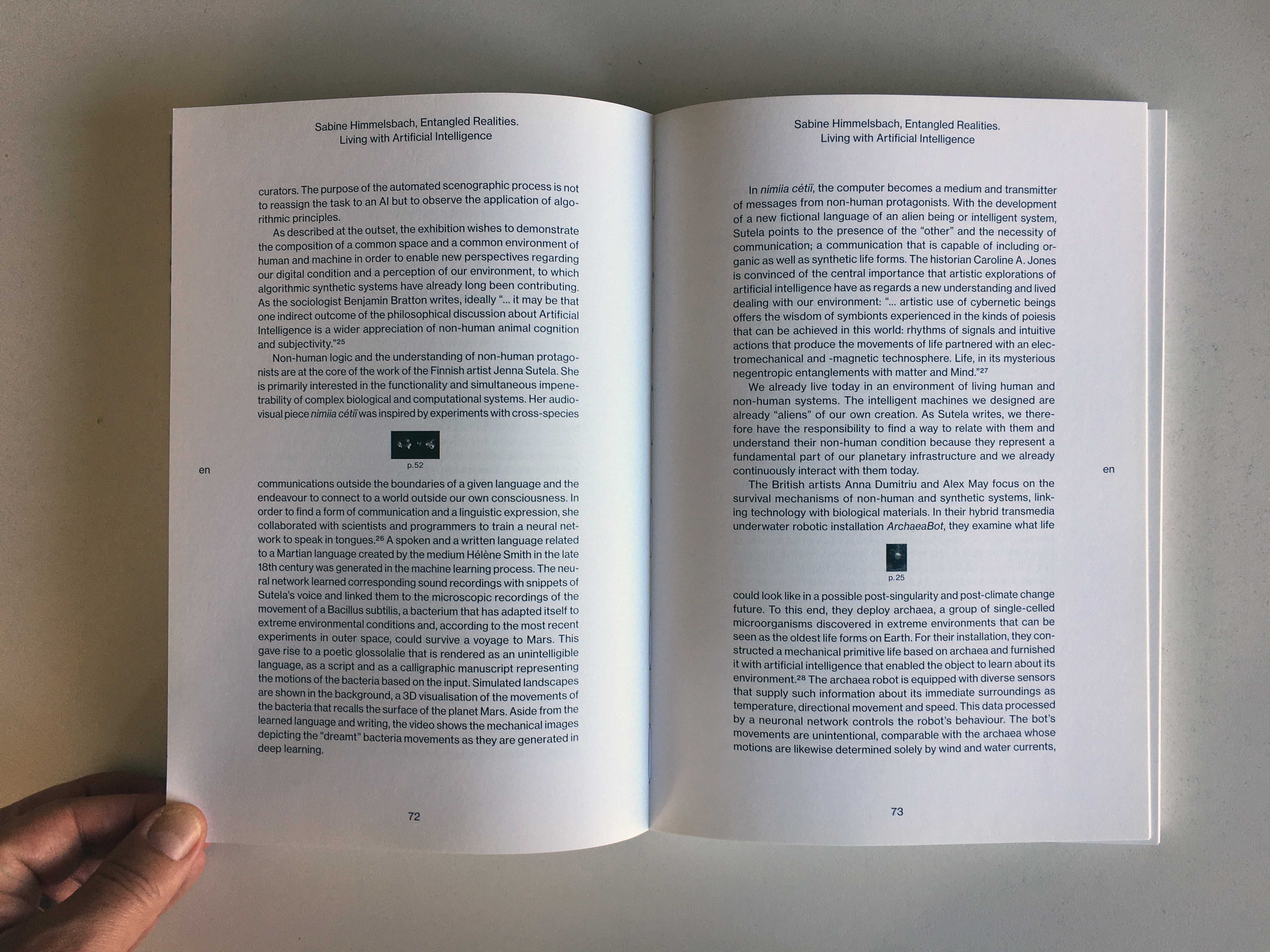
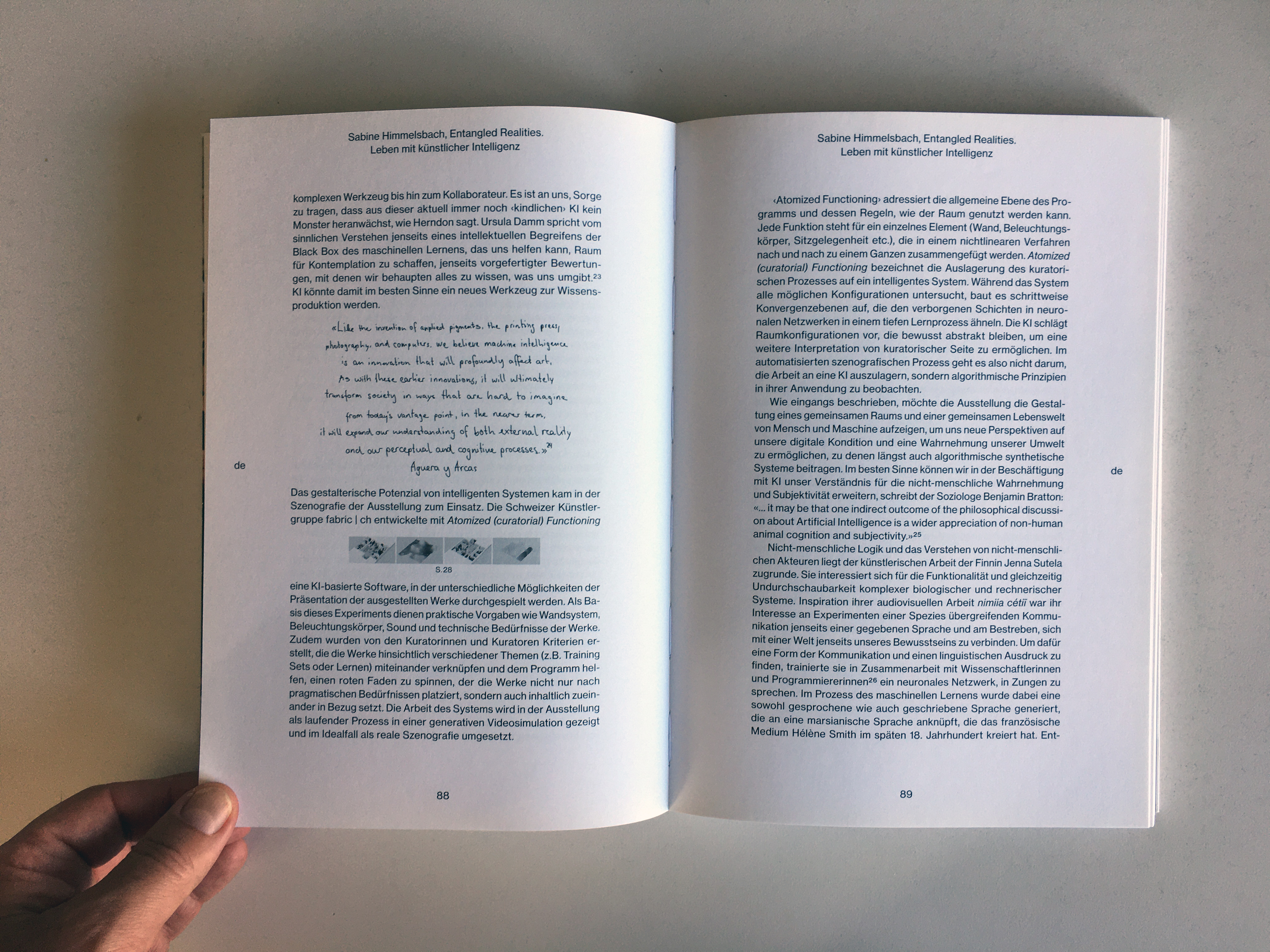
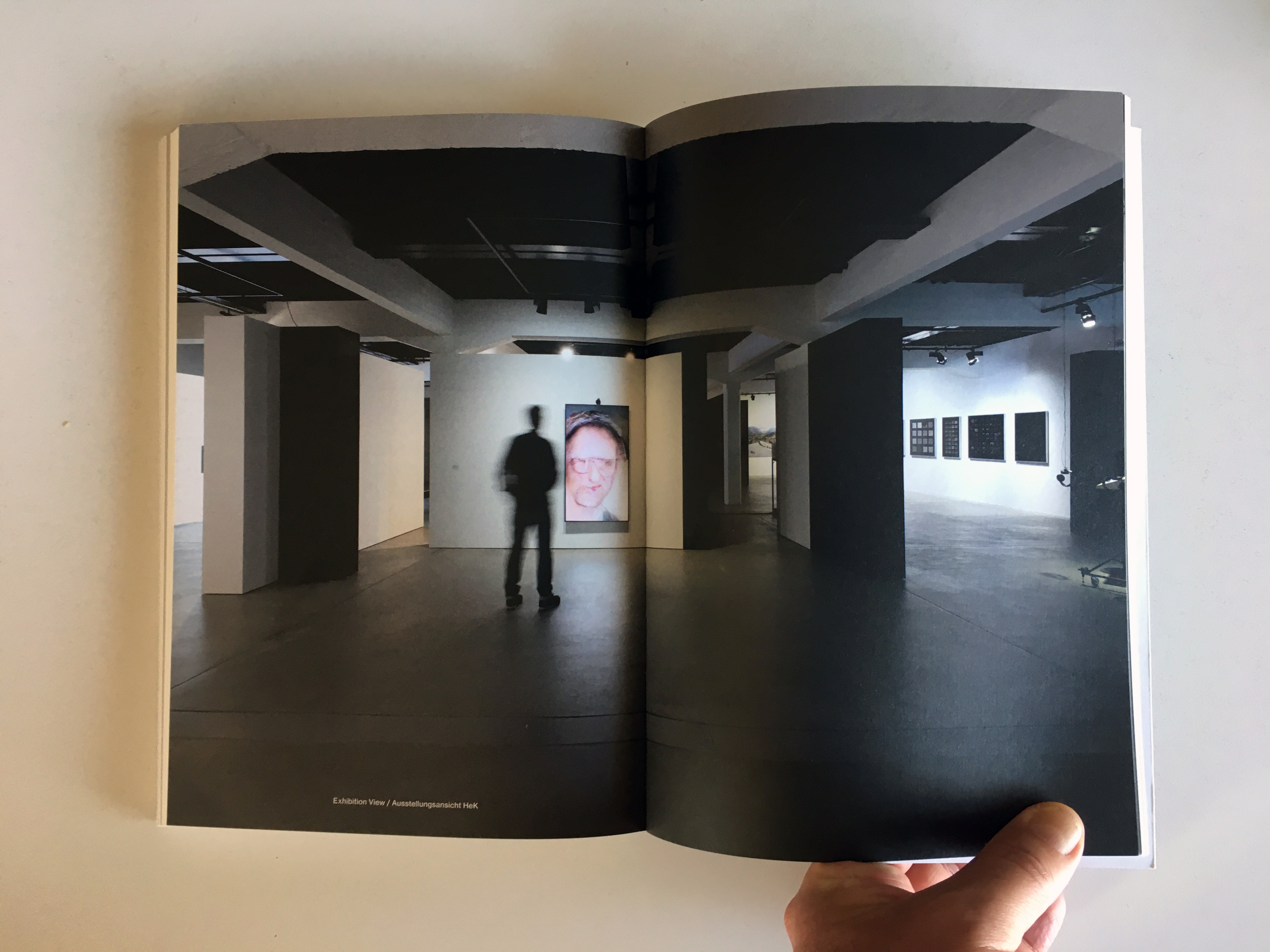
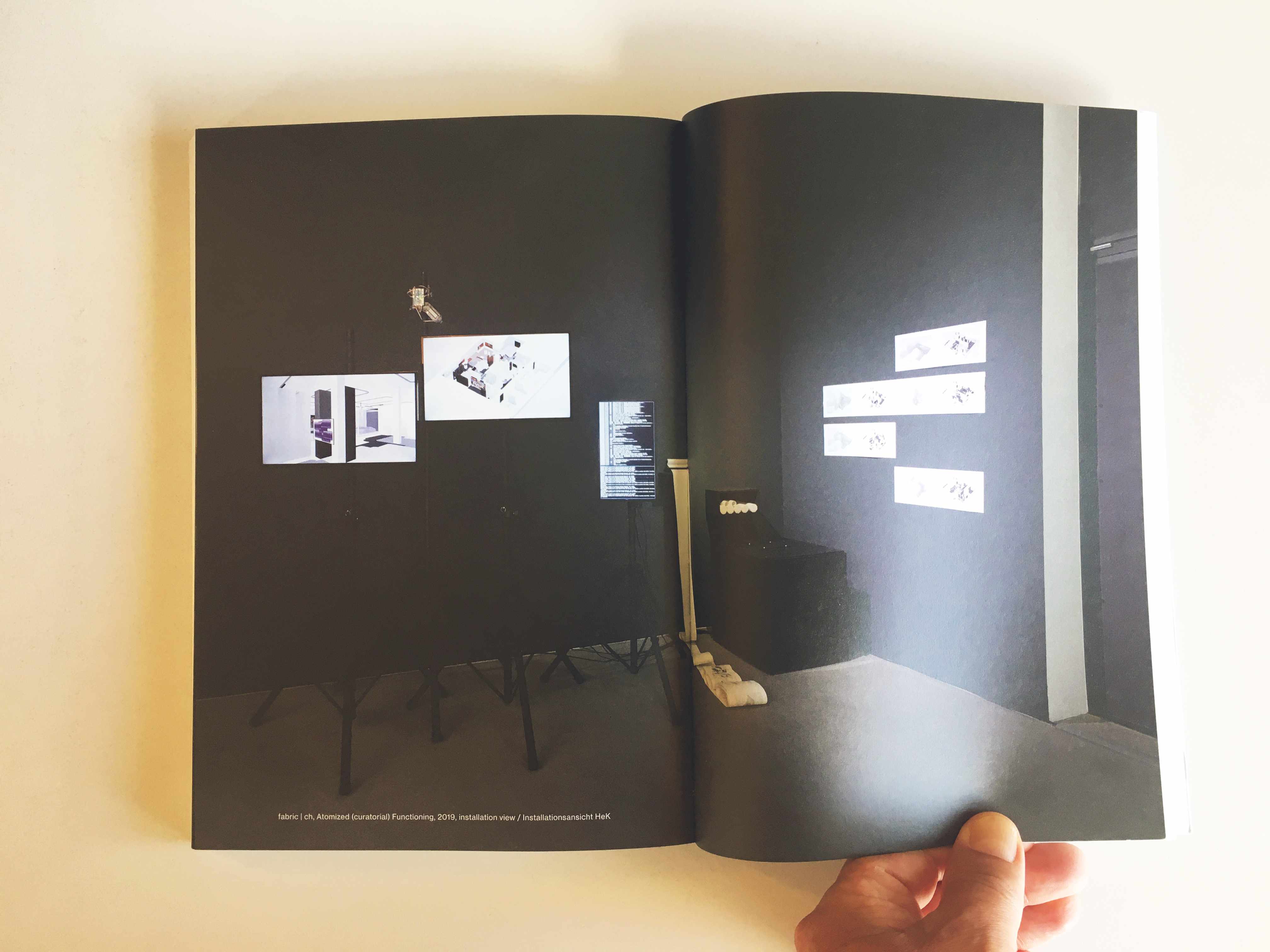
Wednesday, July 14. 2021
Interview with Patrick Keller – fabric | ch, HEK Blog (Basel, 2020) | #satellite #daylight #device
Note: Patrick Keller (fabric | ch) was in discussion with curator Sabine Himmelsbach, from Haus der elektronischen Künste in Basel (CH), about their new acquisition for the collection of the Museum: Satellite Daylight 47°33'N.
The piece will be displayed permanently in the public space of the HeK. At least until breakdown... But interestingly, it is also part of a whole program of digital conservation at HeK that should prevent its technological collapse, for which we had to follow a tight protocol of documentation and provide the source code pf the work.
-----

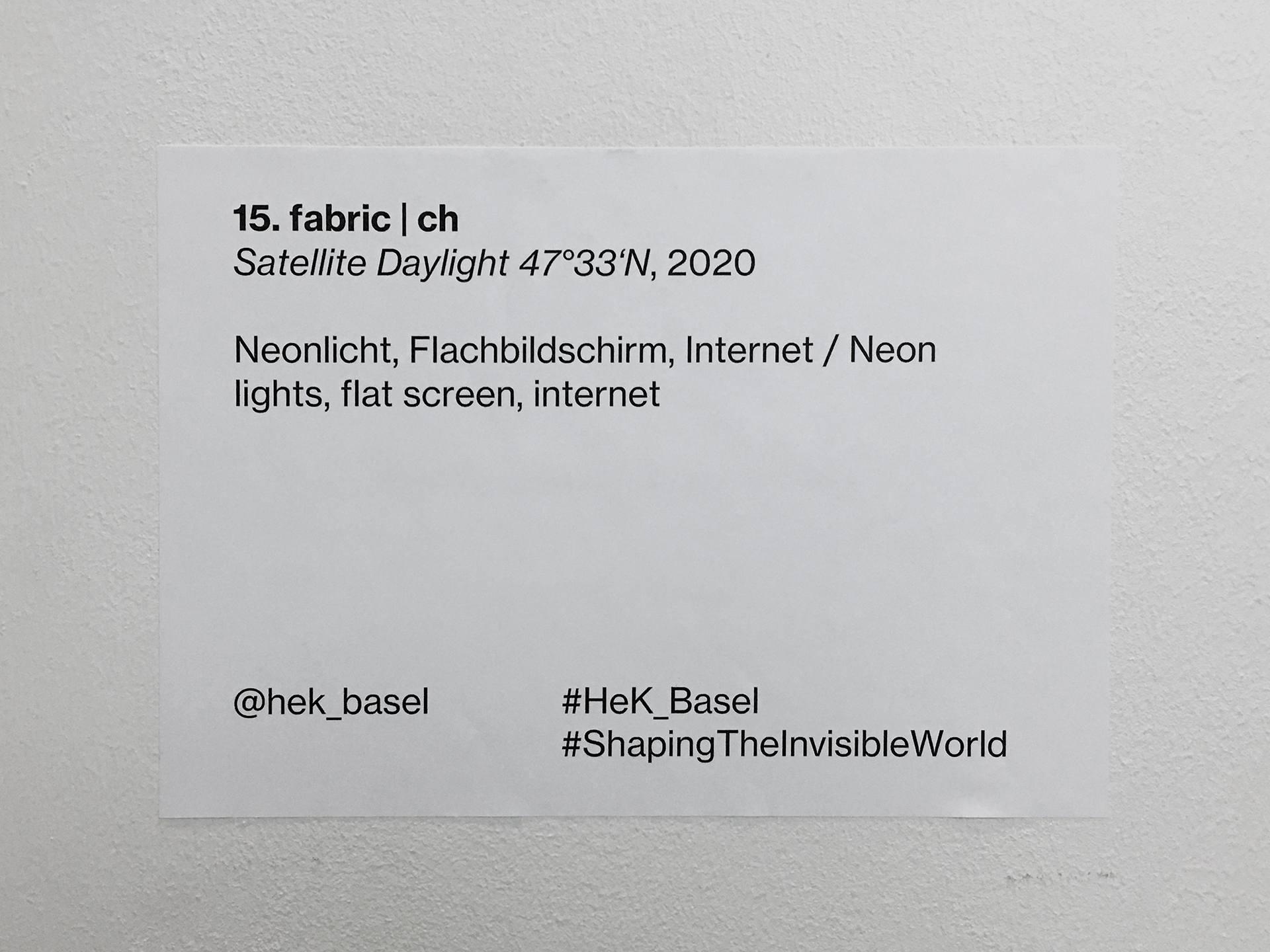
fabric | ch, Satellite Daylight, 47°33‘N, 2020, Vue de l'installation durant «Shaping the Invisible World», 2021, HeK. Photo.: P. Keller.
Shooting set in preparation ...

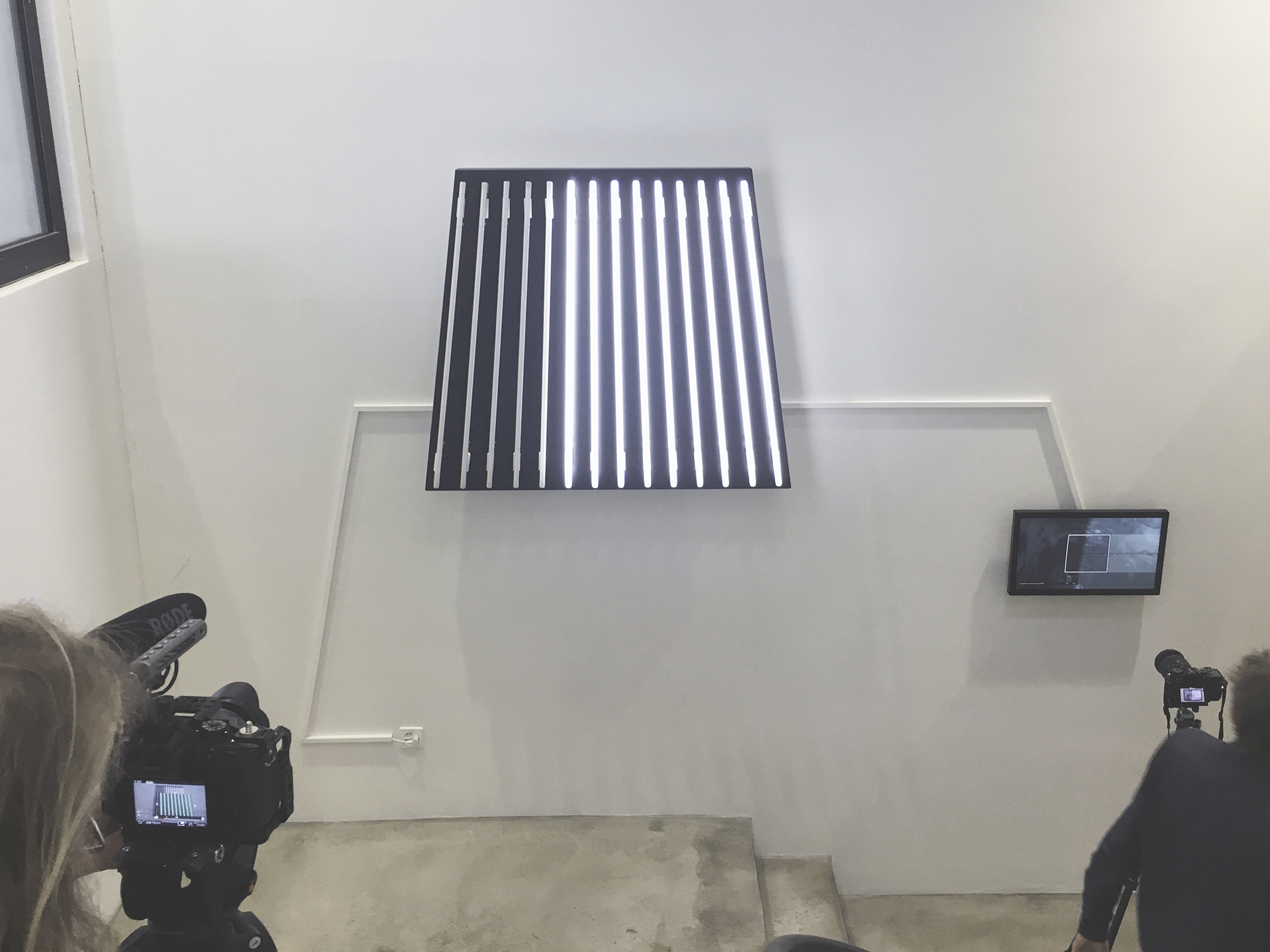
Followed by our discussion with Sabine Himmelsbach ... (with a lot of reverb in the staircase!)
-----
Via Haus der elektronischen Künste (blog)
Patrick Keller of fabric | ch, a studio for architecture, interaction and research in Lausanne, provides thrilling insight about the new work installed in the staircase of HeK.
Patrick Keller of fabric | ch, a studio for architecture, interaction and research in Lausanne, provides information about the new work in an interview. The installation Satellite Daylight, 47°33’N, commissioned for the HeK collection, simulates the light registered by an imaginary meteorological satellite orbiting the earth at the latitude of Basel at a speed of 7541m/s.
Monday, June 28. 2021
Exhibition "Shaping the Invisible World" at the Haus der elektronischen Künste | #exhibitions #countercartography
Note: fabric | ch was part of the exhibition Shaping the Invisible World, in the middle of the world pandemic (03.03 - 23.05.21).
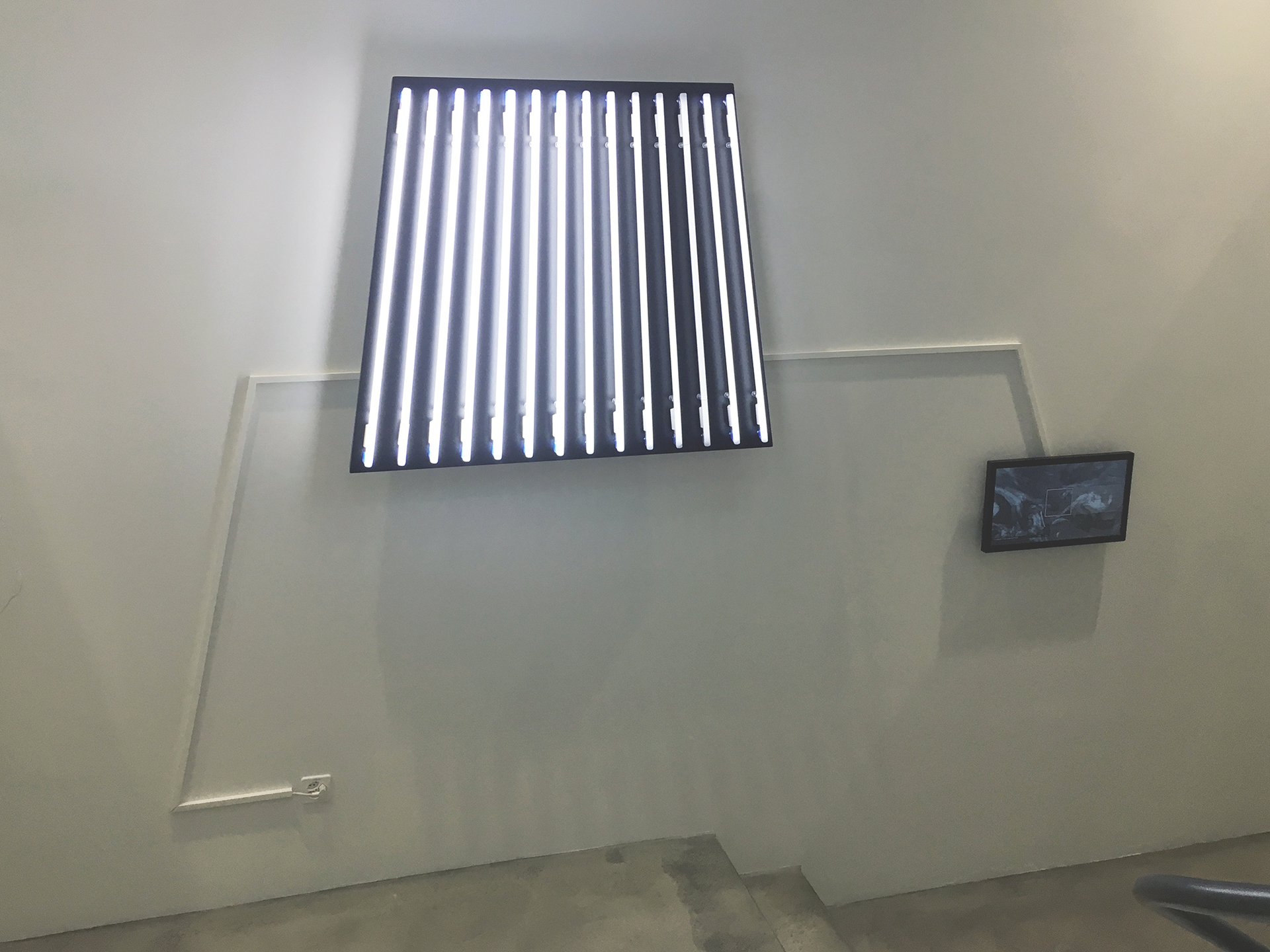
A new creation, Satellite Daylight 47°33'N was exhibited at this occasion (img. below), which was also acquiredby HeK and enters it's collection at the same time.
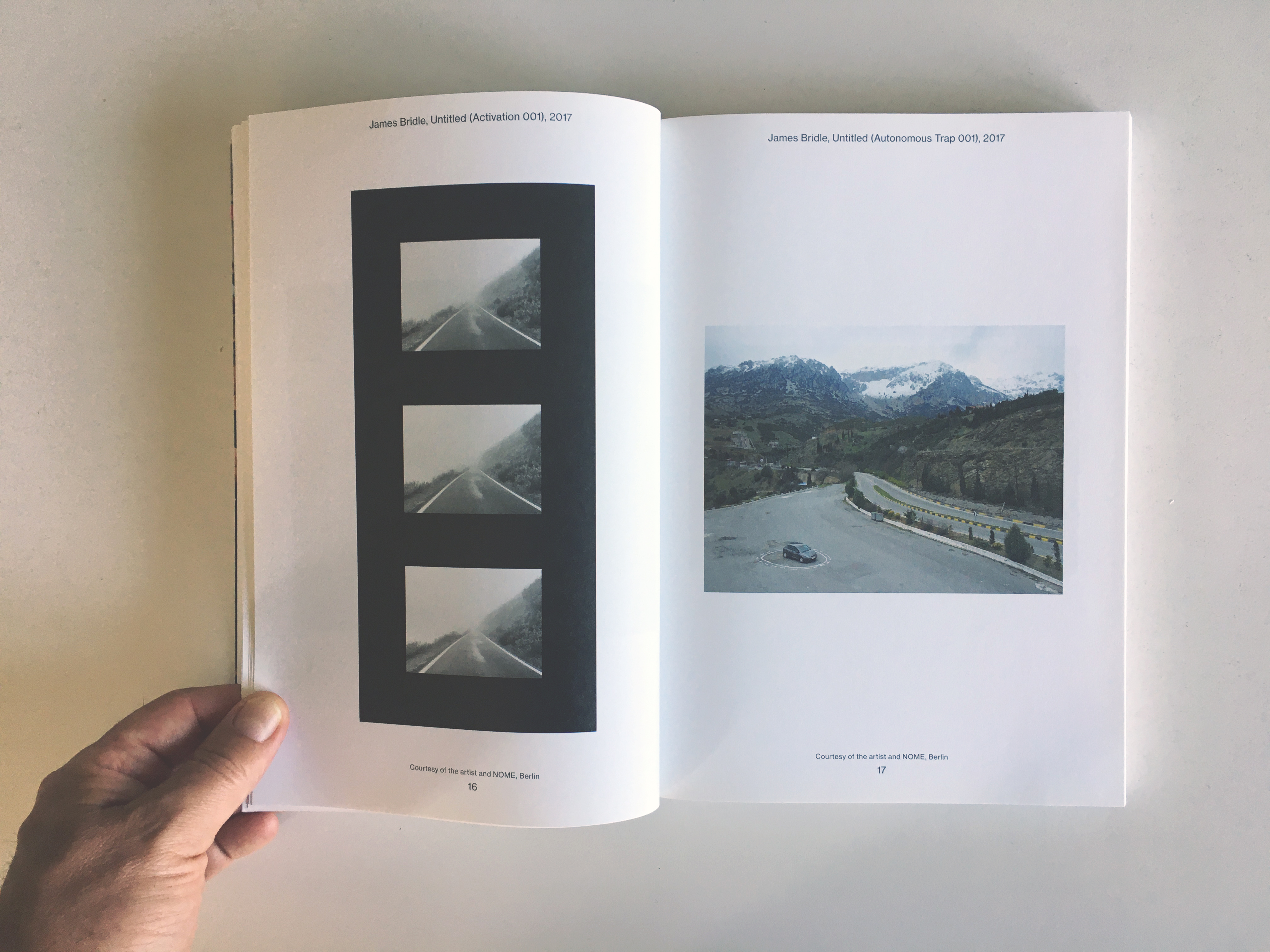
Among others, the exhibition displays works by Tega Brain, Bengt Sjölén & Julian Oliver, Bureau d'études, James Bridle, Trevor Paglen, Quadrature, etc. and was curated by Boris Magrini and Christine Schranz.
-----
Via Haus der eletronischen Künste
The exhibition «Shaping the Invisible World – Digital Cartography as an Instrument of Knowledge» examines, through cartography, the representational forms of the map as a tool between knowledge and technology. The works of the artists on view negotiate the meaning of the map as a gauge of our digital, technological and global society.
(Photo.: fabric | ch)
(Photo.: T. Marti)
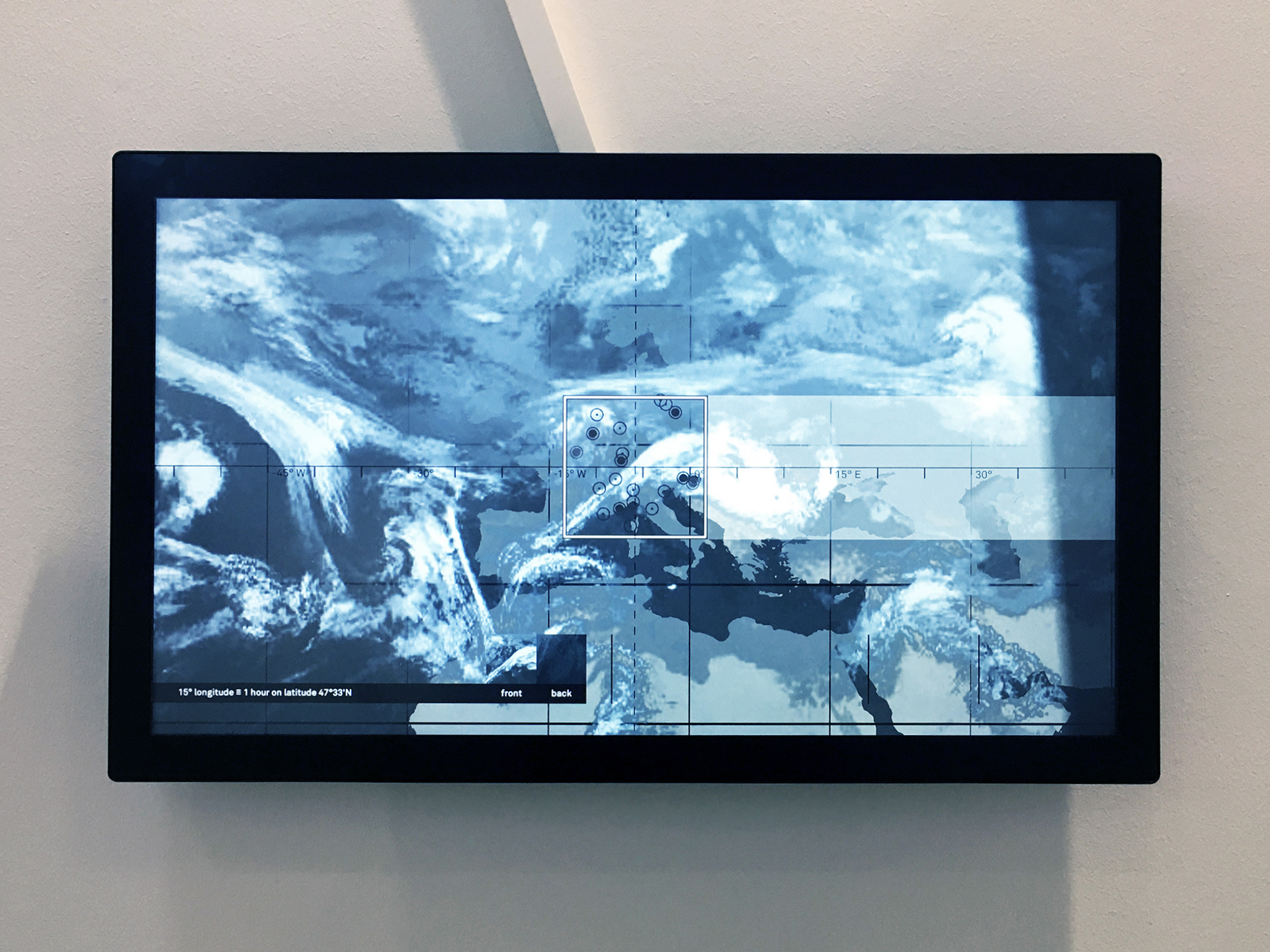
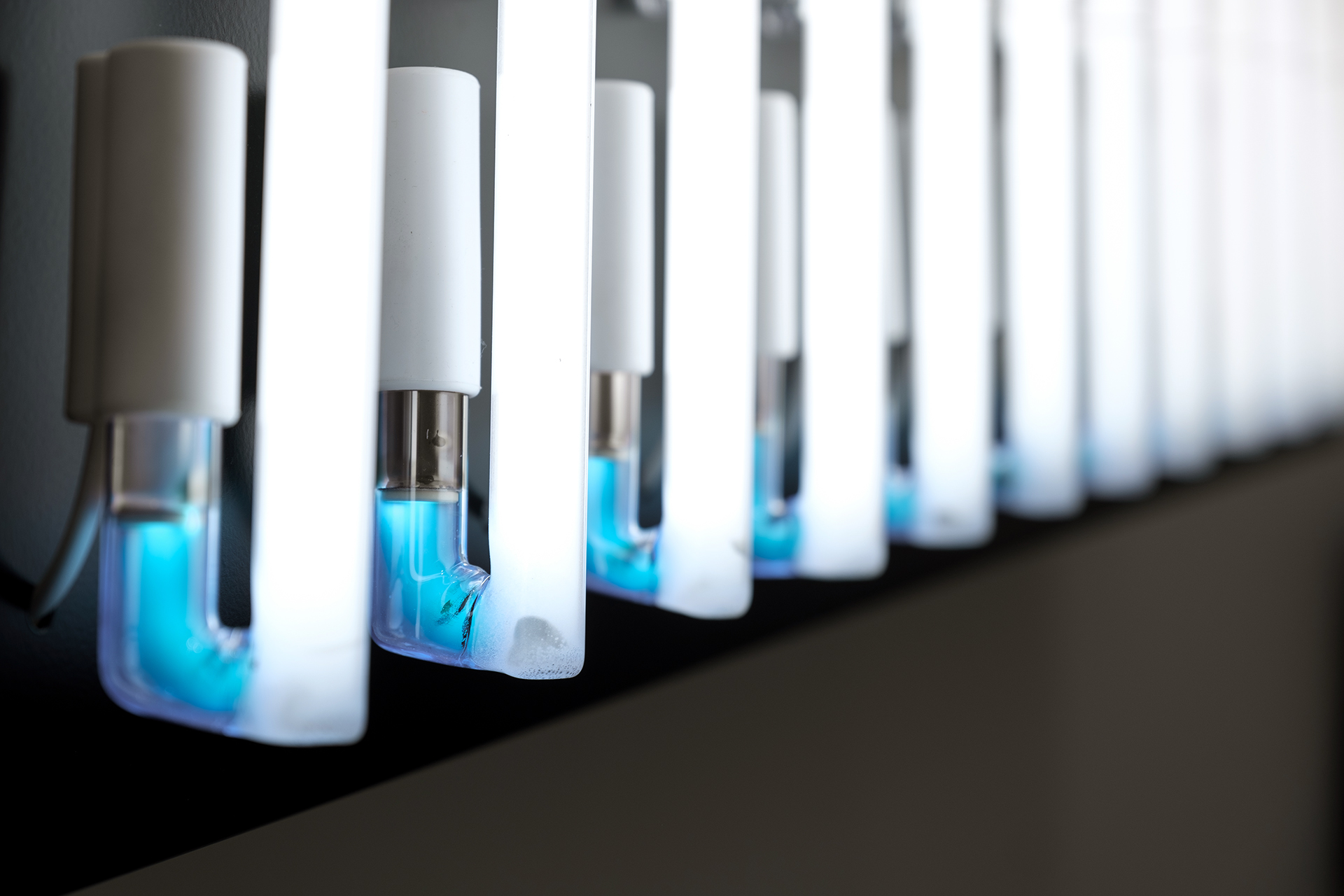
fabric | ch, Satellite Daylight 47°33'N (2021) at the Haus der elektronischen Künste (photo.: fabric | ch).
Cartography – the science of surveying and representing the world – developed in antiquity and provided the springboard for communication and economic exchange between people and cultures around the globe. At the same time, maps are undeniably never neutral, since their creation inherently involves interpretation and imagination. Today, it is IT companies that drive progress in the field and drastically influence our views of the world and how we communicate, navigate and consume globally. While map production has become more democratic, digital maps are nevertheless increasingly used for political and economic manipulation. Questions of privacy, authorship, economic interests and big data management are more poignant than ever before and closely intertwined with contemporary cartographic practices.
Today’s maps not only depict, but also document, negotiate and visualize subjective views of the world. But are these maps more democratic? Who benefits from self-determined productions and what consequences do they lead to?
The strategies in digital mapping and cartography employed by the artists presented in Shaping the Invisible World – Digital Cartography as an Instrument of Knowledge are subversive. Their spectacular panoramas and virtual scenarios reveal how the digital technologies culturally affect our understanding of the world.
Navigating between subversive cartography and digital mapping, the exhibition puts the spotlight on the fascination of maps in relation to the democratization of knowledge and appropriation. By uncovering hidden realities, scarcely visible developments and possible new social relationships within a territory, the artists delineate the evolution of invisible worlds.
-
Artists: Studio Above&Below, Tega Brain & Julian Oliver & Bengt Sjölén, James Bridle, Persijn Broersen & Margit Lukács, Bureau d'études/ Collectif Planète Laboratoire, fabric | ch, Fei Jun, Total Refusal (Robin Klengel & Leonhard Müllner), Trevor Paglen, Esther Polak & Ivar Van Bekkum, Quadrature, Jakob Kudsk Steensen
Curators: Boris Magrini and Christine Schranz

(View the pictures of the exhibition directly on HeK's website).
fabric | ch, Satellite Daylight 47°33‘N | #luminosity #daylight #device #environment
Note: A new work by fabric | ch has been commissionned and aquired by the Haus der elektronischen Künste (HeK) in Basel for the museum's collection, part of the Satellite Daylight serie of "environmental devices".
It is the second work of fabric | ch that enters the collection, after a serie of four videos related to Satellite Daylight and entitled Satellite Daylight Pavilion. We are glad to join artists in the collection like Jodi, mediengruppe!Bitnick, Etoy, ... and also former students or colleagues at ECAL/University of Art and Design Lausanne (Juerg Lehni, Gisin & Vanetti, FragmentIn)!
This new artwork is entitled Satellite Daylight 47°33'N, and circles in fictious and continous way around the 47°33'N latitude -- while acquiring live environmental data about daylight, light intensity, nebulosity and cloud cover that drive the luminous display. --
This continuous circonvolution, at the speed of a real Earth Satellite and that triggers 16 nights and days per regular day on Earth, produces a new combined daylight at the point of installation, both local and internationally mediated.
Satellite Daylight's is an open serie of unique artworks, each located on a different latitude.
Via fabric | ch
-----
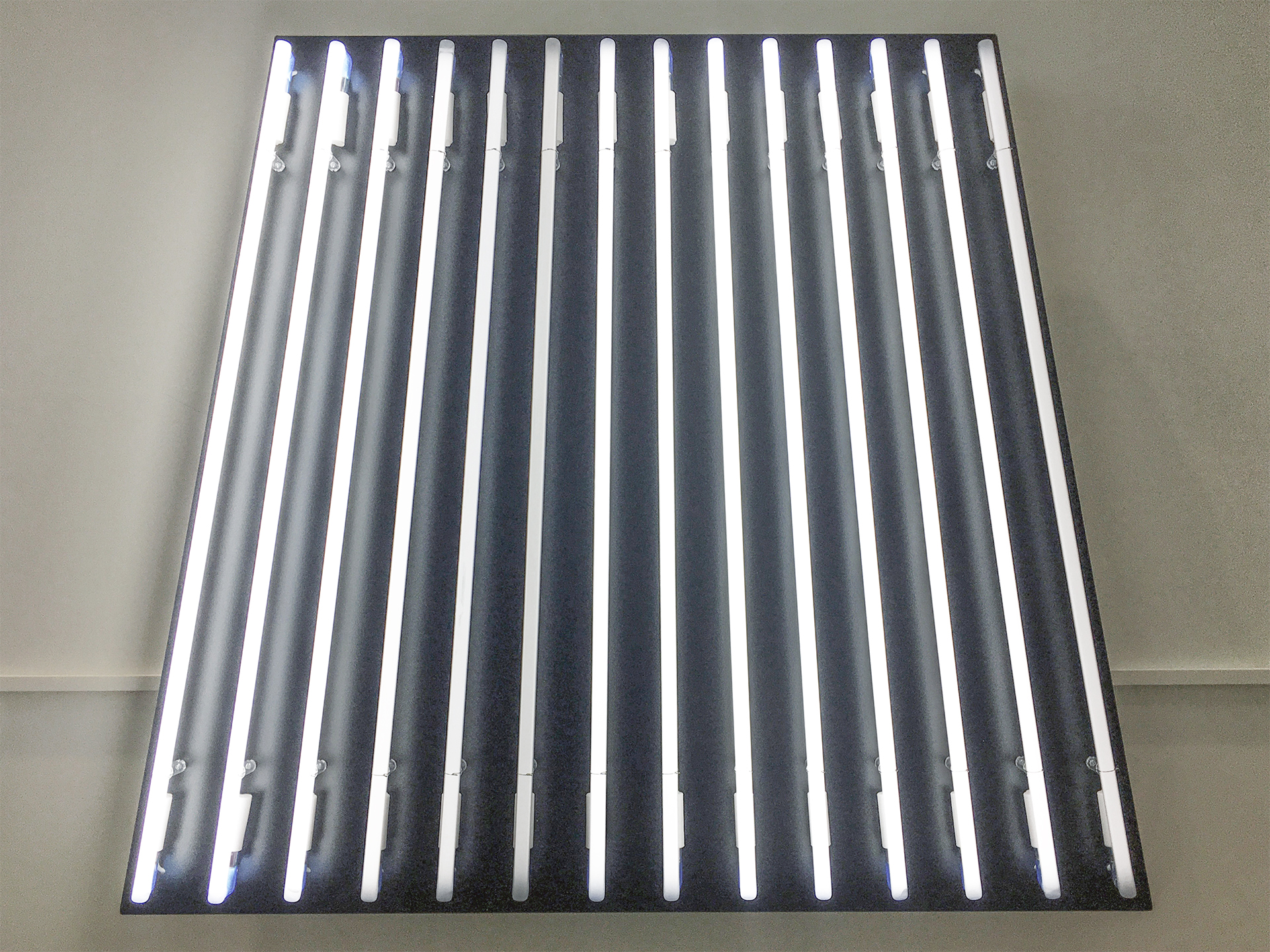
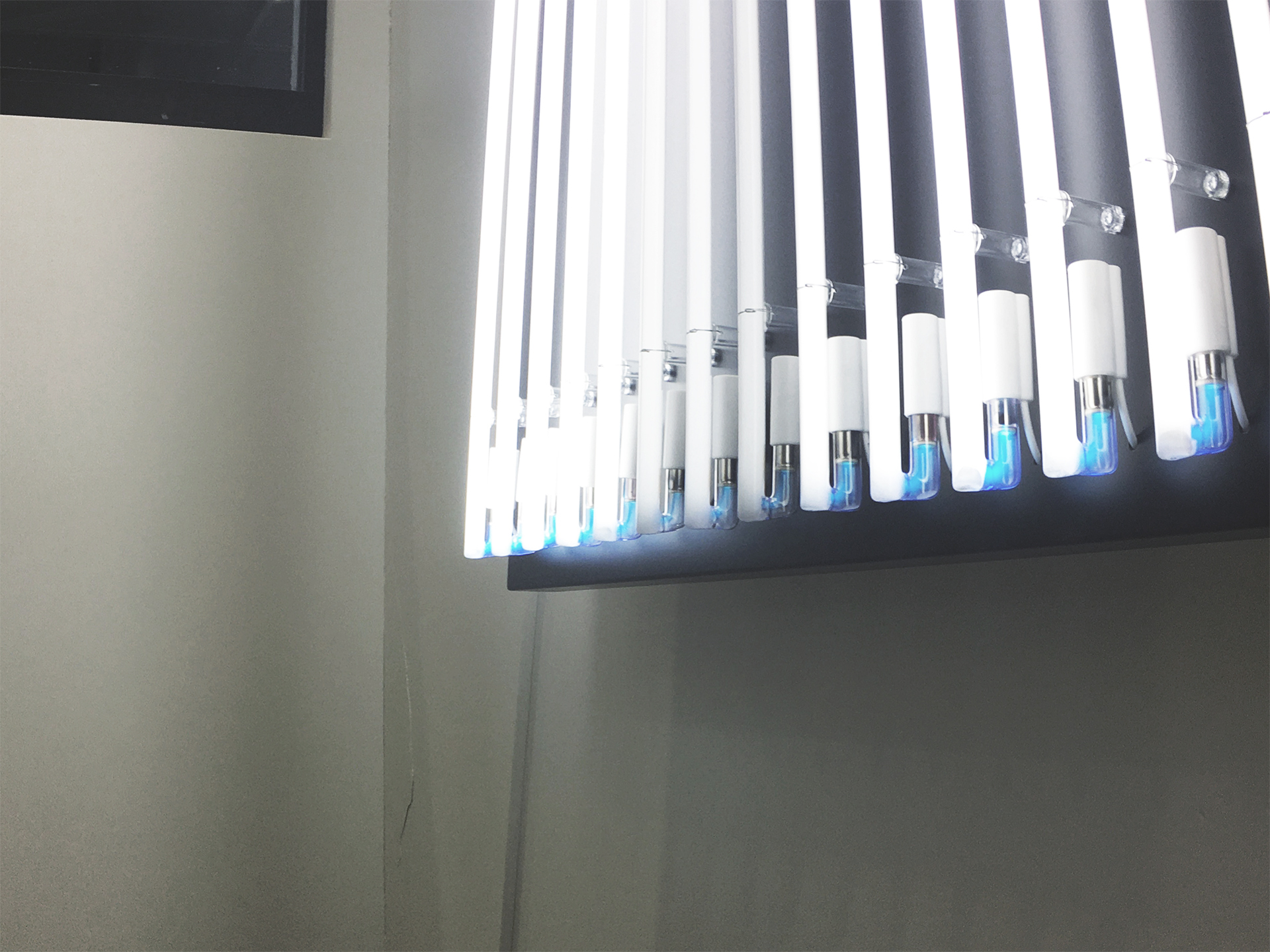
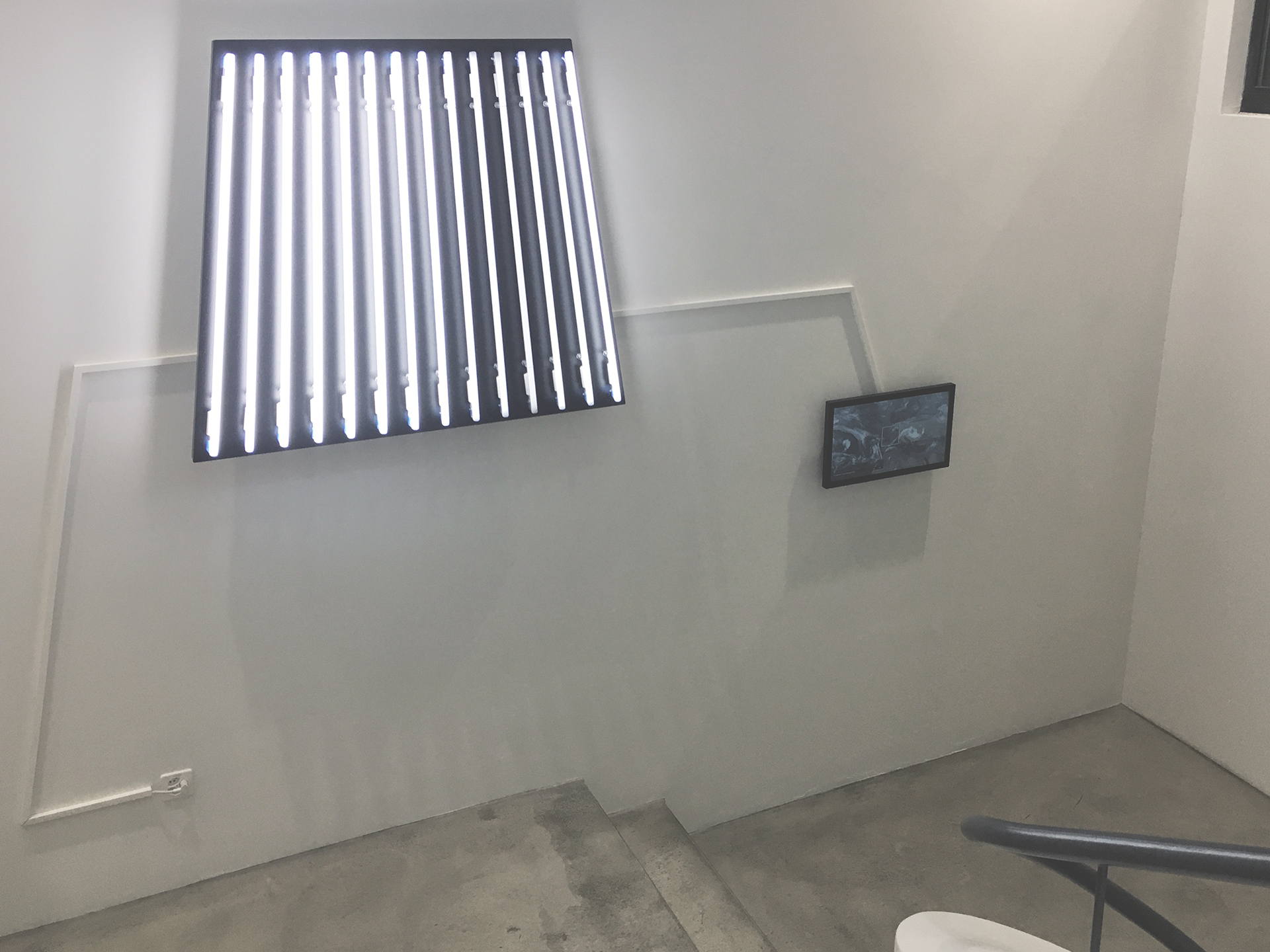
(Photo.: P. Keller)
Monday, May 03. 2021
Satellite Daylight 46°28'N during Media Quanrantine at Pushkin Museum | #artificial #luminosity #satellite
Monday, August 31. 2020
fabric | ch, Satellite Daylight Pavilion | #luminosity #artificiality #interference
Note: during the long shutdown of the museums in Switzerland last Spring, fabric | ch has nevertheless the chance to see Public Platform of Future Past (pdf), one of its latest architectural investigations, integrated into the permanent collection of the Haus der elektronischen Künste (HeK), in Basel.
We are pleased that our work is recognized by innovative and risk taking curators (Sabine Himmelsbach, Boris Magrini), and become part of the museum's collection, along several others works (by Jodi, !Mediengruppe Bitnik, Olia Lialina, Christina Kubisch, Zimoun, etc.)
It is also the first of our work whose certificate of authenticity has been issued by a blockchain! (datadroppers)
A second work - currently in production - will enter the collection in the spring of 2021, which will be documented at that time.
-----
Via Haus der elektronischen Künste
By Sabine Himmelsbach
HeK Sammlung - Sabine Himmelsbach über fabric | ch from HeK on Vimeo.
---
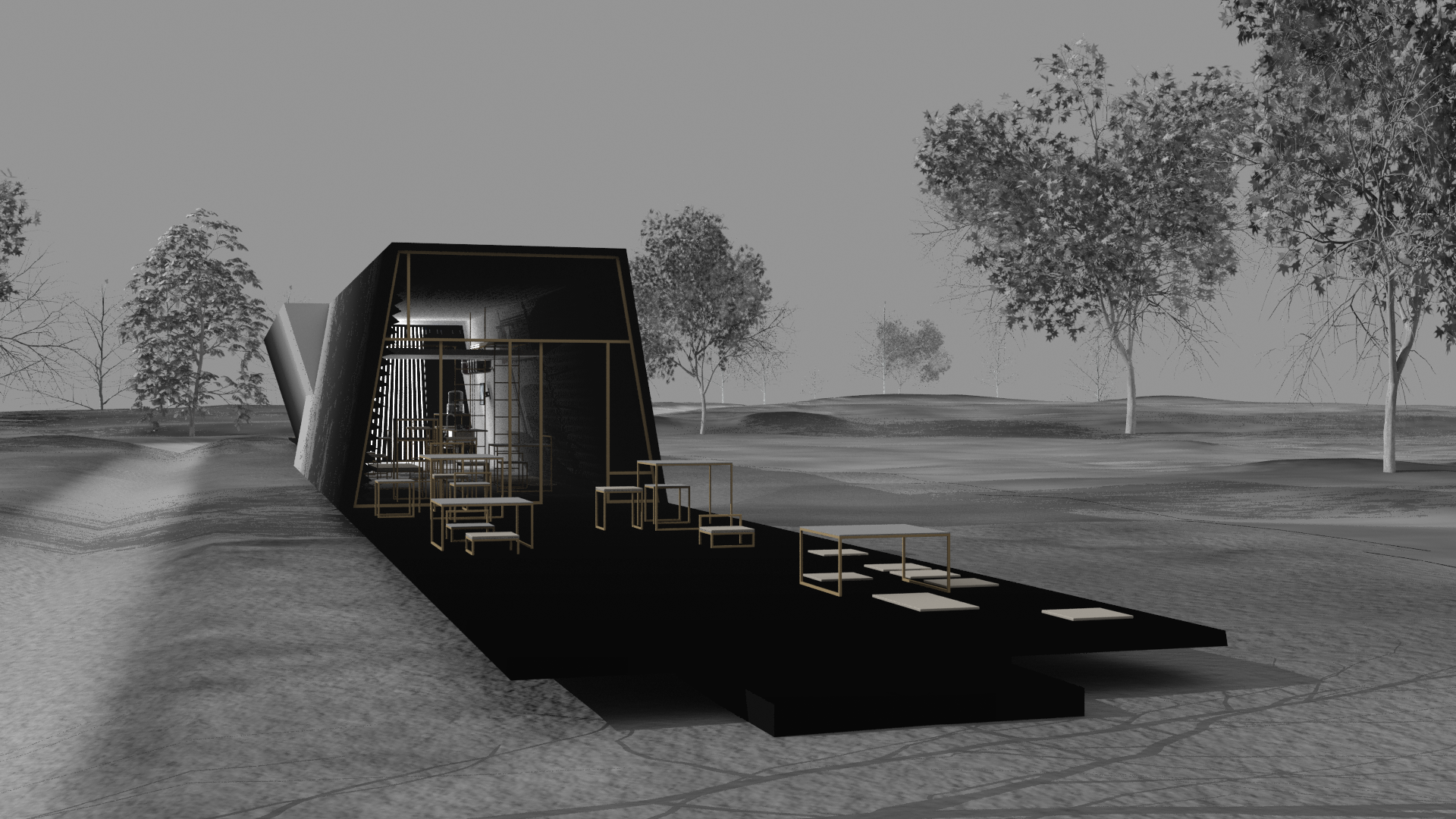
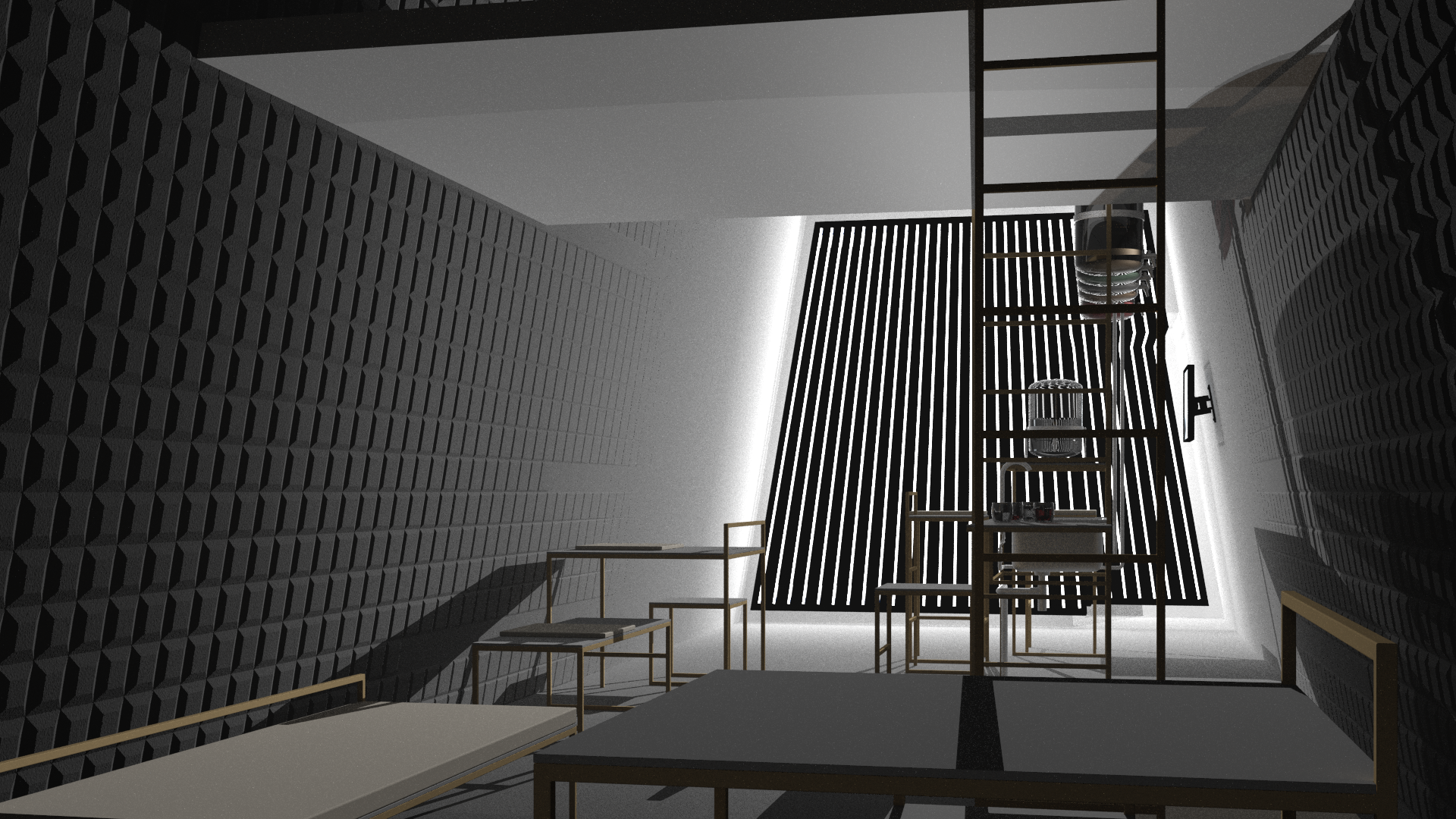
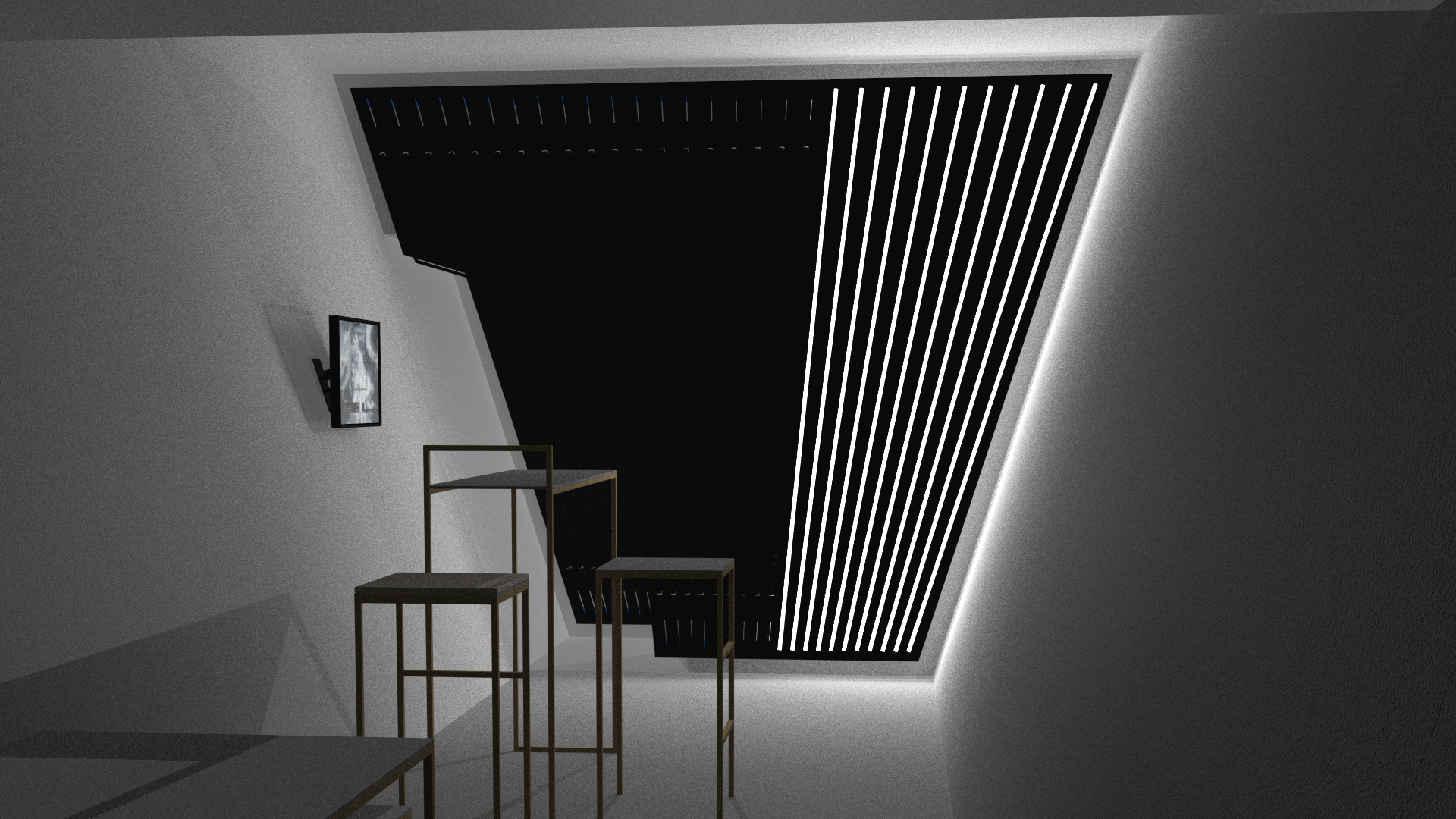
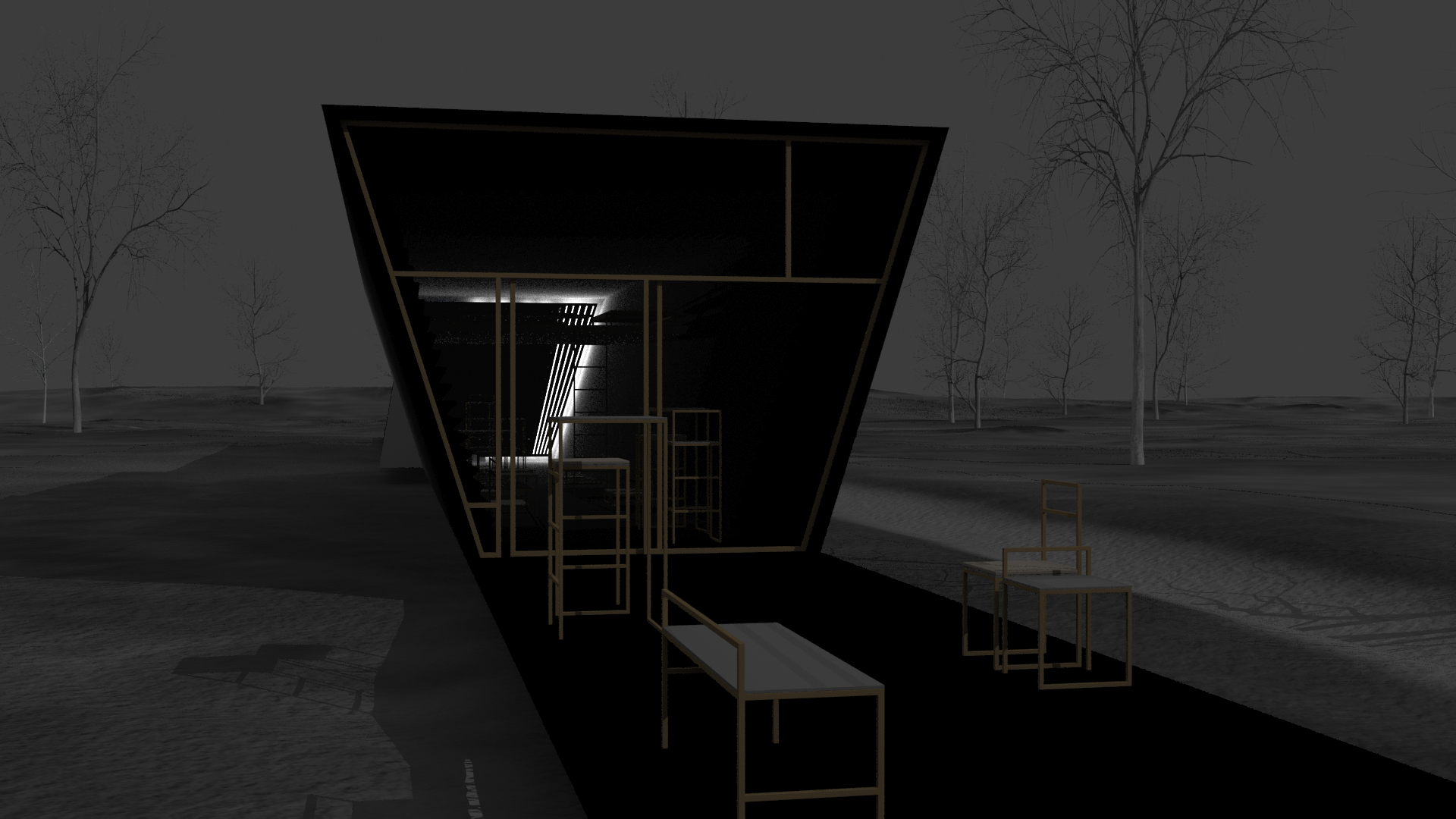
The video work is composed of four distinct videos, each showing a distinct but static view into a timelapse of the pavilion and its evolving light.
All four video must be displayed simultaneously by following minimal instructions.
Saturday, February 17. 2018
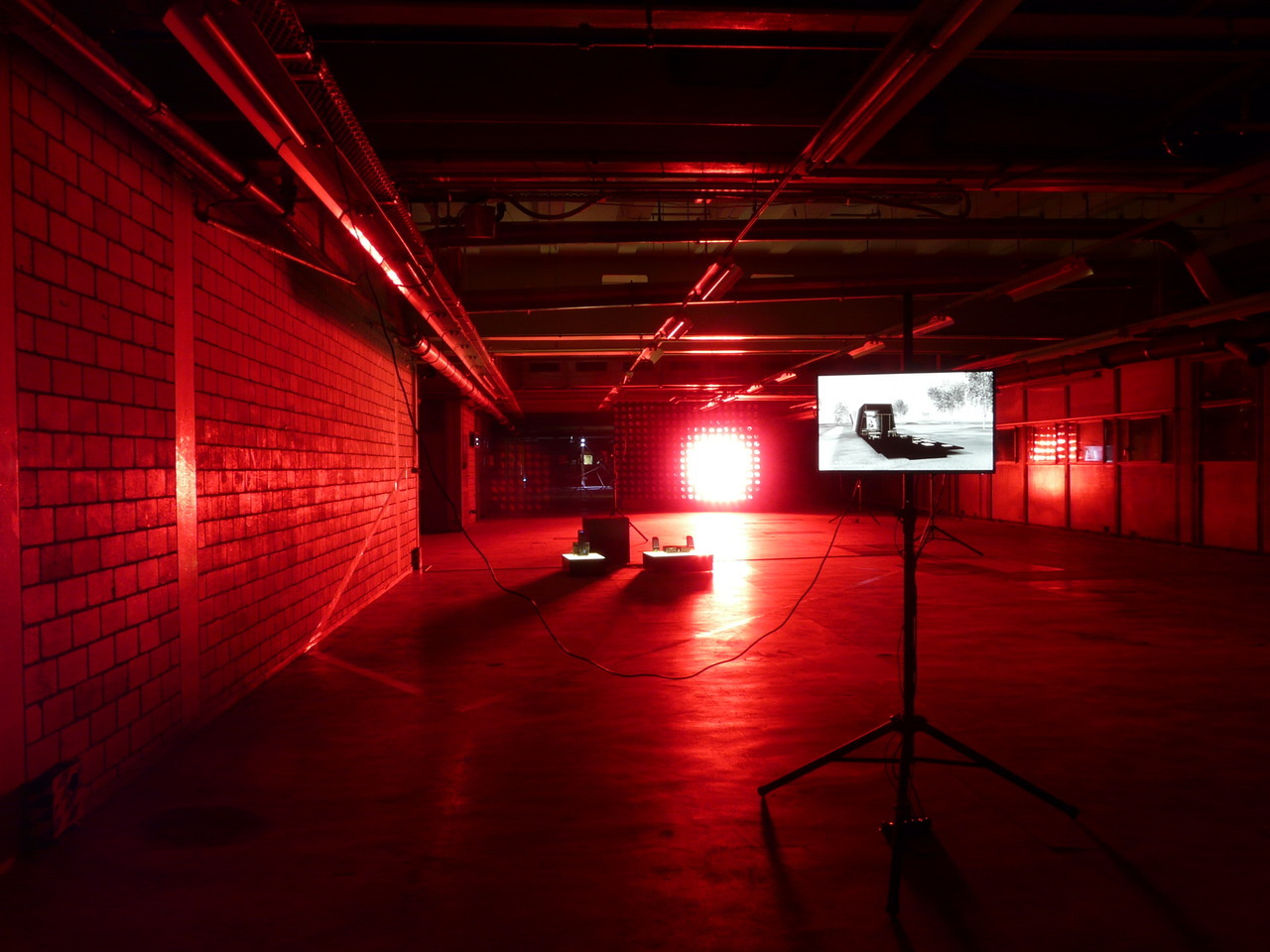
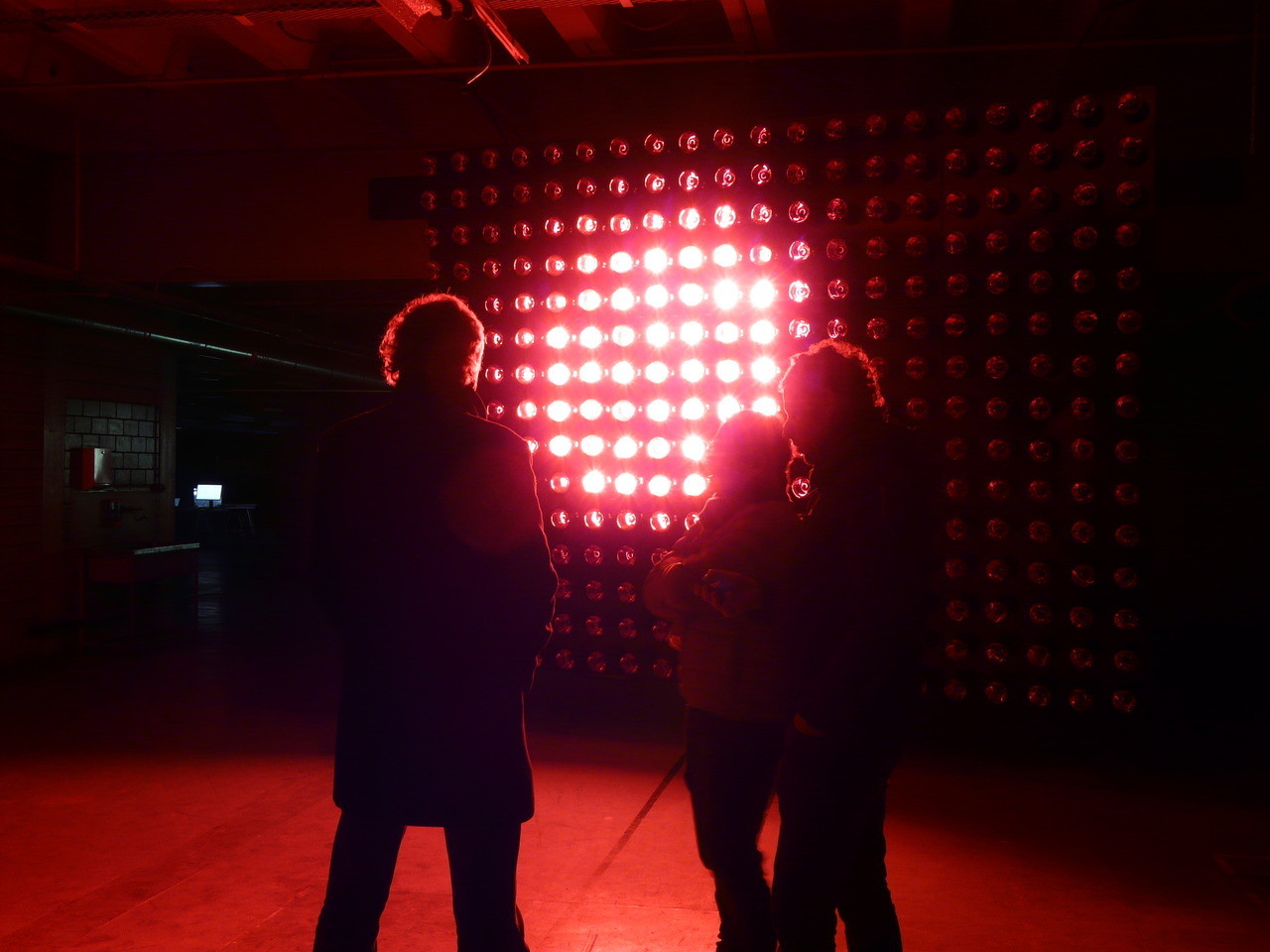
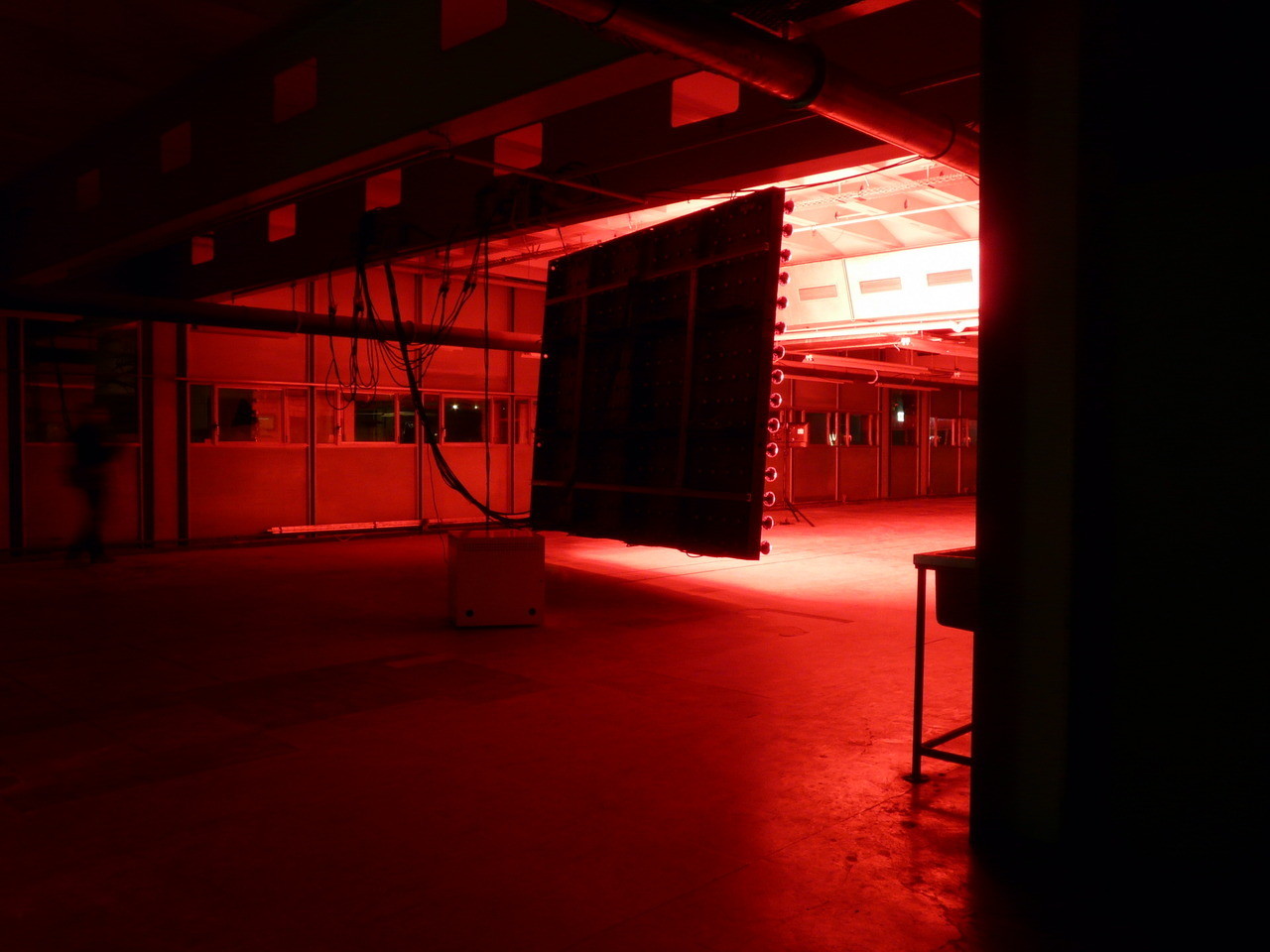
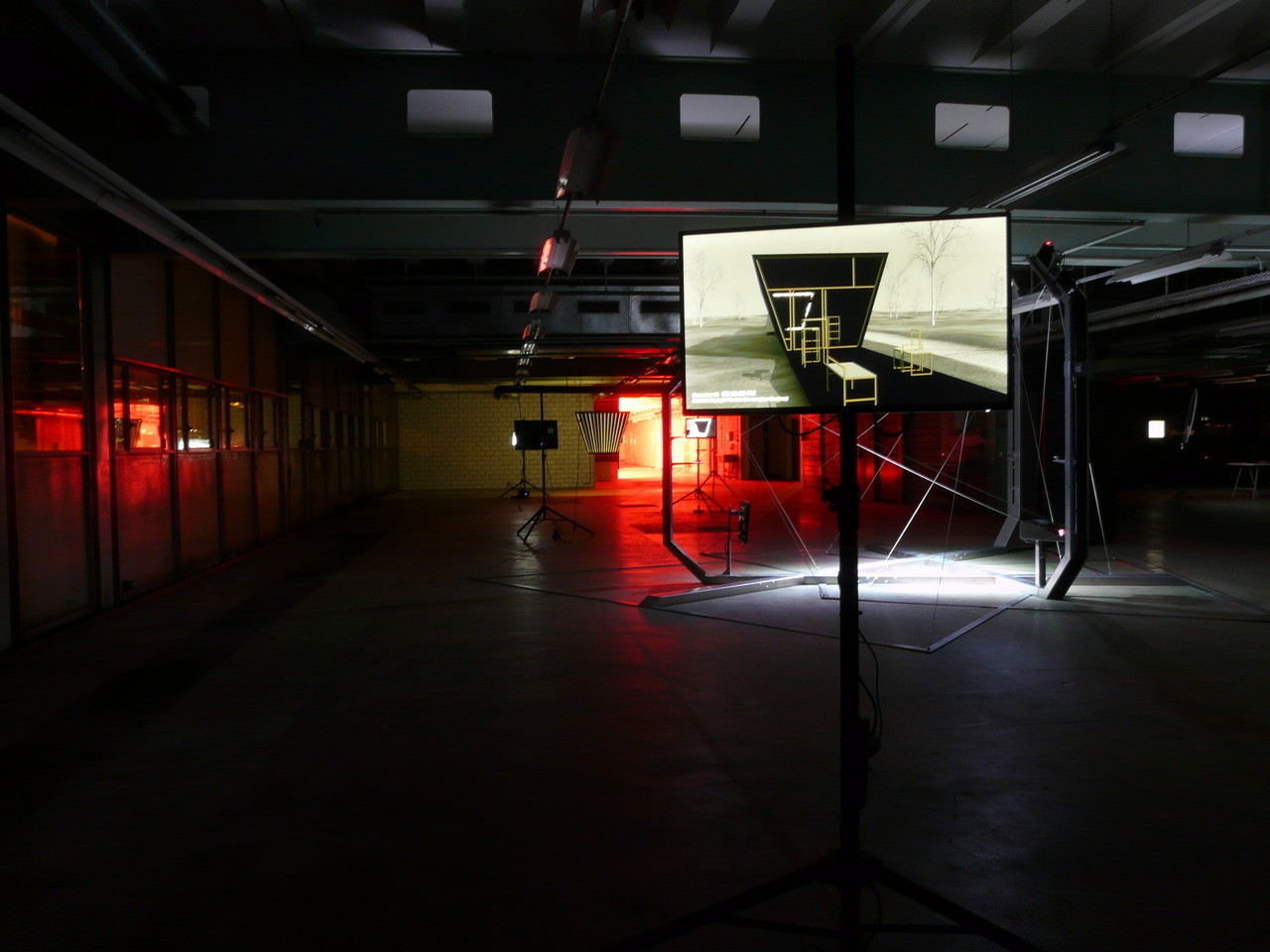
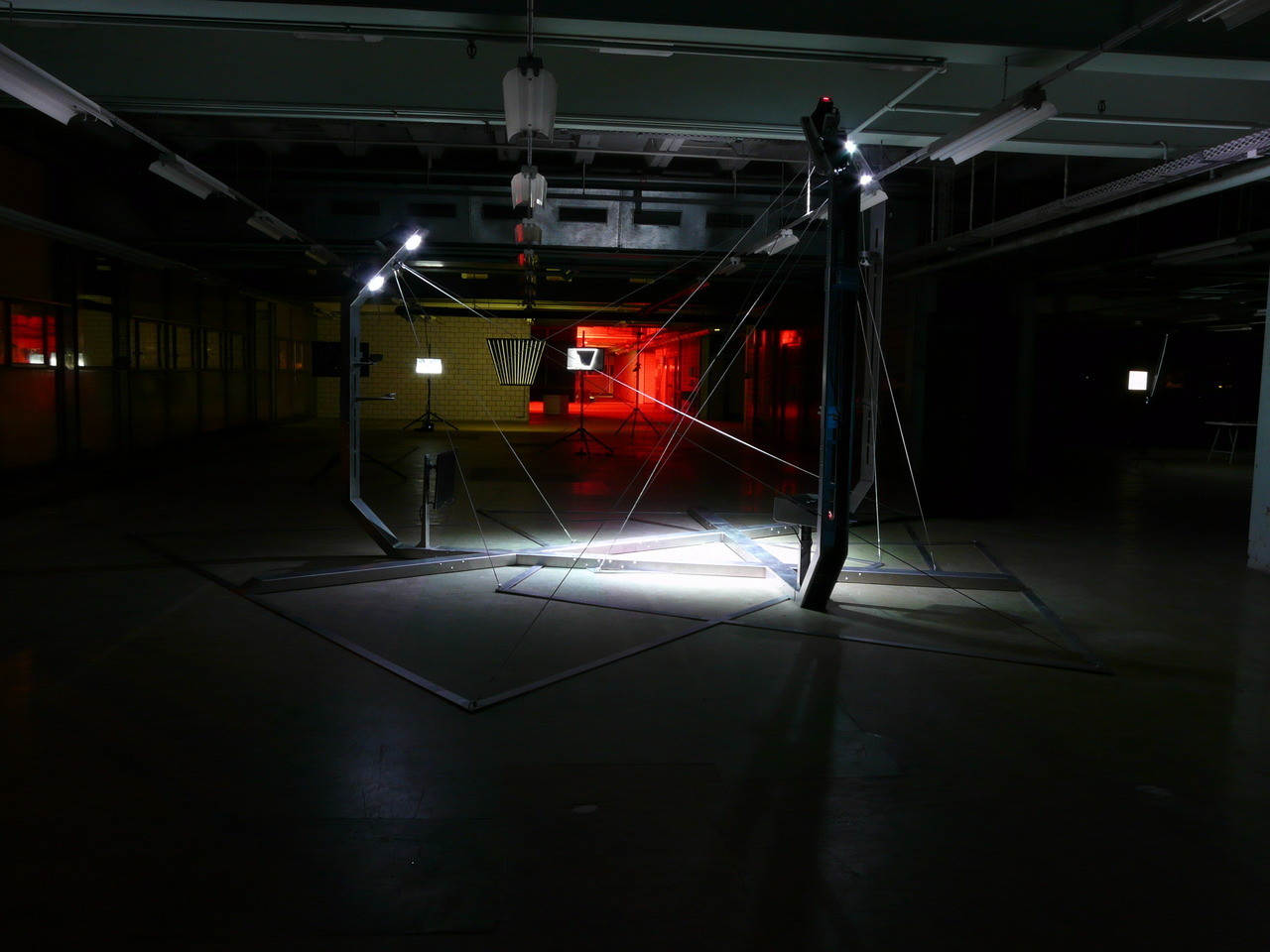
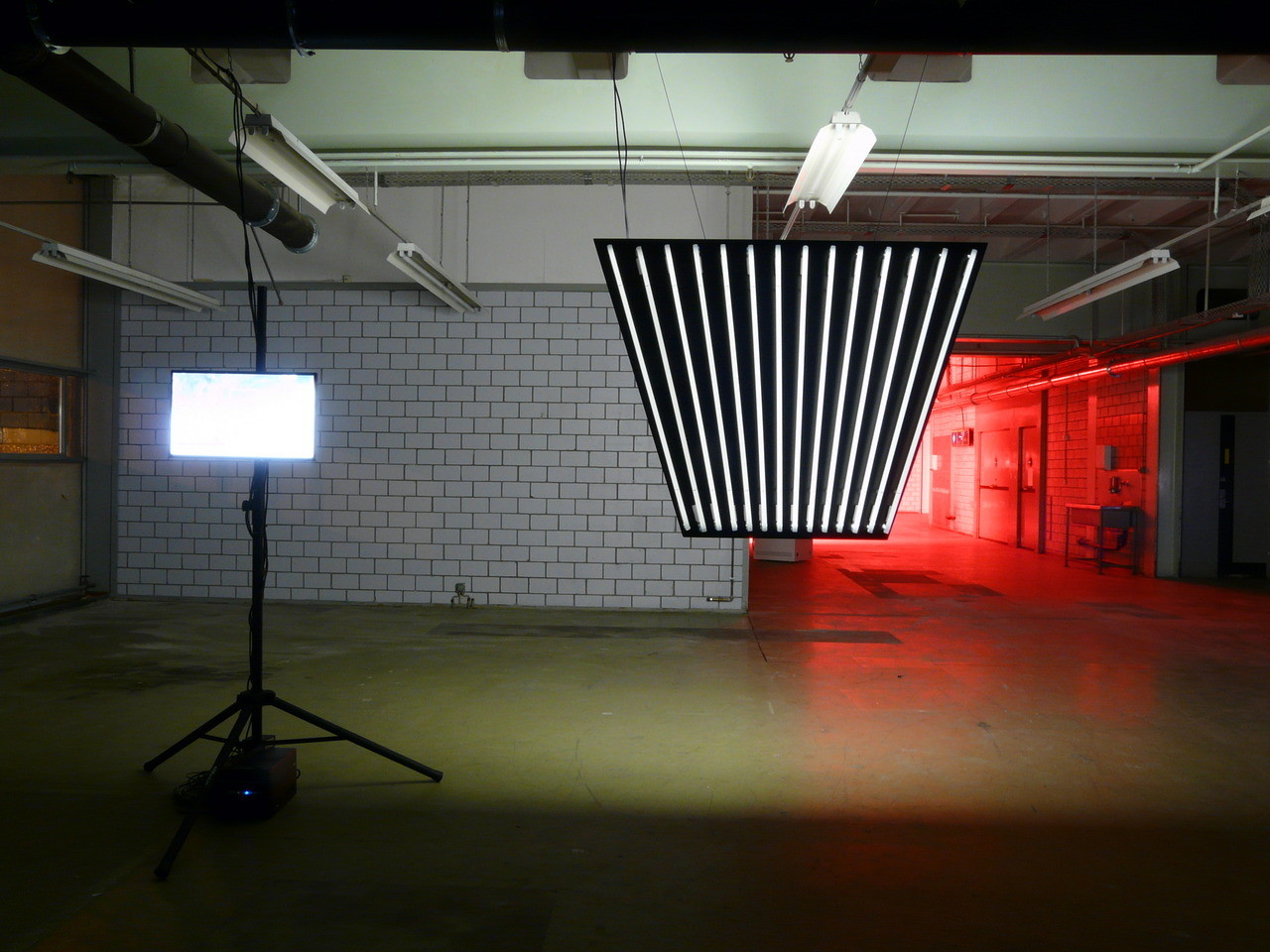
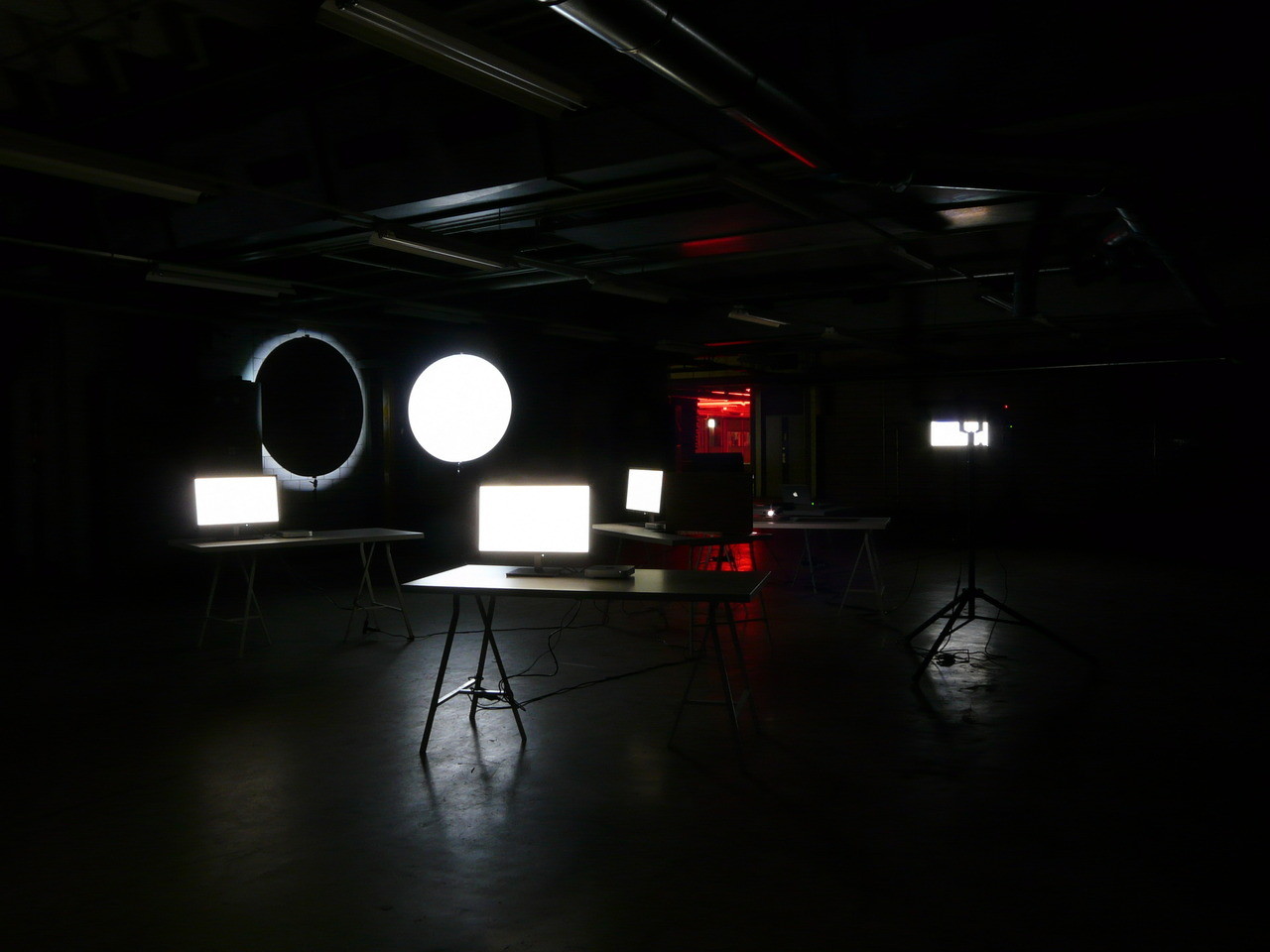
Environmental Devices retrospective exhibition by fabric | ch until today! | #fabric|ch #accrochage #book
Note: a few pictures from fabric | ch retrospective at #EphemeralKunsthalleLausanne (disused factory Mayer & Soutter, nearby Lausanne in Renens).
The exhibition is being set up in the context of the production of a monographic book and is still open today (Saturday 17.02, 5.00-8.00 pm)!
By fabric | ch
-----
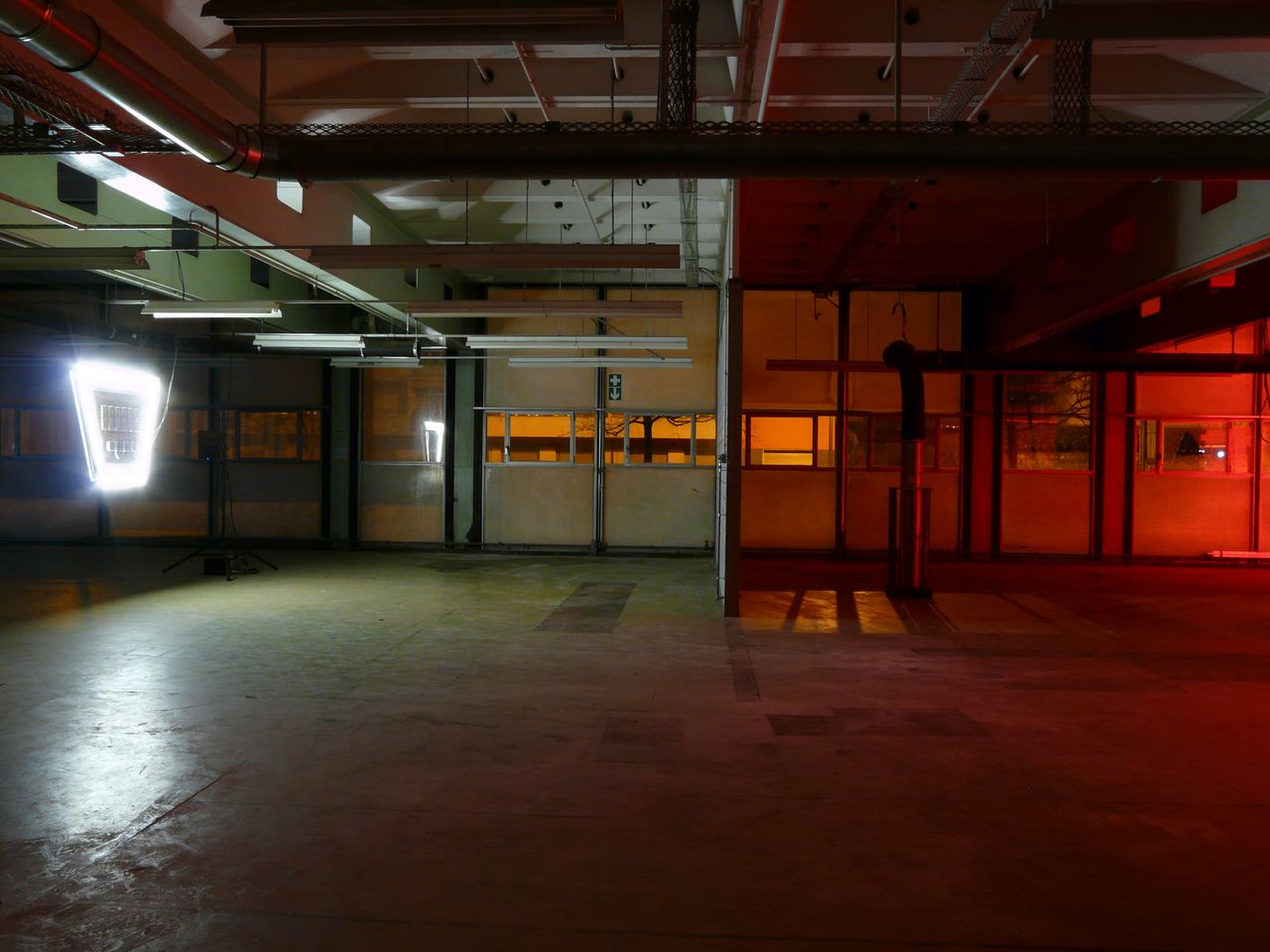
-
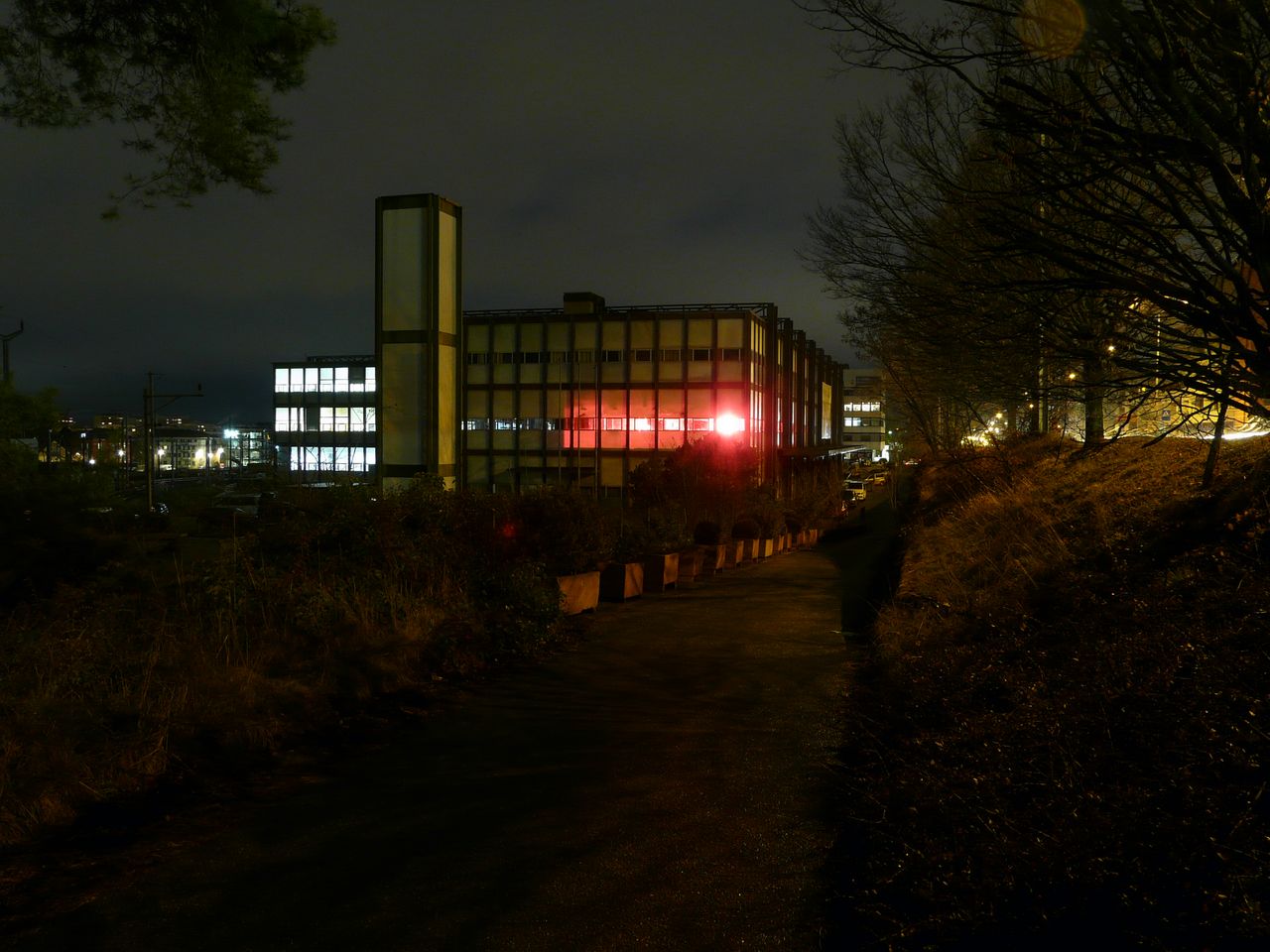
All images Ch. Guignard.
fabric | rblg
This blog is the survey website of fabric | ch - studio for architecture, interaction and research.
We curate and reblog articles, researches, writings, exhibitions and projects that we notice and find interesting during our everyday practice and readings.
Most articles concern the intertwined fields of architecture, territory, art, interaction design, thinking and science. From time to time, we also publish documentation about our own work and research, immersed among these related resources and inspirations.
This website is used by fabric | ch as archive, references and resources. It is shared with all those interested in the same topics as we are, in the hope that they will also find valuable references and content in it.
Quicksearch
Categories
Calendar

|
July '25 | |||||
| Mon | Tue | Wed | Thu | Fri | Sat | Sun |
| 1 | 2 | 3 | 4 | 5 | 6 | |
| 7 | 8 | 9 | 10 | 11 | 12 | 13 |
| 14 | 15 | 16 | 17 | 18 | 19 | 20 |
| 21 | 22 | 23 | 24 | 25 | 26 | 27 |
| 28 | 29 | 30 | 31 | |||
